Home Blog Page 2070

Deaton Shares Top Reason Why He Joined Ripple Case on Behalf of XRP Holders

The attorney says XRP holders and developers are not in the same situation as Ripple.

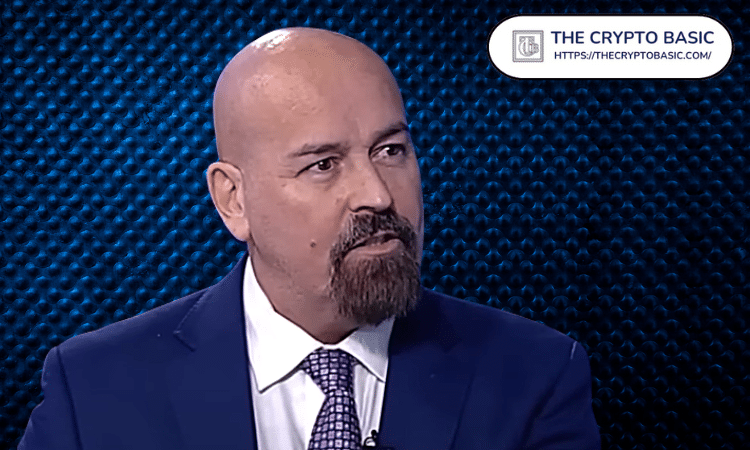
Attorney John E. Deaton has disclosed the primary reason why he fought to join the United States Securities and Exchange Commission (SEC) case against Ripple on behalf of XRP holders.

The lawyer representing over 75,000 XRP holders as a friend of the court in the case over whether XRP is an unregistered security made this known in a tweet yesterday. It came in response to a recent Blockworks interview of Ripple General Counsel Stuart Alderoty, where the attorney disclosed that Ripple would appeal the case if the court sided with the SEC.

Commenting on this, Deaton noted that Ripple could afford to appeal the case, as its On-Demand Liquidity sales of XRP continue while it is pending. However, he pointed out that XRP holders and developers are in a different situation. Consequently, the CryptoLaw founder noted that his primary goal is to bring clarity to secondary market XRP sales even if Ripple loses and even if this clarity comes only as a judicial opinion.

It is not the first time Deaton has alluded to the importance of representation for XRP holders in the lawsuit. The attorney highlighted this last month, clarifying that Ripple’s primary responsibility was to itself. 

“In the end, Ripple must decide what’s best for Ripple and its employees and shareholders – not what’s best for XRP Holders or other businesses developing on the XRPL,” Deaton wrote.

The case has trudged on for over two years and is now awaiting a court ruling which Deaton says could come soon or take two more months. Ripple recently filed a supplemental letter citing a recent U.S. Supreme Court ruling it believes supports its fair notice defense.

TerraCVita To Launch a LUNC Wallet, Shares Terraport Progress

The development group assured the community that the wallet’s development is not impacting the progress of the much-anticipated Terraport project.

TerraCVita, an autonomous Terra Classic development group, announced today the imminent launch of a crypto wallet for use on the Terra Classic network. The group disclosed that the wallet development had reached its final phase.

According to the announcement, the development team faced multiple challenges during the wallet’s code release process. However they have successfully resolved these issues, but the impediment has caused a delay in the testing phase. 

TerraCVita noted that work on the wallet would resume once the developers are satisfied that the Terra Classic infrastructure and the layer-1 code work together correctly. This step is crucial to ensure the wallet can seamlessly interact with the Terra Classic blockchain and function optimally within the existing technical framework.

Besides these, the group has not disclosed anything else about the ongoing wallet development. Nonetheless, they assured the community that the wallet’s development is not impeding the progress of the much-anticipated Terraport project. Terraport remains one of the most eagerly awaited projects in the community due to its promised features.

Progress on Terraport

Accordingly, TerraCVita has periodically updated the community on the project’s development process. Four days ago, the group shared some good news on their progress, announcing that all swap tests on Terraport were completed without a hitch. This disclosure indicates that the project is functioning as intended.

As previously reported, Rex “Rexyz” Harrison, a senior member of TerraCVita, revealed last month that the ultimate goal of the Terraport project is to support the Terra Luna Classic  (LUNC) burn initiative and concurrently attract investments into the ecosystem. The project is expected to come with a dedicated Terra Classic decentralized exchange (DEX).

Deaton Indicates Ruling in Ripple Case Could Take 2 Months Longer

There is no clear timeline for when Judge Analisa Torres will give her ruling, but Ripple executives generally believe it will come in the year’s first half.

Attorney John E. Deaton has indicated that the ruling in the United States Securities and Exchange Commission Case (SEC) against Ripple could take two months longer.

The CryptoLaw founder, who represents thousands of XRP holders in the case as a friend of the court, let this slip in a tweet yesterday. It came in response to the latest filing from Ripple in the legal battle spanning over two years.

As reported today, Ripple has filed a supplemental letter in support of its fair notice defense, citing a U.S. Supreme Court ruling from the end of last month. Deaton, explaining that the latest filing was necessary as the recent ruling could have implications for the Ripple case and strengthen its fair notice defense, noted that Judge Analisa Torres could give her verdict at any moment, or it could take two months longer.

“Judge Torres could possibly file her decision at any moment (or it could be 2 months longer),” the attorney wrote. “The point is: this isn’t a decision from a federal district court or even an appellate circuit court. This is a U.S. Supreme Court decision decided on February 28, 2023 – 4 days ago.”

Recall that Ripple’s General Counsel Stuart Alderoty had also expressed that the ruling could come soon. However, he hinted at a decision as early as the end of the month. 

There is no clear timeline for when Judge Analisa Torres will give her ruling, but Ripple executives generally believe it will come in the year’s first half.

As recently highlighted by Alderoty, the case could have one of three outcomes. The court could side with the SEC or Ripple or send the case to trial, citing disputed facts. The Ripple Attorney has asserted that Ripple would appeal in the case of an SEC victory.

Shiba Inu Lead Developer Raises Prize Pool for Monthly Shiba Eternity Tournament

The Shiba Inu lead also suggested that the tournament be done biweekly instead of monthly.

Shytoshi Kusama, Shiba Inu’s lead developer, has increased the prize pool for a community-run Shiba Eternity tournament to $1,000. 

The latest development came in response to a Friday announcement from Brwncow, a community member who hosts the tournament. Brwncow revealed that the fourth monthly Shiba Eternity tournament would be held on Sunday at 10:00 PST (18:00 UTC).

The initial prize pool comprised a total of $50 worth of Ryoshis Vision (RYOSHI), with $30 going to first-place participants, $15 to second place, and $5 to third place. The $50 prize had been donated by CalvenJ, a music artiste and Shiba Inu proponent.

Kusama commending the community-run initiative, called for an increase of the prize pool to $1000, $500 for the first place participant, with $250 each earmarked for the first and second runner-ups. Kusama also recommended that the tournament be held every two weeks, equating to twice a month. 

The team behind Dogpad Finance, the official launchpad ecosystem for Shibarium, volunteered to sponsor the tournament. Kusama accepted the offer, instructing them to contact Browncow to facilitate the donation.

Brwncow introduced the tournament last year to drive Shiba Eternity adoption and concurrently “have fun with friends.” The first tournament occurred last December and has continued every month till now. Registration is free and can be carried out on the tournament’s dedicated Discord channel.

Since its launch in October last year, the Shiba Eternity game has undergone various upgrades intermittently, as the team looks to enhance it to a high degree of excellence before the launch of the blockchain version. The blockchain version is set to operate on Shibarium, the upcoming layer-2 network.

Three days ago, Kusama called public attention to a recently-introduced MetaMask feature aimed at improving the gaming experience for players. As previously reported, the move sparked speculation that the lead developer might consider integrating Shiba Eternity with MetaMask.

Major ETH Whale Purchases Over 131B SHIB in the Past 24 hours

WhaleStats recently reported that the 254th largest ETH holder tagged “BlueWhale0073” accumulated a staggering 131,477,192,339 (131.47B) SHIB, worth $1,481,747 ($1.48M) in one significant transaction.

Based on WhaleStats data, it has been found that Shiba Inu continues to be a preferred token among the top 5000 ETH Whales. These whales currently hold a whopping $606,553,503 ($606.55M) worth of SHIB in their wallets.

Currently, the entire focus of the Shiba Inu community is on the upcoming launch of Shibarium Beta, and they are eagerly awaiting its release. SHIB developer Shytoshi Kusama continues to stoke the flames of speculation, recently hinting at the completion of an ongoing project. As reported earlier by The Crypto Basic, Kusama shared a tweet that included a link to the song “La Vedo Nera” by Dueuno, an Italian-based music duo, and mentioned that he and his team have been listening to it repeatedly while they “finish up.”

Kusama has been reluctant to provide a specific date for the release of the Shibarium beta, despite repeated requests from the Shiba Inu community. Instead, he updated his Twitter bio to refer to himself as the “official partner of wen and ambassador of soon.”

Ripple v. SEC: Ripple Files Supplemental Letter in Support of Fair Notice Defense

The letter cites a recent U.S. Supreme Court ruling where two justices relied on the rule of lenity for their opinion.

Ripple has filed a supplemental letter in support of its fair notice defense in its legal battle with the United States Securities and Exchange Commission (SEC) over whether XRP is a security. 

Attorney James K. Filan, a seasoned attorney that has continuously provided updates on the case, disclosed this in a tweet yesterday, sharing a copy of the letter. The letter cites a recent U.S. Supreme Court ruling in Bittner v. U.S.

Notably, in the recent ruling, two of the justices in the majority relied on the rule of lenity in support of their opinion. It dictates that where the law is unclear, the court should rule in a way that best favors the defendant. Citing the opinion of the justices, Ripple writes:

“This opinion strongly supports Defendants’ fair notice defense. As in Bittner, the relevant statutory provisions … provide no discussion specific to the facts of this case. And as in Bittner, many experienced securities law practitioners and industry participants were unable to anticipate the government’s current theory. Accordingly, as in Bittner, ‘the government’s current theory poses a serious fair-notice problem.’“

For context, Ripple’s fair notice defense points to the lack of crypto market rules and former SEC director Bill Hinman’s endorsement of Bitcoin and Ethereum as non-securities as reasons why it could not anticipate the SEC’s enforcement action against Ripple.

Attorney John Deaton, who represents thousands of XRP holders in the case as a friend of the court, has attempted to dispel notions that Ripple is filing this now because they are less confident in their position. The CryptoLaw founder pointed out that the ruling came just four days ago and held potential significance to the Ripple case. 

According to Deaton, it could support Ripple’s fair notice defense if Judge Analisa Torres finds that there were times when the blockchain payments firm sold XRP as a security. The attorney noted that the latest Supreme Court ruling strengthened his belief that Ripple would win should the case come before the apex court.

Meanwhile, not all agree that the opinion cited by Ripple in its latest filing can serve as a strong precedent. Marc Fagel, a securities lawyer and former SEC regional director, has described the latest step by the generally brilliant Ripple attorneys as a “risky move.” 

The Stanford lecturer believes that Justice Neil Gorsuch’s inability to get the bulk of the majority to sign on to this opinion made it a questionable and weak precedent. Fagel pointed out that SEC lawyers will likely emphasize this in a potential rebuttal.

It is worth noting that the Ripple case has lasted over two years and is awaiting a court ruling, which Ripple General Counsel Stuart Alderoty has said could come at the end of the month. Crypto proponents believe a Ripple victory would force the SEC to create clear guidelines for the nascent market. On the other hand, Alderoty has noted that Ripple will immediately appeal if the judge rules in favor of the SEC.

Meet Metatime, The Ant Hive Mind-Inspired Blockchain That Wants Nothing Less Than World Domination

0

With its declared goals of becoming one of the world’s top three blockchain ecosystems within just three years, and the world’s most widely used financial ecosystem two years after that, the creators of Metatime certainly cannot be accused of lacking in ambition.

Moreover, they certainly don’t lack in terms of creativity either, for the secret sauce that they believe will help them achieve these goals comes in the shape of a novel blockchain consensus algorithm that’s inspired by the hive mind of ants.

A Networked Mind

Colonies of ants are sometimes referred to as “superorganisms” because of the way they all work together to achieve the same goal – the health and growth of their colony. Different ants perform different, specialized roles. You have the individual worker ants that search for food, others that collect the food and take it back to the anthill once it’s found, others still that take care of the young, yet more who’re tasked with building and expanding the ant hill. And let’s not forget the warrior ants, who’re tasked with defending the colony from other ants and bugs. Finally, there’s the queen, whose sole job is to reproduce. It’s as if each ant colony is in fact, one giant network of interoperating parts.

These individual parts of the ant nest all work in concert to feed, grow and defend the colony, migrate when necessary and sense their environment, and will often make collective decisions on what to do next. In some ways, ant colonies can be likened to the human brain, with each ant being a separate brain cell, or neuron. Like ants, neurons are also simple things relative to the highly complex brain that they belong in. Cognition emerges as a result of the millions of interactions between large numbers of neurons, and networks of ants display a similar kind of intelligence.

Together, ant colonies come to decisions. They carefully allocate behavior based on the collective intelligence they gather about their surroundings, allowing the colony to achieve its goals more effectively than if all of the ants were all acting individually. The colony processes information about its own state and environment, and then adapts accordingly to decide the most optimal behavior.

A Hive Mind For Blockchain Transactions

This concept of the ant hive mind is the inspiration behind Metatime’s MetaChain blockchain, which uses a technology known as MetaAnthill to synchronize the network at high speed, while using the resources of multiple types of platform-independent hardware in the most efficient way. MetaAnthill adopts the structure of an ant colony to maximize workforce allocation and efficiency to enable a claimed transaction processing speed of just 0.1 seconds, through a mining network made up of mobile devices and PCs.

MetaAnthill acts as a software library written in the Java programming language. It’s a platform-independent integrated accelerator and smart processing router that works by scanning the host device at the hardware level, in order to ascertain the available resources and its configuration. With this information, it’s then able to create the optimal path structure for network synchronization across nodes. In this way, the MetaChain becomes vastly more scalable than rival blockchain designs, with its seamless inter-node synchronization minimizing the confirmation times of transactions to process millions at a time, in under one second.

MetaAnthil facilitates transactions through an innovative “hybrid mining” mechanism that’s powered by a novel “Proof-of-Meta” consensus algorithm to create what Metatime says will be one of the most decentralized and secure blockchains of all. Proof-of-Meta makes it possible to profitably mine transactions with any hardware, thanks to the way MetaAnthill optimizes the various resources powering the Metatime network.

According to Metatime co-founder and CEO Yusuf Sevim, there are three different kinds of miners that make up the MetaChain network, depending on what hardware they’re using. First are the MetaMiners, which use the Meta Proof-of-Stake consensus algorithm, meaning they stake MetaCoin to validate transactions. They play the key role of monitoring network traffic, and redirecting it to the other miners based on the level of incoming transactions. Second, we have MacroMiners that employ the Meta Proof-of-History mechanism to ensure that the hardware required for MetaChain is analyzed, and the necessary software installations are completed and used. Finally, there are MicroMiners, which use the Meta Proof-of-Social work consensus algorithm and are tasked with monitoring the density and ping time of each node in order to communicate and direct synchronization and integration of transactions into the wider network, in the fastest possible way.

In this system, each incoming transaction is pre-verified by MetaAnthill before being sent to MetaMiners, MacroMiners and MicroMinders for block generation via smart load optimization. Verified transactions, once confirmed, are processed into blocks and shared with the entire network, synchronized by Meta and Macro nodes.

So just like ant hills, which allocate resources to ensure the colony functions with maximum efficiency, each type of miner plays a key role in ensuring the blockchain runs as efficiently as possible.

The final piece of the puzzle is MetaCoin, which is akin to the pheromones used by individual ants to pass messages to one another. MetaCoin is the native token of the MetaChain, used in smart contract applications and transactions.

Metatime is currently gearing up for the launch of MetaCoin via a private sale on March 3. The initial sale, which comes ahead of Metatime’s ICO later in the year, will see 100 million MTC tokens sold at a price of $0.07, with no minimum buying quantity required.

World Domination?

With its unique, bio-inspired hive mind design, Metatime looks to be one of the most promising new blockchains to launch in 2023, aiming to solve questions around slow transaction times and scalability issues. It’s a radical concept that’s designed to support a hugely ambitious ecosystem that will initially consist of the MetaChain, MetaExchange, MetaNFT Marketplace, MetaLaunchpad, MetaExplorer, MetaWallet, MetaCoin and MetaStablecoin.

It remains to be seen if Metatime will emerge to challenge existing smart contract blockchains like Ethereum, but it’s based on a very successful  model. After all, there are many who argue that ants, not humans, are actually the most dominant species in the world, and it’s hard to counter  that viewpoint if we’re going on numbers alone. A study last year estimated that there are likely more than 20 quadrillion ants in the world, equating to approximately 2.5 million for every human that walks the Earth.

Scientists say that the success of ants is primarily due to their sophisticated level of cooperation. Communication allows ants to act like a single hive mind and find the most optimal way to maximize how they gather and use resources, and it is this that has allowed them to spread to virtually every corner of the globe. With a network modeled on the same behavior that’s focused on optimizing transactions, Metatime hopes to dominate the blockchain world in a similar fashion.


Shiba Inu Lead Developer Dubs Himself “Official Partner of Wen and Ambassador of Soon”

Kusama changes his Twitter bio again.

Pseudonymous Shiba Inu lead developer Shytoshi Kusama has changed his Twitter bio again, this time in response to the unending questions about the official launch date of Shibarium. 

Kusama noted on his Twitter bio that he is the “official partner of wen and ambassador of soon.” 

It bears mentioning that Kusama is fond of telling Shiba Inu’s community members that the L2 network will “soon” launch whenever he is asked to give a specific date for the project’s rollout. The Shiba Inu lead developer has refused to provide a date for Shibarium’s launch despite constant pleas from the community. 

Last month, the pseudonymous lead developer explained why he has refused to give a precise date for the Shibarium Beta launch. Per Kusama, the upcoming Shibarium network is not an off/on switch that can be linked to a date. Notably, Kusama has changed his Twitter bio before. Last month, he changed his Twitter bio to a full stop, sparking speculation that developers have finalized the project.

TMS Network (TMSN) Gains Traction During its Presale Event. Is It Set To Outperform Avalanche (AVAX) and Solana (SOL)?

0

In recent years, crypto has emerged as a hotbed for cryptocurrency innovation, with a growing number of innovations. With the rise of the TMS Network (TMSN), a decentralized trading hub promising to revolutionize trading, many wonder whether it could outperform established coins like Avalanche (AVAX) and Solana (SOL).

TMS Network (TMSN) Revolutionize Trading – Gains Traction During Presale

TMS Network (TMSN) is revolutionizing the way we trade digital assets by offering a blockchain-based platform that is transparent, accurate, and secure. The platform’s use of blockchain’s smart contracts eliminates the need for middlemen, enabling TMS Network (TMSN) to keep transaction fees low and provide maximum benefits to its users. This, in turn, significantly reduces the possibility of manipulation or fraud on the platform.

TMS Network (TMSN) offers a wide range of tradable digital assets, including cryptocurrencies, CFDs, Forex, and ETFs, all on a single interface, ensuring high liquidity and speedy transactions. The platform’s ability to handle increasing users and transactions without sacrificing speed is a significant advantage for traders.

TMS Network (TMSN) is also dedicated to raising financial literacy through its educational resources, including market analysis and trade signals. The project’s commission revenue model will incentivize TMSN token holders by distributing fee-based revenue among all token holders, thereby driving the platform’s growth.

Within a few days of launch, TMS Network (TMSN) has seen significant traction, with its presale price surging by over 8000% from $0.0003 to $0.025. The ongoing presale sold out faster than expected in round one, and the second round is underway. Like the first round, the TMS Network (TMSN) token is seeing an influx of smart traders and investors looking to fund the idea of decentralized trading.

Avalanche (AVAX) – The Ethereum Killer

Blockchain scalability has seen a new dawn as many networks touting themselves as Ethereum killers appear. Avalanche (AVAX) is one of these protocols that offers enterprise-scale tools and massive scalability for developers to create and deploy DeFi and dApps seamlessly. Avalanche (AVAX) remains among the most popular open-source, smart contract-enabled decentralized systems built on the Proof of Stake consensus algorithm.

The network has subsecond throughput, more than 4500 TPS, and a wide range of toolkits for EVM-enabled apps. Avalanche (AVAX) boasts great interoperability with other EVM chains via its components – Exchange Chain, Contract Chain, and Platform Chain. Recently, Avalanche (AVAX) completed its network-wide upgrade to v1.9.8 while sealing a multiyear partnership with Amazon Web Services (AWS). Consequently, the Avalanche (AVAX) token has been trailing the bullish path, gaining 64% this year.

Can Solana (SOL) Live Up to Expectations?

Solana (SOL) aims to solve blockchain trilemma uniquely without sacrificing one aspect for the others. Solana (SOL) uses a hybrid consensus mechanism that balances speed with decentralization. By combining Proof of Stake (PoS) and Proof of History (PoH), Solana (SOL) offers a platform that can handle high transaction volumes while maintaining a reasonable level of decentralization.

However, the rise in popularity of Solana (SOL) led to congestion, despite recovering from the setbacks of the FTX debacle. Solana (SOL)’s network outages continue to hinder its adoption and reliability. Currently, the Solana (SOL) token is trading above $22.6 – miles away from an all-time high value at $260. Even though experts are optimistic about a return back to ATH, Solana (SOL)’s woeful network-wide performance can take investors’ minds off the network.

Is TMS Network (TMSN) Set to Outperform Solana (SOL) and Avalanche (AVAX)?

While Avalanche (AVAX) and Solana (SOL) remain giants in the crypto space, TMS Network (TMSN)’s potential to revolutionize trading and incentivize its token holders through its commission revenue model makes it an exciting prospect for investors. Whether TMS Network (TMSN) will outperform these established coins remains to be seen, but its significant interest during its presale event suggests that it could be a force to be reckoned with in the future.

Presale

Whitepaper

Website

Telegram

Discord

Twitter

The Growing Popularity of Crypto Payments: Could TMS Network (TMSN), Alchemy Pay (ACH), and Ripple (XRP) Lead The Way?

0

The use of cryptocurrency for payments is on the rise. TMS Network (TMSN), Alchemy Pay (ACH), and Ripple (XRP) are all positioned to play a significant role in shaping the future of crypto payments. However, TMS Network (TMSN)’s decentralized trading hub is unique, offering unparalleled security and transparency in decentralized trading. TMS Network (TMSN) is still in presale, but it has piqued the interests of market bulls and investors. Read on to learn more.

TMS Network (TMSN)

The world of cryptocurrency is excited over the upcoming launch of TMS Network (TMSN), a blockchain-based exchange that promises to revolutionize how people buy, sell, and trade digital assets. TMS Network (TMSN) offers a one-stop trading platform for various assets, including cryptocurrencies, stocks, CFDs, and fiat currencies.

However, TMS Network (TMSN) is more than just a trading platform. It also functions as an educational resource, with guides, video courses, and webinars designed to help users, whether they’re beginners or experienced traders, improve their understanding of finance and how markets work.

TMS Network (TMSN) also boasts an enhanced level of security. This feature ensures faster transaction times and lower fees, while a suite of analytical tools helps users make informed investment decisions. There are price aggregators, on-chain metrics, real-time price data, advanced charting tools, trading terminals, and more.

Whether you’re a novice or an experienced trader, TMS Network (TMSN) is a platform worth watching in the coming months. The platform’s native token, TMSN, is currently in phase two of its presale and has proven to be an innovative game changer for investors. Although the initial price of TMSN is $0.0003, the token has surged to $0.025. Many experts predict its value will increase by as much as 100x by the end of the presale.

Alchemy Pay (ACH)

Alchemy Pay (ACH) is a decentralized hybrid payment network that bridges traditional financial/payment systems and blockchain technology. It offers a seamless way for users and investors to use their crypto assets for payment. Alchemy Pay (ACH) is a vast payment network with a growing list of partners, including Binance, Gemini, and Shopify.

Alchemy Pay (ACH) offers B2B and C2B for millions of users in over 70 countries. Its ecosystem is powered by the $ACH token, which is used for facilitating payments and enjoying the platform’s perks. Even though the token is not one of the largest crypto assets, it has proven to be an excellent investment for many investors. Currently, the Alchemy Pay (ACH) token is trading at $0.036, about 81.9% below all-time high price of $0.198 in August 2021.

Ripple (XRP)

Ripple (XRP) is a decentralized financial network that provides cross-border remittance and seamless asset transfer in a secured and decentralized way. From the outset, Ripple (XRP) aimed to replace SWIFT, or the settlement layer between major financial institutions. Acting as a trusted intermediary, the network can confirm transactions quickly and easily between two parties.

Using Ripple (XRP) is cheaper and faster. It is also more cost-effective than other cryptocurrencies, making it suitable for everyday payments. Today, Ripple (XRP) offers many payment solutions for businesses, firms, and institutions to facilitate trustless and borderless payments. Despite its long-standing feud with the US Security and Exchange Commission, Ripple (XRP) is one of the top 10 cryptocurrencies by market capitalization.

Conclusion

The growing popularity of cryptocurrency for payments is undeniable, and TMS Network (TMSN), Alchemy Pay (ACH), and Ripple (XRP) are poised to be major players in the field. However, TMS Network (TMSN) stands out with its decentralized trading hub offering unparalleled security and transparency. Overall, the future of crypto payments looks bright, and these three platforms could very well lead the way.

Presale

Whitepaper

Website

Telegram

Discord

Twitter