Home Blog Page 2075

Only 352 Million Shiba Inu Burned in February

0

Over 352 Million Shiba Inu (SHIB) burned in February.

In February, Shiba Inu Community-led burn initiatives removed 352,210,738 (352.21M) SHIB from circulation through 128 individual transactions.

This marks a significant decrease in burn rate compared to the previous month when over 1.12 Billion Shiba Inu were incinerated through 223 transactions.

Despite the lower burn rate, a record-breaking amount of Shiba Inu tokens were burned in a single transaction on February 27th. As reported by The Crypto Basic, an unknown wallet destroyed an astounding 63,869,939 (63.86M) SHIB, adding to the growing number of tokens being removed from circulation.

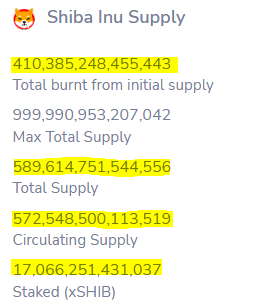
The Shiba Inu Community continues to regulate the supply of Shiba Inu through strategic burns and staking efforts, with a staggering 410,385,248,455,443 (410.38T) SHIB burned from the initial supply of 1 quadrillion, leaving the total supply of SHIB at 589,614,751,544,556 (589.61T).

Additionally, a significant portion of the total supply, 17,066,251,431,037 (17.06T) SHIB, has been staked by key investors into the ShibaSwap DEX, leaving the current amount of Shiba Inu in circulation at 572,548,500,113,519 (572.54T).

Shiba Inu Burn Stats 1
Shiba Inu Burn Stats

Shiba Inu has failed to impress investors with its recent performance. Over the last 30 days, it has only seen a 2.1% increase in price, while in the past week, it has underperformed by -5.4%. As of press time, Shiba Inu is trading at $0.00001238, up by 0.10% over the last day, with a 24-hour trading volume of $173,207,376 ($173.20M).

Pro-XRP Attorney Taps Grayscale To Win Case Against SEC

0

The courts have set a date for oral arguments in the case.

Attorney John E. Deaton has tapped Grayscale to win its case against the United States Securities and Exchange Commission (SEC).

The lawyer representing thousands of XRP holders in the SEC case against Ripple expressed this in a tweet today asserting that the regulator tends to lose when faced with resistance, citing facts shared by Ripple General Counsel Stuart Alderoty. 

Recall that, as reported, Alderoty had pointed out that the SEC has lost four out of its last five cases that have made it to the U.S. Supreme Court. 

In June, the agency denied Grayscale’s application to convert its Bitcoin Trust (GBTC) to a spot exchange-traded fund (ETF). The SEC in its decision, cited a lack of sufficient safeguards against market manipulation, among other concerns. As reported by The Crypto Basic, Grayscale opted to challenge this decision in the U.S. Court of Appeals for the District of Columbia.

Notably, Grayscale argues that the SEC unexplainably treated its spot ETF application differently from Bitcoin Futures applications it has approved in the past. Grayscale’s Senior Legal Strategist, Donald B. Verrilli Jr., a former U.S. solicitor general, asserted that it is a violation of both the Administrative Procedure Act and the Securities Exchange Act of 1934, under which Grayscale filed its application. 

“It’s just a classic case of taking like cases and treating them differently,” Verrilli said in a press briefing yesterday, per a CoinDesk report. Recall that CoinDesk is owned by Grayscale’s parent company Digital Currency Group (DCG).

In January, the court set March 7 for oral arguments in the case. The firm has urged investors to listen in, noting that it is the second of two cases that morning and could start as early as 10 a.m. ET.

The prevailing narrative is that a Bitcoin spot ETF would be a low-cost and familiar way for investors to gain Bitcoin exposure. However, it has faced resistance from the SEC despite approving products based on futures. Pundits speculate that the Gary Gensler-led SEC seeks greater oversight over the nascent market before it approves a Bitcoin spot ETF. 

YCharts data indicates that GBTC is trading at a 45.53% discount to Bitcoin’s market value. In a recent interview on Peter McCormack’s What Bitcoin Did podcast, Michael Sonnenshein, Grayscale’s chief executive officer, asserted that the conversion of the trust to a spot ETF would return billions to investors as the fund would move back up to its net asset value (NAV) due to an embedded arbitrage mechanism. 

Sonnenshein has disclosed that Grayscale is mulling a tender offer to redeem GBTC shares should legal efforts to overturn the SEC’s decision fail. 

It is worth noting that the financial health of DCG, Grayscale’s parent company, has come under increased scrutiny in recent months, sparking fears of a Grayscale liquidation.

San Francisco Nightlife Merchants Can Now Accept Shiba Inu

0

Shiba Inu can now be used in the entertainment industry.

Merchants operating in San Francisco’s nightlife industry can now accept Shiba Inu (SHIB) payments, thanks to a partnership between KillerPay and SmartTab.

The leading crypto payment system for hospitality and entertainment merchants, KillerPay, recently teamed up with SmartTab to offer customers to pay with Shiba Inu and other cryptocurrencies at merchants throughout San Francisco’s nightclub and cabaret scenes.

Through this partnership, the merchants will also have the choice to convert crypto payments immediately into their fiat currency, such as USD.

KillerPay’s preferred tokens for its payment system are Fat Cat Killer’s kBUSD and kUSDC. Still, KillerPay accepts various tokens, including the world’s biggest canine-themed cryptocurrencies based on market capitalization, Shiba Inu and Dogecoin (DOGE).

Shiba Inu is rapidly gaining mainstream adoption as more businesses embrace its use for transactions. In the latest development, Binance Pay has partnered with CityPay.io to introduce Shiba Inu payments in Georgia at Wendy’s and over 600 other regional vendors, including supermarkets and restaurants.

This follows a recent partnership between the London Lions basketball team and BitPay, which enables fans to buy merchandise and game tickets using Shiba Inu.

Welly’s, a Shiba Inu-themed fast-food restaurant, has plans to open a new store in Sannazzaro, a commune in the Italian province of Benevento.

Exodus Wallet Responds to Requests for Shibarium Support

0

The Exodus team noted that they had taken a log of the request.

Exodus Wallet, a non-custodial cryptocurrency wallet, has responded to calls to declare support for Shibarium, the forthcoming Ethereum L2 network for Shiba Inu. The team did not explicitly confirm its readiness to support the network but noted that the request had been channeled to the appropriate department.

“…Shibarium has been logged with our assets team,” Exodus disclosed yesterday through its official Twitter handle in response to requests from two Shiba Inu community members who had implored the wallet to support the network.


The team mentioned that, though they cannot make any promises at the time, the Shiba Inu community could be in for a “delightful surprise” in the future. Remember that Exodus has an op-ed article touting Shibarium as Shiba Inu’s answer to Polygon.

Furthermore, the Exodus account proposed an alternative way for Shiba Inu proponents to add support for Shibarium on their respective Exodus wallets personally. According to the team, users can add Shibarium as a custom ERC-20 token by following the detailed steps outlined in its dedicated guide. “Fingers crossed for full support down the road,” they added.


Responding to the proposed alternative, a community-driven Shiba Inu handle insisted that they want to be sure that Shibarium will be officially supported. “The team has been notified of your request to support Shibarium on the network (no promises, though),” Exodus replied accordingly.

It bears mentioning that Exodus’ support for the Shiba Inu token in 2021 came from numerous similar calls made by SHIB proponents at the time. The team noted then that they had forwarded the requests for Shiba Inu support to the appropriate section.


Should Exodus declare support for Shibarium, it would be joining a growing list of several platforms that have already announced a readiness to accommodate the L2 network when it launches. These include notable entities such as Voxel X Network, Atomic Wallet, NOWNodes, and CoinRabbit, among others.

Binance Confirms Support For Terra Classic (LUNC) Upgrade v.1.1.0

0

The upgrade introduces features aimed at addressing Binance’s concerns about token burns.

Binance announced support for the Terra Classic (LUNC) network upgrade scheduled for Feb. 28 at 22:00 (UTC). The upgrade, featuring v.1.1.0, incorporates modifications to the network that aim to address Binance’s apprehensions regarding token burns.

The upgrade occurred at the Terra Classic block height of 11,734,000. According to an official press release, Binance said it would pause deposits and withdrawals for the LUNC network from Feb. 28 at 21:00 (UTC). This ensures the safety and integrity of users’ funds during the upgrade process.

The exchange noted that deposits and withdrawal services for the network would be restored once they have confirmed that the network is once again stable. Notwithstanding, the development will not impact trading for LUNC and TerraClassicUSD (USTC) on the platform.

The Significance of Upgrade v.1.1.0

The Terra Classic upgrade v.1.1.0 comes on the heels of the passing of Proposal 11367, which sought the community’s consent to implement the network upgrade. The upgrade introduces features such as a burn tax split, a ban on reminting of burned tokens, and a tax exemption list. These features address concerns raised by Binance regarding token burns.

Recall that Binance suspended its periodic monthly contribution to the LUNC burn campaign last December following the passing of a proposal that sought to re-mint 50% of burned tokens, including those of Binance. The exchange halted its burns till March and noted that it would burn 50% of LUNC trading fees instead of the initially-promised 100%.

Binance put forth several conditions under which it would resume its burns, as it was concerned about reminting its tokens after being burned. In response, LUNC developer Edward Kim presented three signal proposals on Feb. 14, two designed to meet Binance’s requirements.

Following the community’s affirmative vote on these proposals, the network upgrade proposal was introduced over a week ago to incorporate the suggested features. This implementation was intended to meet Binance’s requests and likely lead to the exchange resuming its burn contribution.

It is important to note that Binance is the most significant contributor to the LUNC burn initiative, having incinerated up to 20.1 billion tokens, which represent 50.7% of the total cumulative burn of 39.6 billion tokens.

Shiba Inu Becomes Most Searched Asset on Huobi

0

Shiba Inu Takes the Lead as the Most Searched Token on Huobi Global.

Huobi Global, one of the world’s leading cryptocurrency exchanges, has revealed that Shiba Inu (SHIB) has become the most searched token on its platform. Shiba Inu has beaten other popular cryptocurrencies like Huobi Token (HT), Solana (SOL), Luna Classic (LUNC), and Ripple (XRP) to claim the top position.

The upcoming launch of Shibarium Beta has kept Shiba Inu in the spotlight, and it has now surpassed the USD-pegged stablecoin USDC to become the third-largest asset in Crypto.com’s digital asset reserves. As reported by The Crypto Basic, Crypto.com holds $677.06M worth of Shiba Inu, compared to $453.59M worth of USDC.

Binance has recently added support to Shiba Inu’s new trading pair against the US Dollar (SHIB/USD) while delisting KSHIB/USD. Additionally, OKCoin Japan, a Tokyo-based exchange, has listed Shiba Inu on its platform.

Shiba Inu has also gained popularity, ranking fourth in the list of most searched digital currencies in the US, according to a recent study by Cryptomeister.

Ripple Unlocks 1B XRP From Escrow, Sends 50M Tokens to Unknown Wallet

0

The development is part of the company’s scheduled periodic escrow executions.

Ripple has initiated its routine escrow execution exercise for March, unlocking 1 billion XRP tokens. The latest executions occurred barely 8 hours after the Silicon Valley company transferred 50 million tokens to an unidentified wallet yesterday.

The 1 billion XRP tokens were concurrently released in four distinct escrow executions and then transferred to two addresses associated with Ripple. Bithomp data confirms that these transactions were carried out precisely at midnight (UTC) today.

As part of the recent escrow executions, Ripple unlocked 100 million XRP and 400 million XRP in Executions 15 and 16, respectively, both of which were sent to a Ripple-owned address. The current balance of this address is now at 1 billion XRP, as the tokens have yet to be moved.

Similarly, Escrow Executions 17 and 18 also unlocked 100 million and 400 million XRP tokens, respectively. The designated recipient wallet currently reflects a balance of 1 billion XRP as of this writing.

Barely 8 hours before the latest escrow executions, Ripple had sent 50 million XRP ($18.89 million) to an unidentified wallet. The recipient wallet, which currently has a balance of 67M XRP, is confirmed to be affiliated with the company.


As observed in previous transactions, Ripple’s standard practice involves transferring these tokens to a different wallet, with a portion locked up in escrow, while the remaining tokens are allocated to fund the company’s daily internal operations.

Last month, the American technology company locked up 600 million tokens in escrow 18 hours after it had unlocked 1 billion tokens, as previously reported. 

Ripple XRP escrow locks are a mechanism Ripple uses to ensure the stability and predictability of the XRP market. The escrow locks involve putting a large amount of XRP into a locked account, which is released monthly installments over a predetermined period. The company locked up 55 billion XRP in December 2017.

Cardano Founder ‘Doge’ Tweet Causes a Stir – Here’s What It Means

0

The Cardano founder causes a stir by appearing to promote Dogecoin.

Cardano founder and Input Output Chief Executive Officer Charles Hoskinson has caused quite a stir on Twitter today by appearing to promote DOGE.

“Doge voting 4ever,” the Cardano founder wrote with love emojis.

Unsurprisingly, Hoskinson’s tweet has taken many members of the Cardano community by surprise. This is because the Input Output chief has a rocky history with the doggy-themed meme coin, once asserting that DOGE was a mockery of his life’s work. After all, the DOGE creators intended to make fun of Bitcoin and its cult following.

Nonetheless, it is more likely that Hoskinson is referring to the Venetian electoral process during the Renaissance designed to discourage corruption and any other governmental vice. The people of Venice elected the Doge, referring to the republic’s leader, through this highly complex system. 

Per the records, the Venetian Great Council would randomly select 30 members by casting lots; these 30 would randomly select nine others, and these nine would choose 40; from the 40, the council would randomly select 12, the 12 would choose 25, and from the 25, the council would randomly select nine. The nine would elect 45, the 45 would be randomly reduced to 11, and the 11 would finally choose 41 who would vote for the Doge.

Meanwhile, being the Doge did not leave one with unlimited power. The republic placed several restrictions on the Doge, with the Great Council and Judiciary checking his power. Notably, the office of the Doge by this process was not hereditary, and the Venetians did their best to dispel any such fantasies by destroying any symbols and seals of a Doge following his death.

Hoskinson’s “Doge voting” comments come as the Cardano network prepares to enter the final phase of its roadmap dubbed the Age of Voltaire. It will usher the network into a new era of decentralized governance, which the Cardano founder asserts would school the rest of the industry. 

Voltaire would combine a voting and treasury system to make the network self-sustaining, allowing ADA holders to influence the direction of the network. Consequently, ADA holders could propose network improvements and upgrades with the treasury on hand to fund these changes if approved through voting.

The network has already taken the first steps with Project Catalyst. The experimental, decentralized governance process proposes a “liquid democracy” model that combines the benefits of direct and representative democracy, allowing for expert contributions to discourage irrational behavior. Per the system, voters can vote directly or delegate their voting power to an expert on the topic they trust.

Hoskinson, last year, introduced Cardano Improvement Proposal (CIP) 1694, the first proposal to usher in the Age of Voltaire. It suggests the creation of a Cardano constitution.

TMS Network’s (TMSN) Crypto Presale Shouldn’t Be Ignored! Here’s Why Experts Say TMSN Is A Better Investment Than Monero (XMR) And Cronos (CRO)

0

Monero (XMR) and Cronos (CRO) see a lot of negative sentiment. Fortunately, the emergence of the TMS Network (TMSN) is a dream come true for traders. The platform is a crypto-based trading hub, and the whole crypto market is buzzing with the news of its ongoing presale.

Due to its huge potential to revolutionize trading, experts are advising investors not to ignore TMS Network (TMSN)’s promising opportunity. Thus, in a sea of investment options such as Monero (XMR) and Cronos (CRO), TMS Network (TMSN) stands out as a better investment choice due to its innovative and decentralized trading platform. Read on to learn more.

Why TMS Network (TMSN) Shouldn’t Be Ignored

For the past few days, TMS Network (TMSN) has been making waves and generating massive buzz as the most advanced trading hub that will revolutionize trading. Based on the Ethereum chain, TMS Network (TMSN) is fast becoming an inevitable choice for traders looking to upscale and improve their trading skills with informed decisions.

Investing in the TMS Network (TMSN) offers numerous advantages that make it an appealing choice for both novice and seasoned investors – one of which is security and transparency. The platform employs state-of-the-art high-end encryptions and robust protective measures to protect users from fraud, making it a secure and reliable investment choice.

Another advantage of the TMS Network (TMSN)is its scalability. The platform is built to handle a high volume of transactions and a growing number of users. This is essential for traders who want to ensure that their assets can keep up with the demands of a rapidly changing market and huge liquidity.

Unlike centralized exchanges, TMS Network (TMSN) is not controlled by any authority as it is decentralized. This also ensures that deposit and withdrawal are faster, fees are lower, speed is unmatchable, innovation remains top-notch, and powerful trading tools become more accessible.

All these features make TMS Network (TMSN) an excellent investment choice for anyone who wants to participate in a secure, reliable, and censorship-resistant trading platform. Consequently, the TMS Network (TMSN) token has gained the support of market stakeholders and whales looking to bring its vision to reality. So far, the presale price is hovering at $0.0073 and has risen by over 2300%.

Monero (XMR) Suffers Rejection as Regulatory Rules Tighten

Privacy and anonymity are major advantages of blockchain technology that many protocols aim to uphold. In no time, privacy-focused chains like Monero (XMR) gained huge support, allowing users to benefit from scalable transactions without revealing their identities. Monero (XMR) uses ring signatures and stealth addresses to achieve this. However, this has only attracted widespread regulatory scrutiny as the privacy feature makes it easier for bad actors to leverage Monero (XMR)’s potential.

Currently, Monero (XMR) has been hit hard by regulatory crackdowns around the world. In fact, global regulators have proposed new rules for crypto exchanges to tighten their KYC while intergovernmental organizations are setting new anti-money laundering standards for pro-crypto countries to get rid of Monero (XMR). The crackdown resulted in Coinbase and Huobi delisting the token, while Dubai and Japan banned all transactions with privacy-focused cryptocurrencies.

Cronos (CRO) Still 91.5% Below All-Time High

Cronos (CRO) token powers the ecosystem economy of the Crypto.org chain and Crypto.com. It allows holders to enjoy the limitless DeFi opportunities the exchange offers. However, while Crypto.com continues to be one of the most successful exchange platforms, Cronos (CRO) has failed to trail on that path.

For more than a year, the Cronos (CRO) token has been on an indefinite downtrend. The token lost more than 93% of its value from its all-time high price of $0.9 in November 2021. Cronos (CRO) is currently trading at $0.083 – about 91% from ATH value, and bearish sentiment has not eased around the token. Several investors have lost interest in the token, and hope for a better future has caved in. As if that were not enough, experts predict a bearish 2023, and we may see Cronos’ (CRO) value plummeting to $0.03.

Why TMS Network (TMSN) Token is a Better Investment Than Monero (XMR) and Cronos (CRO)

Monero (XMR) and Cronos’ (CRO) growing bearish sentiments make TMS Network (TMSN) a better investment. The platform’s unique approach to seamless and hassle-free trading is a game changer. As a result, the TMS Network (TMSN)token is forecasted to rise 1000x at launch.

Presale

Website

Telegram

Twitter

As Polygon (MATIC) NFT Sales Soar, Outpacing Dogecoin (DOGE), TMS Network (TMSN) Presale Keeps Investor Confidence High

0

In order to stay relevant in a fast-changing market, platforms need to either have high-level support or find ways to stay relevant to their communities. To keep up, Polygon (MATIC) started offering NFTs, which boosted its sales, even allowing it to surpass the hype surrounding Dogecoin (DOGE).

On a different note, investor confidence in TMS Network (TMSN) presale remains high. This decentralized trading hub has been gaining traction in the cryptocurrency world due to its unique approach to trading, which sets it apart from other platforms.

Polygon (MATIC) NFTs Outpaces Dogecoin (DOGE)

For the second month in a row, Polygon (MATIC) NFTs are doing wonders on the chart, outpacing Ethereum NFTs and even Dogecoin (DOGE) in sales. According to Dune, over 1.3 million NFTs were sold on Polygon (MATIC), compared to Ethereum’s 1 million NFTs in December. In January, the number went up to 1.5 million for Polygon (MATIC)and 1.1 million for Ethereum.

Despite Ethereum holding some of the best high-value non-fungible tokens, Polygon’s (MATIC) layer-two network has seen increased user activities at all levels in the past few months. This is because the recent Ethereum Merge couldn’t address the issue of Ethereum’s expensive gas fees – a much-needed adjustment for everyday NFT traders.

Recent upgrades and hard forks on the Polygon (MATIC) platform were solely directed toward improving gas efficiency and scalability, thus making Polygon (MATIC) a more appropriate choice network for hosting more affordable NFT collections, which are being used in metaverse worlds or Web3 games. In contrast, Dogecoin (DOGE) has been on a downtrend for more than a year. Dogecoin (DOGE) rose to prominence after attaining an all-time high value of $0.74 in May 2021.

Since attaining ATH, Dogecoin (DOGE) has struggled to stay on its feet and maintain its value. While investors increasingly realize that Dogecoin (DOGE) is a mere meme coin with no use case, Polygon (MATIC) has enjoyed increased traction as a destination for gaming NFTs and low-cost collectibles, leading to broader adoption and increased valuation.

TMS Network (TMSN) Keeping Investors’ Confidence High

TMS Network (TMSN)  is breaking barriers and setting new standards in asset trading. The TMS Network (TMSN) presale, which began recently, has already garnered over million during an exclusive seed funding sale.

One of the reasons why the TMS Network (TMSN)  has attracted such massive demand is its advanced trading platform. The TMS Network (TMSN) platform incorporates cutting-edge technology, including advanced charting and technical analysis tools, order book depth indicators, and trading bots. These tools help traders make more informed decisions and execute trades more efficiently.

Another reason why investors are flocking to the TMS Network (TMSN)  is its decentralized nature. Unlike traditional centralized exchanges, the TMS Network (TMSN) is built on the Ethereum blockchain, which ensures transparency and eliminates the risk of fraud or failure. Moreover, the TMS Network (TMSN) is designed with scalability in mind, which means it will be able to handle high trading volumes without compromising performance. This means users can also enjoy faster, seamless and low-fee payments and transaction processing.

In addition, the TMS Network (TMSN)  decentralized trading hub also offers a range of educational programs and robust trading tools. The educational programs are designed to help traders of all levels improve their trading skills and stay up-to-date with the latest trends in the different markets.

Overall, TMS Network (TMSN)  has proven to be an important project that focuses on the needs of its audiences. The successful presale attests to TMS Network (TMSN) ‘s potential, and many wise investors are massively rushing to be part of the next big thing. TMS Network (TMSN)  token is trading at $0.0073 in presale, and experts think it may rise by 100x at launch.

Presale

Website

Telegram

Twitter