Kim says it is necessary to reopen IBC channels to stay updated with changes in the Cosmos ecosystem and have time for rigorous testing.
Terra Classic core developer Edward Kim, a member of the Terra Rebels and the TerraCVita, has published a proposal to reopen the network’s Inter Blockchain Communication (IBC) channels, per a tweet yesterday.
The proposal will see the lines of communication and commerce between the Terra Classic network and Cosmos chains like Osmosis, Crescent, and Juno reopened.
As previously reported, the IBC channels were supposed to be reopened with the v23 network upgrade. However, Kim says developers believe separating the IBC reopening from the broader network upgrade is necessary. Kim says this is due to continuous changes in the Cosmos ecosystem and rigorous testing required so that the Terra Classic network can gain technological parity with the Cosmos ecosystem.
If the community approves, developers will reopen the IBC channels with block 10,542,500. The developer estimates this to happen around December 5. Notably, it will allow for the flow of liquidity trapped by the decision to close the IBC channels during the Terra ecosystem collapse in May to prevent impermanent losses.
However, the network may not become fully Cosmos interoperable until developers roll out the v23 upgrade, as it contains the CosWasm upgrade highlighted by Terra Rebel member Raider. CosWasm is a library that contains code standards to build a contract on the Cosmos ecosystem.
Kim first disclosed that Terra Classic developers worked closely with Cosmos developers like Jacob Gadikian to reopen IBC channels in September. Notably, Gadikian revealed that the code was ready in October.
The v23 upgrade remains on schedule to also roll out in December, as reported by The Crypto Basic.
It is worth noting that the reopening of IBC channels and subsequent full Cosmos interoperability would potentially benefit both the Terra Classic network and the Cosmos ecosystem. Other Cosmos chains can boost economic activity by attracting the budding Terra Classic community, while members of the Terra Classic community gain new ways to spend their Terra Luna Classic (LUNC).
Several users have expressed excitement at the new proposal. For example, community influencer and network validator Classy said his validator would vote yes to the proposal.
Schwartz believes that there are several lessons to learn from the FTX collapse but says one is the most important and will not be learned.
Ripple CTO David Schwartz, in a Twitter thread today, has asserted that there are several lessons to learn from the FTX collapse.
There are a few lessons that should be learned from the FTX fiasco, but there's one important lesson that is really pretty obvious in retrospect and that I can say with total confidence will not be learned. 1/4
However, Schwartz believes people are most likely to ignore the most obvious. According to Schwartz, it is impossible to avoid the temptation to speculate with billions of dollars of other people’s funds in your possession for a long time if there are no checks to stop you.
“There are a few lessons that should be learned from the FTX fiasco, but there’s one important lesson that is pretty obvious in retrospect and that I can say with total confidence will not be learned,” Schwartz wrote. “If you hold billions of dollars of other people’s money for indefinite periods, the temptation to speculate with those funds is irresistible if there aren’t verifiable checks that make such risk-taking virtually impossible; nothing else will be sufficient.”
Furthermore, the Ripple executive asserted that enforceable punishment for these acts that kick in only after the crime has been committed would not help. According to Schwartz, neither would due diligence from investors. Additionally, the XRP Ledger builder highlights that even when some users spot these signs early, they will be shot down by others as spreading fear, uncertainty, and doubt.
“The temptation is irresistible,” Schwartz surmises.
It comes in light of the collapse of FTX, the once second-largest crypto exchange in the world. Notably, a bank run confirmed reports of the crypto exchange’s shady handling of user deposits.
Facts indicate that former FTX chief Sam Bankman-Fried with no notice to clients, loaned billions in user funds to his quantitative trading firm Alameda Research using a backdoor created in the company’s accounting software to cover his tracks. Unfortunately, it resulted in FTX having an $8 billion hole in its balance sheet. With no recourse left, FTX and several subsidiaries have filed for bankruptcy protection in the US.
Meanwhile, court filings now reveal that the company’s financial mismanagement was worse than the community previously thought. As CEO and restructuring officer John Ray reveals, the firm had little to nothing regarding accounting and record keeping. In addition, there was no centralized management of cash. Instead, billions in corporate funds were dolled out as loans to SBF and other executives. Furthermore, executives and employees used corporate funds to purchase private property in the Bahamas.
In light of these happenings and the damage to the trust of centralized crypto exchanges, Binance’s Changpeng Zhao has tried to push a “proof-of-reserves” campaign. Notably, it requires centralized crypto platforms to publish their crypto holdings and the wallet addresses where they are held to allow users to verify and trace these holdings on the blockchain.
However, some believe even this is not enough. Kevin O’Leary, who believes that regulations are the answer, says the collapse of FTX will push governments to create regulations that ensure things like these never happen. It bears mentioning that the Shark Tank star was also a paid FTX spokesperson and investor.
US president Joe Biden recently led calls for international crypto regulations in light of the FTX collapse at the most recent Group of 20 (G20) industrialized countries meeting in Indonesia. However, it will not be the first time world leaders do so.
Garlinghouse reiterates that Ripple is willing to settle with the SEC if the agency provides clarity for XRP that will help US institutions like Bank of America gain a competitive advantage by using Ripple ODL.
Ripple Labs’ CEO Brad Garlingouse reiterated that the leading blockchain company would settle with the Securities and Exchange Commission (SEC) only if the federal agency provided regulatory clarity for XRP.
Garlinghouse disclosed this to Linqto Director of Member Sales Nick Burrafato at the recently concluded Ripple Swell 2022 held in London.
“I met with Brad Garlinghouse face-to-face, and he made it clear that [Ripple] is ready to settle with the SEC as long as they can get clarity on XRP,” Burrafato said.
According to Linqto’s Director of Member Sales, Garlinghouse further revealed that American financial institutions are following developments in the ongoing lawsuit between the SEC and Ripple. He added that these companies would join the Ripple bandwagon when the blockchain company settles with the SEC.
Burrafato said Garlinghouse was specific about Bank of America. The Ripple exec believes Bank of America will gain a competitive advantage when the blockchain company settles with the Securities and Exchange Commission.
“Bank of America is going to gain a competitive advantage when the SEC v. Ripple case settles, by using ODL in the marketplace,” Linqto noted in a tweet.
Ripple Labs CEO Brad Garlinghouse stated to Linqto Director of Member Sales Nick Burrafato at Ripple Swell 2022 in London that "Bank of America is going to gain a competitive advantage when the SEC v Ripple case settles, by using ODL in the marketplace." https://t.co/y8g5cOdYZTpic.twitter.com/RDzGgmj8GV
In November 2020, Ripple listed Bank of America as a leading member of its global payment network, RippleNet. Despite the Ripple vs. SEC lawsuit, Bank of America is still listed among the financial institutions in the network.
Ripple Open to Settle With SEC
Meanwhile, Garlinghouse has always been open to settling with the Securities and Exchange Commission. Ripple would want the SEC to agree that XRP is not a security for this to happen. However, it does not seem like it will happen as the SEC is committed to proving that XRP is a security using the Howey test.
It bears mentioning that Ripple failed to settle with the SEC before the company was sued. The parties have filed motions, oppositions, and replies for summary judgment.
Last week, the XRP community was enthusiastic over rumors of a settlement between Ripple and the SEC. The jubilation pumped the price of XRP by over 10%. However, XRP holders’ expectations were cut short as the expected settlement did not happen.
The SEC recently won a similar lawsuit against peer-to-peer network LBRY earlier this month, thus giving the agency confidence that it will also win the Ripple lawsuit. XRP proponents believe that Ripple has a better fighting chance in proving that cryptocurrency is not a security.
Coinbase has partnered with WooCommerce, enabling merchants to accept payments in BTC, DOGE, and other cryptos.
WooCommerce, an open-source customizable e-commerce plugin integrated with WordPress, has formed a partnership with Coinbase Commerce that will allow its merchants to accept payments in cryptocurrencies, including but not limited to Bitcoin (BTC) and Dogecoin (DOGE).
Being one of the most leveraged e-commerce plugins for small and medium-scale merchants, WooCommerce is likely to bring cryptocurrency exposure to millions of merchants worldwide through this partnership with Coinbase Commerce.
Coinbase disclosed the development through its Twitter handle and an official press release. “WooCommerce merchants can now offer consumers the flexibility to pay with crypto through Coinbase Commerce,” Coinbase revealed in a tweet Monday, as it shared a link to the official announcement.
WooCommerce merchants can now offer consumers the flexibility to pay with crypto through Coinbase Commerce.
According to the announcement, the recent partnership with WooCommerce is part of Coinbase’s long-term goal to introduce as many as 100 million individuals to the cryptocurrency industry. Being the most popular e-commerce plugin available, WooCommerce was the best partnership choice for Coinbase to reach millions of merchants.
WooCommerce is utilized by over 25% of the most prominent online stores. The e-commerce plug-in is integrated into WordPress – a website-building service – and allows merchants to receive customer payments. With this Coinbase Commerce partnership, merchants can enable cryptocurrency payments on WooCommerce. Assets currently available include Bitcoin, Ethereum, Dogecoin, Bitcoin Cash, DAI, Litecoin, and USD Coin.
Speaking on the development, Dave Lockie, Web3 Lead at Automaticc – the firm behind WordPress – highlighted the significance of the partnership, noting that both Coinbase Commerce and WooCommerce share similar values in terms of enabling the liberty of flexible payments for online stores.
“We’re excited to watch what happens when one of the world’s biggest and most trusted brands in crypto becomes easily available to WooCommerce merchants around the world,” he added.
Businesses are Indicating Interest in Accept Crypto Payments
Early this month, South African biggest grocery retailer, Pic N Pay, revealed that it would start accepting payments in BTC and cryptocurrencies.
Microsoft became one of the earliest cryptocurrency adopters in 2014 when it started accepting BTC as payment for digital goods purchases in its store, setting the stage for broader adoption at a time when popularity had not peaked. Additionally, At&t started accepting BTC payments through crypto payment processor BitPay in 2019.
Several businesses, such as Burger King, Overstock, Norwegian Air, and suchlike, have also integrated crypto payments. A recent Deloitte study revealed that almost 75% of U.S. merchants want to accept cryptocurrency payments within the next year.
Considering the growing interest in crypto payment integration, the Coinbase Commerce partnership with WooCommerce looks more relevant, as it will enable interested WooCommerce merchants to accept crypto payments finally. Coinbase has already introduced an integration page.
“We look forward to building on our partnership with WooCommmerce and finding even more ways to help customers and small businesses make crypto a part of their daily lives,” Matt Watts, Director at Coinbase’s Payment Business Development, remarked.
A single wallet burned over 26.77 Million SHIB in one significant transaction, 106.78 Million SHIB in the past week.
One of the Community-led SHIB Burn initiatives sent a whopping 26.77 Million SHIB to the “inferno” addresses in one significant transaction using SHIB Burn Portal.
The most dedicated SHIB Burn Project, named “SHIB Super Store,” recently confirmed via tweet that it has just removed a whopping 26,772,703 (26.77M) SHIB from circulation forever in one noteworthy transaction.
Burn and earn!
Little bigger than last week!
26.7M Burned 19.5M Rewarded so far, will end up being about 26.6M once everything is distributed.
Overall, Shiba Inu Community had incinerated a total of 106,780,540 (106.78M) SHIB to the “inferno” addresses via 29 separate transactions in the past seven days, Shibburn.com reports
In the last 7 days, there have been a total of 106,780,540 $SHIB tokens burned and 29 transactions. #shibarmy
At press time, Shiba Inu is trading at the price of $0.000008709, down -5.17% over the last day, with a 24-hour trading volume of $179,653,194 ($179.65M).
Stuart Alderoty said the SEC hasn’t labeled XRP security and does not have the power to do so.
Stuart Alderoty, Ripple’s General Counsel, has reacted to a New York Times article dubbed “Inside a Crypto Nemesis’ Campaign to Rein In the Industry.” In the article, the New York Times noted that Ripple was charged with offering “unregistered securities” by the SEC.
“A federal judge is expected to rule in the coming months in a lawsuit brought by the S.E.C. that charges the cryptocurrency issuer Ripple with offering unregistered securities,” the New York Times reported.
Ripple’s General Counsel Reacts
The comment did not sit well with Alderoty, who quickly corrected the New York Times. According to Alderoty, the SEC neither labeled XRP security nor has the power to do so.
“To be clear, the SEC hasn’t labeled XRP a security, nor does it have the power to do so,” he said.
The Ripple General Counsel said the Securities and Exchange Commission could only ask the court whether XRP is a security, and the court will answer the question.
To be clear, the SEC hasn’t labeled XRP a security, nor does it have the power to do so. One Judge put it this way: the SEC can only ask the question and the court ultimately answers. https://t.co/oMUjZwBkZo
Alderoty is known for always criticizing the SEC under the leadership of Gary Gensler, the federal agency’s Chairman. In September, he lashed out at Gensler for appointing himself as the cop on the beat for crypto.
Meanwhile, the NYT was said to have gone easy on Gensler in the article, which comes less than a week after the media outlet chose not to blame Sam Bankman-Fried (SBF) for the sudden collapse of FTX.
Stronger Crypto Regulations Could Have Prevented FTX Fall
Per multiple sources, FTX execs led by SBF allegedly misappropriated customers’ funds, which left a hole of $8 billion in its balance sheet. The United States Justice Department and the SEC are investigating whether SBF illegally lent billions of dollars to Alameda Research, a company owned by the former FTX CEO. Notably, the FTX collapse left many investors in huge losses, as the effect of the exchange’s implosion spread across the entire market. However, many experts believed FTX’s collapse could have been prevented without stronger crypto regulatory frameworks.
As reported, the Senate Agriculture Committee will hold an FTX hearing on December 1. Commenting on the upcoming FTX hearing, Susan Friedman, Ripple’s Head of Public Policy, said:
“Hoping this serves as the catalyst for substantive movement on the crypto policy front in the 118th Congress. Stronger regulatory frameworks enacted globally could have prevented the FTX situation from occurring in the first place.”
Consequently, Japanese residents will now be able to trade the cryptocurrency on the mobile app or the desktop version of the exchange. In addition, the crypto exchange says it is running a promotional campaign for users to celebrate the listing.
It comes about two weeks after the crypto exchange promised to elevate the Coinbase experience for its Japanese customers in a blog post. Pledging to list new tokens as fast as possible in line with regulations, it has now added AVAX and ADA to the list of tokens it supports.
With the latest listing, Coinbase Japan brings the number of cryptocurrencies listed on its exchange to 16. It has almost tripled the number of assets it supports this year, listing five tokens in September alone. The current list of assets supported includes:
Bitcoin (BTC)
Ethereum (ETH)
Litecoin (LTC)
Stellar Lumens (XLM)
Bitcoin Cash (BCH)
Polkadot (DOT)
Chainlink (LINK)
Enjin Coin (ENJ)
OMG Network (OMG)
Ethereum Classic (ETC)
Basic Attention Token (BAT)
Maker (MKR)
The Sandbox (SAND)
Avalanche (AVAX)
Solana (SOL)
Cardano (ADA) NEW!
The crypto exchange appears to be taking advantage of simplified Japanese listing processes under crypto-friendly Prime Minister Fumio Kishida’s administration. Notably, Kishida believes Web 3 will create an avenue for economic growth for Japan, CoinPost reported.
The previous listing regime took months to complete the listing of a single token. However, Japan Virtual and Cryptoassets Exchange Association (JVCEA) is now trying to relax the process, creating a list of 18 cryptocurrencies dubbed the “green list.” In addition, it will revealed plans to exclude itself from listing processes and police the assets after they have been listed.
However, exchanges must submit plans to list new tokens with the Financial Services Agency.
Unsurprisingly, users have welcomed the ADA listing on Coinbase with excitement.
In response to the development, Cardano Foundation Centralized Finance and Decentralized Finance Relationship Manager John Macpherson tweeted, “Thank you for supporting Cardano.”
Cardano’s ADA was first listed in Japan by Bitpoint in August 2021.
The increase in the number of crypto exchanges is one of the characteristics of blockchain technology and the expanding cryptocurrency space. As tens of thousands of digital currencies exist, more and more crypto exchanges are coming to life. Traders can list their coins on these decentralized exchanges, trade the coins they possess, and sometimes receive rewards.
Among other exchanges, FixedFloat is a cryptocurrency exchange that offers its users quick, secure services with various virtual currencies.
FixedFloat: A Lightning Crypto Exchange
Launched in 2018, FixedFloat exchange was founded by a group of blockchain enthusiasts with business, finance, and web technology backgrounds. The exchange uses a lightning network and offers a fully automated, instant feature for digital assets.
The user-friendly interface of the FixedFloat website makes browsing through it incredibly simple, making it ideal for new investors. FixedFloat’s crypto enthusiasts take pride in offering a top-tier digital exchange platform that has been specially tailored, keeping in mind every need of the crypto community.
The three positive attributes that FixedFloat possesses are speed, convenience, and security.
Speed
On FixedFloat, transactions can be completed quickly, with fair and transparent rates and no additional fees.
Convenience
The FixedFlaot app is incredibly convenient because users do not need to register or log in. To complete any transaction, they can simply scan the QR code with their wallets or enter the address on the platform.
Security
There are no intermediaries involved, and no customer cash is maintained on the site.
Cross-platform functionality
FixedFloat is intended to perform flawlessly on any device.
Saves time
Users of FixedFloat can get immediate replies to questions thanks to its fully automated processing.
Additionally, FixedFloat has a lot of unique characteristics that make it stand out from other exchanges. For example, there is no know-your-customer (KYC) compliance requirement on the platform, providing users with super easy accessibility to their medium. Additionally, consumers should not worry about privacy invasion because the exchange secures and protects their data. It’s important to note that FixedFloat does not keep or store users’ coins.
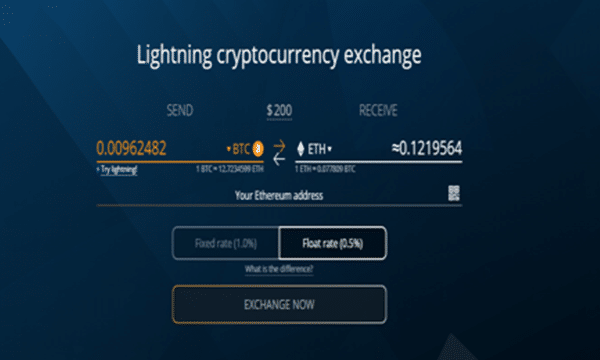
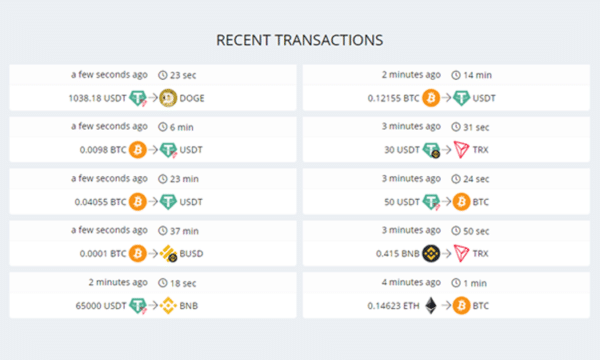
FixedFloat platform interface displayed on the websiteRecent transactions held on FixedFloat
The website also displays the most recent transactions that occurred on the platform. Additionally, this website area shows how much time each transaction took.
Affiliate Program
Users initially have the opportunity to sign up for FixedFloat’s affiliate program and receive 40% of the profit from each exchange their customers make. Follow the easy procedures listed below to profit from the affiliate program.
Sign up for the program to receive an affiliate link.
Put the link in the resources area so people can access it and transact.
Users can receive 40% of the profit generated by each client exchange.
Fee Structure and Transaction Order
A trading fee is a crucial component of any cryptocurrency exchange. Due to this, most crypto traders decide which exchange they want to utilize for transactions. Crypto investors prefer exchanges with favorable fee structures.
Contextually, at FixedFloat, users can opt from two exchange strategies; fixed-rate or floating-rate transactions.
Fixed rate: This is the 1%+ network fee. The price that users see when starting a transaction will be what they pay if they choose a fixed rate.
Float rate:5% network fee. If users opt for this, the exchange system determines the price it observes when users’ funds arrive.
The network fee is created by the blockchain network and is unrelated to the platform, as stated on FixedFloat’s website. These fees are given to miners and validators as compensation for providing services to the blockchain network, such as searching for blocks, validating transactions, etc.
The crypto exchange has some of the market’s lowest minimum limits ($1).
Users of FixedFloat have three options for tracking their orders during the transaction process:
Via email (if users leave their email address)
On the website of FixedFloat (if users’ browsers accept cookies)
By keeping track of the ledger where users transferred their funds.
Users have two options after the order has expired: renew it at the ongoing market rate or request a refund.
FixedFloat enables users to resume where they left off, notably if they unintentionally closed the page. In this situation, users can:
Go to the order page and enter their wallet address into the empty field.
In case their browser accepts cookie technology, open FixedFloat.com once more.
Visit the provided link to complete their code.
Cryptocurrencies on FixedFloat
FixedFloat supports a whole array of cryptocurrencies. They currently have 54 currencies listed and are actively working to diversify their holdings. Avalanche (AVAX) and Solana (SOL) are two new coins FixedFloat recently added to its repertoire. Additionally, the exchange is continually introducing more trading pairs and supported currencies.
FixedFloat: Advantages and Disadvantages
Advantages
Quick, safe, and dependable
Best rates for cryptocurrency exchange
One of the lowest fees in the crypto market; fixed and float exchange rates
Simple to use interface
Network confirmations without hassle
Significantly more supported trading pairs and tokens
Easier user entry into crypto exchanges as there are no KYC requirements for users
24/7 dedicated customer service
Disadvantages
Does not accept fiat currencies
When compared to other well-known exchanges, FixedFloat does not list as many cryptocurrencies.
Closing Remarks
With myriad crypto exchanges booming up, FixedFloat competes in the market by emphasizing its core features, like quick and reliable transfers, the lack of a KYC requirement for trading, a decent number of coins, and simple network confirmations.
Cardano’s stablecoin Djed will be launched on the network’s mainnet in January 2023.
COTI, blockchain payments network and issuer of Cardano’s algorithmic stablecoin Djed has announced that the stablecoin will be finally launched on the mainnet in January of 2023 after months of anticipation.
COTI highlighted the development through its official Twitter handle, as announced by CEO of the payments network Shahaf Bar-Geffen during the Cardano Summit of 2022 on Monday. This announcement follows the disclosure of a delay in the mainnet launch due to the previous Vasil Hard Fork deferment.
“As announced by @shahafbg on the main stage at the CardanoSummit2022, we are excited to share that, Djed, Cardano’s over-collateralized stablecoin will go live on Mainnet in January 2023,” COTI noted in a tweet, as it shared a Medium link to the official announcement.
As announced by @shahafbg on the main stage at the #CardanoSummit2022, we are excited to share that, $Djed, Cardano’s over-collateralized stablecoin will go live on Mainnet in January 2023!
According to the announcement, following the success of the full audit of the over-collateralized algorithmic stablecoin, they have fixed January 2023 as the launch date. Additionally, the Cardano Foundation and COTI announced the launch of Djed Pay – a payment platform and cryptocurrency payment gateway that would allow merchants to accept Djed as payment.
This disclosure comes barely two months after COTI updated the community on the development efforts regarding Djed, which included moves to update the off-chain code to efficiently handle the Cardano node version 1.35.x on the private test environment.
Bar-Geffen highlighted the significance of launching Djed, as he noted the hard work put into making sure the stablecoin was a success, with collaborative efforts from COTI and Input Output Global (IOG) contributing to its development.
“Recent market events have proven again that we need a safe haven from volatility, and Djed will serve as this safe haven in the Cardano network. Not only do we need a stablecoin, but we need one that is decentralized, and has on chain proof of reserves,” Bar-Geffen remarked.
The announcement reveals that, upon launch, the stablecoin will be integrated with some select partners and decentralized exchanges (DEXs) out of the 40 partnerships formed so far. The DEXs with which Djed will be integrated will provide incentives in the form of rewards to clients who contribute to the stablecoin’s liquidity by utilizing it.
Djed’s Partnerships and Development Timeline
Before its launch, several partnerships were formed about Djed to drive adoption, with The Crypto Basic highlighting a handful. In July, COTI disclosed five new Djed partnerships following previous ones reported.
In August, a partnership with a market maker Cardano DEX WingRiders was formed. Additionally, a partnership with the on-chain RPG game Cardano Warriors will allow players to use Djed as a payment means instead of ADA. Empowa and Axo have also indicated an interest in integrating the stablecoin.
Development goals for Djed
Including the mainnet launch, COTI revealed some development goals for Djed in 2023, which are:
Djed 1.1.1: it calls the version the “minimal Djed,” which would feature Vasil Hard Fork compatibility. The version will also be regarded as a beta version with limited liquidity. Liquidity will be increased in subsequent versions.
Djed 1.2: This version is also dubbed “minimal Djed.” It will stand out from the previous version through its utilization of Vasil features which would introduce a reference script for increased scalability.
Djed 1.3: This version is the extended Djed version. According to COTI, dynamic fees and prices will be presented with this version. Furthermore, this version will bring features such as staking support which will help contribute to liquidity.
Additionally, the COTI team revealed that the stablecoin would receive all the necessary updates and improvements. All the teams involved will work tirelessly to ensure that customers and partners get the best from it.
IOTA is one of only three firms to make it to the final phase of the EU’s cross-border service blockchain initiative.
IOTA has made it to the final phase of the European Union Blockchain Pre-commercial Procurement (PCP), per a tweet from IOTA minutes ago.
Breaking news ? the @EU_Commission selected #IOTA for the last phase – Phase 2B – of the EU blockchain PCP that is developing and testing different innovative solutions that could bring further improvements to the @EU_EBSI ??. ?https://t.co/YmAGIUavqo#EBSI
It is one of only three contractors to make it this far in the program that aims to improve the European Blockchain Service Infrastructure, which will provide compliant cross-border blockchain solutions within the bloc.
Other contractors selected include ChromaWay and Billon. Notably, the program has been running for over a year, starting with seven contractors.
IOTA Foundation co-founder Dominik Schiener also confirmed the development.
“Yes, it is true,” Schiener tweeted. “IOTA has been selected as one of 3 finalists for the EU Blockchain PCP to build new solutions for the European Blockchain Services Infrastructure.”
Schiener firmly asserted that they are on the path to driving real-world crypto adoption.
Unsurprisingly, the community lauded the efforts of the co-founder and the team working on the program. Many asserted that it is a huge milestone for the network.
Per the report from the European Commission, the final phase is already underway. Notably, it is scheduled to run for a year. Consequently, enthusiasts will have to wait till Q4 2023 to find out who the European Commission picks.
The final phase, or phase 2B, will see the final development and field testing.
IOTA was one of the seven contractors to get into the program from over 30 applicants, as reported by The Crypto Basic in September 2021.
It bears mentioning that IOTA is a smart contract platform that enables transactions between devices connected to the internet. IOTA employs distributed ledger technology as opposed to the blockchain. Its consensus algorithm, called Tangle, allows it to be more scalable and cheap than blockchain.
The EU Blockchain in October named IOTA as one of Germany’s ten notable blockchain companies.
In response to the news, the price of IOTA has surged 3.69% in the last hour, trading at the $0.22 price point.