Home Blog Page 2181

Native NFT Functionality Enabled As XLS-20 Goes Live On XRP Ledger

0

Native NFT functionality is now live on the XRP Ledger.


In a tweet today, Ripple CTO David Schwartz announced that the XLS-20 amendment is now live on the mainnet thanks to the efforts of the XRPL community and Ripple developers.

Notably, RippleX, an account dedicated to the Ripple Development team, quoting Schwartz’s tweets, confirmed the news. RippleX, subtly hinting that the development came on Halloween, said, “Treat yourselves to NFTs on the XRP Ledger, starting today.”

Unsurprisingly, the community has greeted the announcement with excitement from all quarters. Users noted that it had already been a good day for the community. Before this, news broke that Coinbase requested to file an amicus brief in favor of Ripple in its drawn-out legal battle with the US Securities and Exchange Commission. 

Why NFTs On The XRPL Are Unique

In a blog post shared and authored by Schwartz on behalf of the RippleX team, the CTO highlights some things that make NFT functionality on the XRPL unique.

For one, developers took a “no-smart-contracts approach,” making NFTs on the XRPL less vulnerable to attacks, less likely to cause network congestion, and more effectively cheaper. Notably, this approach tackles issues experienced with NFTs on leading Layer 1 blockchains like Ethereum.

Additionally, with XLS-20, a cut from secondary sales can be directed to the original minter, and people can co-own NFTs.

Furthermore, through the XRPL’s built-in decentralized exchange (DEX), XLS-20 offers automatic royalties to NFT creators. Per the post, creators get a share of the revenue via transfer fees.

It is worth noting that Ripple’s director of engineering, Nik Bougalis, who recently revealed his desire to resign after a decade with the company, first proposed the XLS-20 amendment in 2021. As reported by The Crypto Basic, the proposal looked set to go live in September but faced a setback after developers were made aware of a critical bug.

While it required only a quick fix, Combat Kanga highlighted that implementation would take a month at the least, as validators had to take their time to test the code before voting again.

The latest development now positions the XRPL as a strong Ethereum competitor and is likely to catalyze increased XRP adoption.
Doge Surges As Elon Musk New Tweet Confirms Dogecoin Twitter Acceptance Is Close

0

Elon Musk makes the dogecoin pump again.


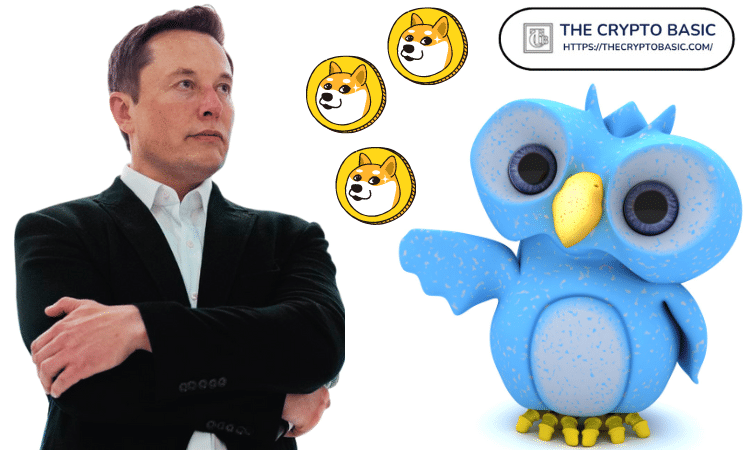
Dogecoin pumped hard after Elon Musk’s recent tweets where Doge is wearing a Twitter shirt. Due to the ever-lasting Elon effect on dogecoin, Dogecoin raced from 12 cents to 15 cents in minutes, up 16% in no time.

Recall that Elon has already shown interest in monetizing and compensating content creators on Twitter.

Should Twitter start compensating content creators, there is a tendency that the social media platform will add cryptos to its list of supported payment methods. If Dogecoin is added as a method to compensate content creators, it would surely be a big boost for the world’s top meme coin.  Recall that Twitter added a Bitcoin tipping feature in September last year and Ethereum tippling in Feb 2022.

Musk is now Twitter CEO, thus making it easier for him to support DOGE across various Twitter features. Being Twitter boss Elon can also enable doge payments for Twitter Blue.

As we have seen that Elon musk’s Telsa, Space X, Boring Company, and Burnt Hair all accept dogecoin, so it is only a matter of time before Doge will be integrated with Twitter.

Binance Changes Terra Classic (LUNC) Burns Schedule From Weekly To Monthly

0

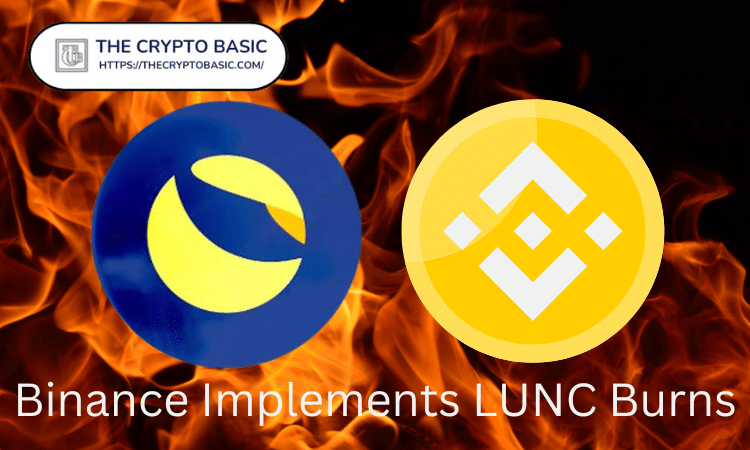
Binance LUNC burns will now take place monthly.  

Binance, the world’s largest crypto exchange by trading volume, has contributed immensely to the revival of Terra Classic (LUNC). The exchange has been burning fees obtained from Terra Classic spot and margin trading pairs for over a month. 

As reported today, Binance completed the incineration of LUNC trading fees for the fifth week. During the exercise, Binance burnt a total of 1.26 billion LUNC, worth $306,406. In just five weeks, the exchange has burnt roughly 13.7 billion LUNC, representing over 50% of the entire Terra Classic tokens burnt. 

Binance to Burn LUNC Monthly

It is worth mentioning that the recent burn made by Binance marks the beginning of a new practice by the exchange. Henceforth, Binance will no longer burn LUNC tokens on a weekly basis. The exchange will now conduct all LUNC burns monthly. 

“The LUNC burn mechanism will take place on a monthly basis after the fifth batch of trading fees on LUNC spot and margin trading pairs has been burned, instead of a weekly basis,” Binance said in an announcement. 

Based on the development, the sixth batch of Binance’s LUNC burn will take place on December 1, 2022. According to Binance, it will calculate LUNC trading fees for spot and margin trading pairs from October 30, 2022, at 00:00:00 (UTC) to November 29, 2022, at 23:59:59 (UTC). 

Binance Contribution to LUNC Burn

Binance has played an integral role toward the revival of LUNC value. At the time of writing, 26 billion LUNC ($6.3 million) have been burnt in total. 

Out of the total LUNC destroyed via the ongoing burn program, Binance is responsible for burning more than 50% of these coins.  

At the time of writing, LUNC is changing hands around $0.00024268, down 0.5% from its yesterday’s value. According to Coingecko data, LUNC is the 36th largest cryptocurrency with a market cap of $1.67 billion. 

Gemini Launches Its Services in Six European Nations

0

U.S.-based cryptocurrency exchange Gemini has announced its expansion into six European nations.

According to an announcement today, the exchange can now service clients in Portugal, Sweden, Latvia, Denmark, Liechtenstein, and the Czech Republic. 

Going forward, residents and businesses in these European countries will be allowed to perform several crypto-related services on the Gemini trading platform. 

“We are thrilled to announce that individuals and institutions in Denmark, Sweden, Portugal, Czechia, Latvia, and Liechtenstein can now open a Gemini account to deposit, trade, and custody over 100 cryptocurrencies,” Gillian Lynch, Gemini’s Head of Ireland and Europe, said. 

Access to Gemini’s Services

Per the announcement, customers in these countries can access Gemini through the exchange’s website or mobile app, to purchase digital currencies with multiple payment methods, including Pound Stealing (GBP), Euros (EUR), bank transfer, etc. 

Aside from gaining access to basic cryptocurrency features, Gemini said advanced traders could also utilize its ActiveTrader platform, the company’s crypto interface featuring advanced charting and multiple order types.

Gemini added that its institutional-grade platform is now available to fintech and financial institutions in these countries. The Gemini institutional grade offers custody, price discovery, trade execution, and portfolio management services.

Gemini’s Expansion Into Europe

According to Lynch, Gemini’s recent launch in six European nations is part of efforts to continue expanding its operations in the continent.

“Launching in these six countries represents further progress in Gemini’s continued rollout across Europe, which is built on a foundation of positive engagement with regulators and policymakers to obtain relevant authorizations and registrations,” he said. 

Earlier this month, Gemini announced it had registered with the Central Bank of Ireland as a Virtual Asset Service Provider (VASP), to offer crypto-related services in the country. 

Gemini’s Crypto Journey

Gemini is currently among the top trading platforms that allow its clients to buy and sell cryptocurrencies. Some of Gemini’s supported crypto assets include Bitcoin (BTC) and Ethereum (ETH.

The exchange has constantly moved huge amounts of cryptos over the years. In August, an anonymous user transferred 4,000 BTC from an unknown wallet to the exchange. Last month, Gemini rolled out staking features for the world’s second-largest cryptocurrency, Ethereum.

It is worth mentioning that during the peak of crypto winter, Gemini’s operations were also affected, prompting the exchange to lay off 10% of its staff to cope with the market slump. Things seem to have stabilized for Gemini following its launch in six European countries.

Prominent Economist Says Crypto Will Survive in the Payments Ecosystem

0


Notable economist Mohamed El-Erian believes cryptocurrencies will remain relevant in the ecosystem of payments as long as they are properly regulated.

Mohamed Aly El-Erian, a prominent Egyptian-American businessman, and economist, has weighed in on the current state of the cryptocurrency scene amidst the prevalent bear market, expressing his confidence in the resilience of digital assets for an extended period of time.

“Crypto can and should survive as part of the ecosystem for payments, and as an asset class – speculative as it is – it just needs to be better regulated,” El-Erian remarked in an interview on a CNBC Squawk Box episode. 

Despite his confidence in the resilience of cryptocurrencies, El-Erian does not believe the asset class would enjoy massive global adoption – at least not to the extent that most proponents are looking at.

“I do not think that Bitcoin is a global currency. I don’t think you can get massive adoption. When people say we’re going to a hundred, two hundred, three hundred thousand; they assume massive adoption. You’re not gonna get that,” El-Erian mentioned. He also noted that he is not certain if the cryptocurrency markets have found a bottom yet.

Furthermore, the cryptocurrency markets have recently sailed through the persistent economic turmoils better than traditional stocks and equities. When asked to air his opinion on the prevailing trend, El-Erian highlighted the early glorious period of cryptocurrencies and the attention it drew.

He further noted that the recent crash in the latest bear market was a classic feature of “most innovations.” Notwithstanding, El-Erian mentioned that the recent wave of reinforcements is expected and should be appreciated. These have contributed to the relative stability in the markets which he urges all crypto proponents to welcome.

“If you are a crypto fan, you should welcome the relative stability we’ve seen the last two months that has shaken out a lot of the excesses,” he said.

El-Erian remains an avid cryptocurrency proponent despite his conservative views on the asset class. Speaking on the recent underperformance of crypto assets in the bear market, the president of Queens’ College in June noted that the industry is currently in “round one” and would be staging a comeback before long.

In November of 2021, when bitcoin and the rest of the crypto market were witnessing a massive favorable atmosphere, El-Erian revealed that he purchased some bitcoin when the asset plummeted to $3,000 during the 2018 bear market. Nevertheless, he sold his holdings in late 2020 when BTC reclaimed the $19k price point.

Edward Snowden Admires Fast Bitcoin Transactions On Lightning And Satoshi Sustained Anonymity

0


Edward Joseph Snowden remains awestruck by Satoshi Nakamoto’s sustained anonymity 14 years after creating Bitcoin despite the asset’s success.


Russian-American ex-computer intelligence consultant Edward Snowden has highlighted his admiration for Bitcoin’s anonymous founder Satoshi Nakamoto. Snowden’s admiration is majorly fueled by the personality’s decision to remain anonymous despite creating a successful payment system that has revolutionized the financial space.

Snowden took to Twitter to share the Bitcoin white paper introduced by Nakamoto on October 31, 2008. Today would make it exactly 14 years since the white paper was published. “14 years ago today, yet Satoshi remains anonymous. Remarkable,” Snowden mentioned in a separate tweet within the thread. 


He also confirmed he is not Satoshi.

He further admired BTC fast transactions on the lightning network.


Bitcoin and cryptocurrencies have gained the favor of several notable personalities over the years, and Snowden is one of them. The President of the Freedom of the Press Foundation recently revealed his usage of bitcoin. Snowden noted in June that he advocates for bitcoin’s usage in everyday payments rather than as an investment.

Additionally, he sought to defend the crypto industry against 26 technologists who had earlier petitioned against cryptocurrencies. In June, several notable personalities in the tech industry jointly criticized the crypto industry.

Meanwhile, Snowden’s admiration of Nakamoto’s consistent anonymity is not unexpected, as several proponents have praised the anonymous founder of the firstborn crypto.

Several individuals have sprung up within the space, claiming to be Nakamoto, but these claims have been met with utter skepticism, as none has been able to provide undeniable proof. Craig Steven Wright, the Australian computer scientist, also began making such claims as far back as 2016.

Wright’s claims followed two reports from the American magazine Wired and tech website Gizmodo in December 2015 suggesting that Wright invented bitcoin. The reports were dismissed, as rumors implied that Wright was behind them.

Furthermore, Crypto proponent Magnus “Hodlonaut” Granath, in 2019, alleged that Wright was a liar for claiming to be Nakamoto. Wright subsequently sued Hodlonaut in a U.K. court for defamation. Hodlonaut received support from the majority of crypto proponents who have also been skeptical of Wright’s claims.

As The Crypto Basic earlier highlighted, Ethereum’s co-founder Vitalik Buterin revealed in January that he does not believe Wright is Nakamoto. He asserted that American developer Hal Finney could be Bitcoin’s anonymous creator. Finney received the first Bitcoin transaction by Satoshi Nakamoto, per reports.

To this day, Satoshi Nakamoto remains anonymous, and several crypto proponents are content with the bitcoin creator’s decision, as it further contributes to the asset’s decentralization and doesn’t have a known central authority.

Stuart Alderoty Says Ripple Will Settle In Minutes If SEC Confirms XRP Is Not Security

0


Legal experts in the U.S. see the SEC losing its case against Ripple.


As XRP investors continue to anticipate the end of the Ripple vs. SEC lawsuit, legal experts believe the federal agency could lose the case. Both parties have already filed their summary judgment motions and replies.

However, the public is only given access to redacted versions of their filings. Interestingly, legal experts could speculate the lawsuit’s outcome based on the motions available to the public.

Legal Experts’ Predictions

According to a report written by Forbes Senior Contributor Roslyn Layton, there are signs that the SEC may suffer a “bruising defeat” against Ripple.

“The verdict could drastically limit the SEC’s authority to regulate crypto in the United States. If that’s how it ends, it will have been a self-inflicted disaster from the start,” Layton wrote. 

The Forbes journalist quoted a statement by attorney Jeremy Hogan, who said the SEC would only prevail with its recently-filed summary judgment motion if U.S. District Judge Analisa Torres “forgets her first year in law school.” 

Similarly, other top legal experts, including Professor J.W. Verret of George Mason University’s Scalia School of Law and Curt Levey of the Federalist Society, think Ripple is on track to record a major victory against the SEC. 

Alderoty: Ripple Willing to Settle If…

Despite these legal opinions, the SEC is still committed to making a scapegoat of Ripple to ensure it continues its regulation by enforcement drive in the crypto industry. 

Forbes also quoted the statement of Stuart Alderoty, Ripple’s General Counsel recent interview in which he said Ripple is willing to settle if the SEC concludes that XRP is not a security.

“If the SEC makes clear that Ripple sales and distributions of XRP and XRP trading in the secondary market does not constitute a security, if they’re willing to acknowledge that, the case settles and settles very, very quickly…, we have no choice to continue to defend the case.”


Attorney Deaton Reacts

Reacting to the article, founder of Crypto Law attorney John Deaton confirmed that he will be filing an amicus brief on behalf of over 75,000 XRP holders later today.

The founder of Crypto Law said Forbes’ Layton would have more information in a few hours to enable her to write another article that could pile further pressure on the Securities and Exchange Commission. 

“I can assure you it doesn’t get better for @GaryGensler later today when XRPHolders speak out,” Deaton said. 

Deaton’s Involvement in the Lawsuit

It is worth mentioning that attorney Deaton currently represents over 75,000 XRP holders in the Ripple vs. SEC lawsuit. Since attorney Deaton was conferred with an amici status in the case, he has made significant steps toward getting the opinions of XRP holders, especially to determine what prompted their decision to purchase XRP.

The SEC claims that investors purchased XRP for investment purposes. The agency said investors were lured into purchasing XRP hoping that Ripple would use its managerial prowess to help them make profits.

However, recent amicus briefs filed by Ripple partners show that not everyone bought the cryptocurrency for investment purposes. Furthermore, some investors purchased XRP without having any prior information about Ripple.

“[…] more than 3,000 provided affidavits to Ripple’s defense team stating that they had never heard of the company they were allegedly investing in before the SEC filed the lawsuit,” Layton said.

CZ Says He Wants To Make Sure Crypto Has A Seat On The Table Of Free Speech

0


CZ Reveals the Reason Behind Binance’s $500M Investment in Elon’s Twitter Takeover.


Binance’s CZ says he wants to see crypto fully incorporated into Twitter, as he discloses the reason behind the exchange’s $500M investment in the social platform.

Changpeng Zhao “CZ”, co-founder and CEO of Binance, recently weighed in on billionaire Elon Musk’s takeover of Twitter, disclosing the factors contributing to Binance’s half-a-billion dollar investment in the buyout.

According to CZ, Binance is looking to incorporate crypto into the aves-themed social platform, as Elon Musk achieves his dream of transforming it into a free-speech channel. “We want to make sure that crypto has a seat at the table when it comes to free speech,” CZ said in a Squawk Box interview Monday.

CZ acknowledged the significance of Twitter within the cryptocurrency space, highlighting its position as a global free-speech platform. He further noted his dependency on Twitter, as he utilizes the platform to connect with the rest of the crypto community. “Twitter is a tool that I use personally very heavily,” CZ, who has over 7M Twitter followers, said.

Besides this, CZ mentioned more tactical reasons behind his firm’s contribution. “We want to help bring Twitter into Web3 when they are ready,” he mentioned. Binance will work hand-in-hand with Twitter as Elon Musk looks to introduce the platform to Web3.

This could result in a partnership leveraging Binance’s cryptocurrency and Web3 offerings. “We want to help solve those immediate problems (…) charging for membership, etc., that can be done easily globally using cryptocurrencies as a means of payment,” CZ added.

Barely three days ago, amidst reports of Musk’s takeover, a Reuters article revealed Binance’s plans to assist Twitter with blockchain solutions which would help address growing concerns of an increasing rate of bot accounts, among other things.

Additionally, CZ noted that he believes Musk’s ambition to transform Twitter into a super-app is possible. It could mirror the Chinese platform WeChat, which involves “payments, social media, messaging, ordering food,” and suchlike.

Conclusively, when asked if he is concerned as an investor about the pressure Musk’s extended diversity could have on the billionaire, CZ mentioned that he is confident Musk would be able to handle the pressure.

Musk’s Twitter buyout deal ended last Thursday after months of delays due to lawsuits and indecisions. The crypto community has been particularly excited about the deal, seeing as Musk remains one of the most crypto-friendly billionaires, with his persistent advocacy for Dogecoin.

Musk confirmed plans to compensate content creators on the aves-themed platform amongst other finance-inclined integrations, as The Crypto Basic previously reported. Being a top Dogecoin advocate, Musk could opt to add Dogecoin to Twitter’s financial offerings, several proponents have asserted. This would help in the social outlook of the meme coin.

Recall that Elon Musk’s Boring Company recently introduced a perfume that Musk personally promoted on Twitter. The perfume “Burnt Hair” costs $100, and payments can be made in Dogecoin.

Hong Kong Set to Legalize Retail Crypto Trades

0

Hong Kong has made a proposal to authorize cryptocurrency trades for retail investors.


A year after proposing to limit cryptocurrency trades to institutional investors, Hong Kong is set to permit retail trades in the digital asset class. The government of Hong Kong’s proposal would legitimize retail trades in cryptocurrencies and crypto-focused exchange-traded funds (ETFs).

The recent review of the past proposal is an attempt to establish a functional financial hub in the special administrative region of China. In addition to authorizing crypto retail investments, Hong Kong is looking to pilot its NFT issuance initiative and CBDC project, a Reuters article noted.

Hong Kong’s recent counter-proposal has been partly influenced by criticisms the government has faced due to the limitation of digital asset investments. 

Besides the sharp criticisms, Hong Kong’s policies on cryptocurrency investments have created unfavorable conditions for crypto entities, prompting a mass exodus to more crypto-friendly jurisdictions, including Singapore and the UAE.

The city seeks to remedy this worrisome trend in the latest wave of policy reviews. Hong Kong will also look into proper policy implementation for stablecoins concerning stabilization, redemption mechanism, and governance. This will ensure proper consumer protection, considering the recent wave of debacles in the crypto scene.

Hong Kong’s attempt at establishing a more tolerant crypto framework comes amidst Singapore’s policy reformation efforts looking to place stricter measures on retail crypto investors. The Monetary Authority of Singapore recently released two consultation papers prohibiting retail investors from purchasing crypto with credit cards or borrowing funds.

“We want to make our policy stance clear to the global market, to demonstrate our determination to explore fintech with the global virtual asset community,” Hong Kong’s Financial Secretary, Paul Chan Mo-Po, said. Chan also mentioned that a consultation process would be implemented to permit a degree of crypto investment access for retail investors.

Hong Kong now aims to welcome investors who would seek shelter elsewhere after driving away local investors with its previous policies as the city wants to be apart from mainland China.

“This is a positive move as it sends out a strong message that Hong Kong is taking a different approach in regulating its capital market,” said Adrian Wang, CEO of Metalpha.

Recall that the Hong Kong government introduced a proposal to require a license of operation for cryptocurrency exchanges in May of last year. This proposal also declared that exchanges would only be allowed to provide services to institutional investors.

As The Crypto Basic previously reported, in February, the Hong Kong Monetary Authority (HKMA) and the Hong Kong Securities and Futures Commission (SFC) restricted exchanges from offering complex crypto products to non-professional investors.

Hong Kong is currently reviewing past unfavorable policies. This review will contribute to its goal of establishing a crypto hub. A Forexsuggest survey earlier this year indicated that Hong Kong remains the most crypto-ready jurisdiction in the world.

Terra Classic Core Developer Reveals The Key To Reduce LUNC Supply Efficiently

0


Zaradar believes that a faster LUNC burn will result from a combination of factors.


In a clip from a Terra Classic community Ask Me Anything session (AMA) with Tobias Andersen, AKA Zaradar, on October 23, shared today by the Terra Rebels, the developer discusses the key to more efficient Terra Luna Classic (LUNC) burns.

Zaradar does not believe it is a higher burn tax rate.

According to Zaradar, a Terra Classic core developer with the Terra Rebels, the key is a combination of factors that include bringing back economic activity to the chain, re-enabling swaps, generating taxes, and allowing people to pay smaller burn fees.

“It’s getting the economic engines running, again, getting the swap system running, getting people to generate taxes and pay smaller burn fees … because that will inherently end up burning things a lot faster,” said the developer.

While the developer asserts it would be slow for the first few years, he believes that if the chain can attract real-world use cases, the network could burn the excess LUNC supply almost at the rate the Terra ecosystem crashed in May (a matter of days).

“And I think, you know, it will probably be slow for the first few years,” said Zaradar. “But if we succeed … to reach some sort of tipping point in terms of real-world transactions on the network, eventually, that will start speeding up at a pace that might eventually equate to the crash itself, at least for a certain period of time.”

It is worth noting that the Terra Rebels hope to re-enable swaps on the network and eventually repeg the defunct TerraClassicUSD (USTC) stablecoin. As per statements from Zaradar during the AMA, Alex Forshaw and another Terra Rebels member, Max, are working to combine both USTC repeg proposals.

As reported by The Crypto Basic a week ago,  USTC will be the network’s reserve currency based on this plan. Notably, USTC’s algorithmic controls burn LUNC with greater adoption of USTC.

In addition, the Rebels are also taking steps to bring back utility to the chain. For example, the code to re-enable Inter Blockchain Communication (IBC) is ready. Per the report, aside from unlocking locked liquidity, with IBC channels reopened, other projects within the Cosmos ecosystem could adopt LUNC as a payment method to attract its active community.

Furthermore, the chain is also working to achieve technological parity with Terra 2.0. Consequently, it will be compatible with the Terra 2.0 decentralized applications (DApps), making the Terra Classic network appealing to these projects. 

The Terra Rebels launched its first Terra Classic DApp on Saturday, a lottery game that allocates 26% of its pool to the burn wallet.

The LUNC supply remains at over 6.8 trillion, with over 24 billion burnt in total and the tax burning 7.7 billion from that total.