Home Blog Page 2206

Cardano Founder Says The “Grand Conspiracy” Is SEC Only Went After Ripple And No One Else

0


Cardano Founder Says His “Grand Conspiracy” Comment About Ripple Was Taken Out Of Context.


Hoskinson further clears the air of the misunderstanding surrounding his recent interview.

Charles Hoskinson, the founder of Cardano, has yet to get over the unfortunate incident between him and the XRP community over alleged corruption at the SEC that targeted Ripple.

In a 15-minute long YouTube video, Hoskinson discussed the number of criticisms he has received from the Ripple community over one of the statements he made in an interview with Thinking Crypto.

Recall that Hoskinson was heavily slammed by members of the XRP community for saying it was a “grand conspiracy” that XRP supporters would believe the SEC is engaged in a financial conspiracy with Ethereum officials, to attack Ripple. 

Hoskinson Stands By His “Grand Conspiracy” Comment

The Cardano boss maintained that the belief held by Ripple supporters is a grand conspiracy because there is no evidence that the SEC has chosen to go after only XRP and no other crypto project. 

“This was a grand conspiracy because it is. There is no evidence that the entire securities exchange commission has decided to only go after XRP and no one else,” Hoskinson was quoted as saying.

Hoskinson backed his statement by saying there are hundreds of cases the SEC has filed against various cryptocurrency projects. He added that Gary Gensler, the chair of the agency, also considers most cryptocurrencies to be securities. Based on these points, Hoskinson does not think the SEC collaborated with Ethereum officials to witch-hunt Ripple.


Cardano Boss Shocked At XRP Community’s Reaction

Hoskinson said he was surprised by the criticism he received from Ripple supporters. Per Hoskinson, he was shocked that the Ripple community would come after him for a statement taken out of context despite the level of support he had rendered to the cryptocurrency project.

“Apparently, a subset of the [Ripple] community has decided to get so far down the rabbit hole […] so much so that a person who has spent years being somewhat positive to the XRP community and has found ways to collaborate is now the enemy,” he said. 

Hoskinson said that some XRP supporters also called on financial regulators to investigate his role at Ethereum. 

“You are the victims of regulatory capture because there is a legislative hole. It’s not fair, it does not feel good and it is a terrible situation for everybody involved. This is what happens when the government over-regulates,” the Cardano exec said. 

Hoskinson noted that XRP should not be a security if it is truly decentralized, has utility, etc., adding that the community does not need a bizarre belief that the SEC is involved in a conspiracy against Ripple. 

Need for Unity in the Crypto Space

For Hoskinson, there is a need for crypto communities to unite, instead of fighting one another. 

“[…] We have a small window of time to do things the right way, and if we don’t, regulations will come and end our industry. The only thing that is going to prevent that is that we work together, we must set that stupidity aside, or by default, we lose,” he said.
BNY Mellon Now Offering Bitcoin And Ethereum Custody Services

0

America’s oldest bank will commence its custody service for cryptos this week.


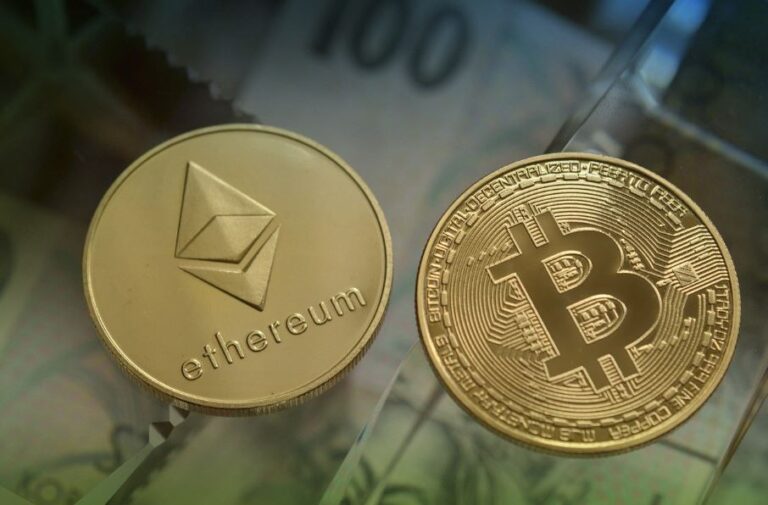
BNY Mellon, America’s oldest bank, has announced that it will commence offering custody services for cryptocurrencies alongside traditional financial instruments.

The Wall Street Journal (WSJ) reported today that BNY Mellon would store the required keys to access and transfer digital currencies. Furthermore, the bank will also provide the same bookkeeping services on its crypto assets. The development comes following BNY’s announcement that it has received approval from New York’s financial regulator to enable the traditional financial institution to provide custody services for its clients’ Bitcoin and Ethereum.

Robin Vince, BNY Mellon’s president and chief executive, said: “We are excited to help drive the financial industry forward.”

Growing Acceptance of Cryptos Among Traditional Financial Institutions

BNY Mellon’s move to offer cryptocurrency custody service is a major win for the emerging industry. For years, several financial institutions have distanced themselves from crypto assets due to the enormous risks attached to the asset class and the absence of clearer regulations for the industry. 

However, some traditional financial institutions have ignored these concerns and have adopted the tech following calls from their clients, who have continuously shown interest in digital currencies.

Fund managers have relied on BNY Mellon to provide several financial services, including tracking the value of different traditional assets. With the addition of cryptocurrencies, these money managers can conveniently manage all their assets under one platform without relying on a different cryptocurrency specialist. 

“BNY Mellon said it is the first of the eight systemically important U.S. banks to store digital currencies and allow customers to use one custody platform for both its traditional and crypto holdings,” the WSJ report noted.

BNY Mellon’s Crypto Service Offerings

It is noteworthy that BNY Mellon first indicated its intentions to offer crypto services on behalf of investment companies in February 2021. Since the announcement, the oldest American bank has been working to roll out the service, and here it is today.

Per the announcement, BNY Mellon will use software developed by Fireblocks to store the crypto assets. In contrast, another software developed by Chainalysis will be utilized to track the movement of funds to and from BNY Mellon’s custody platform. 

The service will officially begin this week with a few investment fund companies. However, BNY Mellon plans to expand the offering to onboard more clients in the future. 

Google To Accept Bitcoin And Crypto Payments for Its Cloud Services

0


Google will start accepting crypto payments for its cloud services in a new Coinbase partnership.


Cryptocurrency payments for goods and services are gradually becoming widespread as several business giants have begun considering the practice. The cryptocurrency scene has ridden on the back of massive adoption to secure its position in mainstream finance, with institutions such as BlackRock and JPMorgan showing an interest.

Most recently, global technology firm Google indicated an interest in delving more into cryptocurrencies through a fresh partnership with America’s largest crypto exchange, Coinbase. The partnership announced Tuesday at the “Google Cloud Next 2022 conference” in California will mutually benefit both corporations.

Through the partnership, Google customers will be able to pay for the company’s cloud-based services with cryptocurrencies such as Bitcoin (BTC) and Ethereum (ETH). This will be facilitated by Coinbase Commerce and will be limited to a few assets. Coinbase Commerce currently supports ten cryptocurrencies as of press time.

The cryptocurrency industry is growing, and corporations that delve into it create a diversified system for their clients, especially regarding payments. The move from Google will further push the tech giant above top competitors in the cloud-based business scene, as most firms offering similar services are yet to appeal to the cryptocurrency community in such a manner.

According to the announcement, Google will put this into effect for selected customers in early 2023. It will, however, be made available for more clients over time. According to recent data, Google’s cloud venture already contributes 9% of parent company Alphabet’s revenue. This collaboration with Coinbase is sure to drive in more customers.

Additionally, the partnership will allow access to the crypto datasets of Google’s data warehouse BigQuery for Web3 developers. Coinbase will once again power this initiative with its Coinbase Cloud Nodes.

Furthermore, Google also plans to leverage the services of Coinbase Prime, including custody and reporting for digital asset services tailored for institutions.

As a result of the partnership, Coinbase has also decided to stage an exodus of its data-related applications from Amazon Web Services cloud to Google. Coinbase has stuck with AWS for years, and the shift will dramatically change.

Ripple Brings Its On-Demand Liquidity (ODL) Solution to France and Sweden

0

Ripple Brings On-Demand Liquidity to France and Sweden in new Partnerships.


Ripple is introducing France and Sweden to its ODL services in recent partnerships with two payment institutions.

Ripple has established its first ODL partnerships in Sweden and France to facilitate seamless cross-border transactions.

Ripple’s penetration of the French market is possible with a partnership with Lemonway, a Paris-based payments solution focusing on marketplaces, e-commerce, and crowdfunding platforms.

Ripple has partnered with Swedish money transfer service Xbaht AB to bring ODL to the Swedish financial scene. Ripple disclosed both partnerships in a recent announcement Tuesday through its official Twitter handle and an official release.


These partnerships are a testament to Ripple’s Europe expansion moves and will bring the beauty of ODL settlements to the financial scenes of Sweden and France.

“By using Ripple’s ODL to underpin Lemonway’s treasury operations, we are looking forward to bringing significant benefits to our business which we can, in turn pass onto our clients,” said the COO of Lemonway, Jeremy Ricordeau, as he speaks on the partnership.

In addition, the partnership with Xbaht will facilitate ODL retail settlements as promoted by Singapore’s international payment hub Tranglo. Xbaht’s original mode of operation allows the payment platform to enable settlements between Sweden and Thailand.

Since its inception, Ripple has emerged as the go-to solution for businesses looking to facilitate payments. Its utilization of blockchain technology for these settlements provides a quick and efficient transfer system. 

Ripple’s ODL has attracted a lot of attention from mainstream businesses across several countries, sealing Ripple’s position as a global leader in the scene. Data suggests that RippleNet now has over $15B in volume run rate. RippleNet is the Ripple decentralized payment network utilized by financial institutions across the globe.

RippleNet’s massive growth in such a short period is attributed to its outstanding features, such as an almost-nonexistent failure rate, and its ability to facilitate transactions within seconds, beating other settlement networks by a mile. RippleNet’s fees are about 90% less than traditional settlements charge.

The recent penetration of the Swedish and French markets has brought the Ripple ODL’s payout markets to 25, including but not limited to Thailand, Poland, and Singapore. Notable firms such as FOMO Pay, iRemit, SBI Remit, FINCI, and suchlike are among the payment solutions already using the ODL. The growth of ODL led to a nine times expansive rate YoY as of Q2 2022, data suggests. Notwithstanding, Ripple doesn’t show any signs of a slowdown.

Cardano (ADA) Is The Top Asset On Grayscale’s Smart Contract Fund, But There Are Downsides

0

Cardano remains the most weighted asset on Grayscale’s smart contract platform fund, but a user points out some downsides.


It bears mentioning that after persistent demand from the Cardano community, on July 2 last year, Grayscale finally added Cardano to its holdings, making ADA the third largest holding on the fund.

A year later, Grayscale launched a smart contract fund with ADA as the largest holding. Notably, the token still maintains that position, with its weight, increased by about 4% since the launch but down a little over 1% since the start of September, making up 28.25% of the fund. It has nearly 6% more weight on the fund than its closest competitor Solana.

While all of these are positive for the network as it represents a huge institutional interest in the asset that would likely bring about massive capital inflows in the future under better macroeconomic conditions, a user has raised some concerns over how this will affect governance.

Concerns Over Increased Grayscale Adoption 

As highlighted by the user, known only as ThisCorrosion, the fact that Grayscale stores all ADA purchased in Coinbase cold storage means that Coinbase controls the staking keys and is likely to have too much influence over ADA governance. Additionally, these institutions are not earning enough returns on their staked asset as they would if they staked the assets with stake pool operators (SPOs).

According to ThisCorrosion, institutions need to recognize the unique advantages digital assets provide over commodities that allow you to earn only when the value increases.

CIP-50: A Possible Fix

Despite these concerns, it is worth noting that the Cardano network may have a fix coming in the Voltaire phase of its roadmap. Notably, the Voltaire era focused on governance will allow the network to function without Input Output Global management and is set to kick off in 2023.

As Martin of Latin Stake Pools highlighted in the comments, a fix for the problem should come with Cardano Improvement Proposal number 50 (CIP-50), which is scheduled for the Voltaire era. Notably, Dr. Michael Liesenfelt, a research assistant professor at the University of Tennessee and the proposal’s author, elaborated that it will benefit these institutions while requiring them to commit to the Cardano network.

CIP-50 is a proposal by Liesenfelt to improve Cardano’s decentralization such that the number of nodes that bad actors must comprise to attack the network (Nakamoto coefficient) is greater than 50. An article from Cexplorer.io currently puts this metric, also known as Minimum Attack Vector (MAV), at 24. While this may seem like a small number, it bears mentioning that Ethereum’s Nakamoto coefficient is 3, while that of Bitcoin is 4. Consequently, it is far more decentralized than both leading crypto networks.

Terra Classic (LUNC) Burn Rate Spike 176,084% In A Day As Total Burns Surpass 18 Billion

0

Ongoing LUNC burns gain momentum.


Binance’s involvement in the ongoing LUNC burn has continuously increased the number of Terra Luna Classic tokens destroyed. According to data shared by LUNC Burn, an unofficial Twitter account that tracks the ongoing incineration of the cryptocurrency, a total of 18.12 billion Luna Classic tokens have been burnt from the asset’s total supply.

Luna Burn Tracker also shared the development today, showing burn increase of 176,084% from the previous day.

Binance Accelerates LUNC Burns

The development comes after the world’s largest cryptocurrency exchange by 24 hours trading volume, Binance, sent nearly 3 billion LUNC tokens to the official burn wallet yesterday.

As reported by The Crypto Basic, Binance sent 2,992,563,505 LUNC worth around $922 million to the wallet. Binance’s recent incineration of nearly 3 billion LUNC tokens spiked the Luna Classic daily burns by 176,084%.


Aside from supporting the 1.2% tax burn for all LUNC on-chain transactions, Binance announced its unique way of supporting the Luna Classic community. The exchange implemented a mechanism to burn all fees obtained from LUNC spot and margin trading pairs in a bid to make victims of Terra collapse whole again. 

Last week, the effort saw Binance send over 5 billion LUNC to the address. The exchange continued its commitment to the community by burning nearly 3 billion LUNC this week. 

Currently, Binance has burnt 8.5 billion Luna Classic tokens via the initiative.

Fox’s Eleanor Terrett Says William Hinman Pushed the SEC to Sue Ripple

0

More shocking revelations were revealed about Hinman.


Eleanor Terrett, a Fox Business journalist, recently shared interesting details about SEC’s former director of Corporate Finance, William Hinman’s involvement in the Ripple lawsuit.

The Fox Business journalist, commenting on the lawsuit, said one of her sources revealed that Hinman was instrumental in the SEC’s push for a lawsuit.

According to Terret, when Ripple was initially alleged to have violated U.S. securities laws, Jay Clayton, the former SEC chair, had wanted a settlement between the blockchain company and the agency. However, Hinman would not have any of it, as he pushed the SEC to file a lawsuit against Ripple for allegedly violating U.S. securities laws via its 2013 Initial Coin Offering (ICO).

Terret made this known in an interview with famous cryptocurrency YouTuber BitBoy Crypto.

“I heard that when the Ripple case was brought in December 2020, Jay Clayton had been in favor of settling [with Ripple] pretty much right off the bat, but Bill Hinman had been driving home saying no we have to continue with this case. I heard Clayton was in favor of settling, Hinman was not,” Terret was quoted as saying.   

Ripple vs. SEC Lawsuit

It is worth noting that the SEC had been considering charging Ripple for allegedly offering unregistered securities in the U.S months before the lawsuit was announced. 

However, the Securities and Exchange Commission officially charged Ripple and two company executives on December 22, 2020.

Hinman’s Previous Controversies

It may not surprise many that Hinman was the SEC staff who pushed for a lawsuit against Ripple instead of a settlement. Hinman has been accused of having an interest in Ethereum during his time at the Securities and Exchange Commission. Before joining the SEC, Hinman was a partner of Simpson Thacher & Bartlett, a member of the Enterprise Ethereum Alliance (EEA). Hinman violated SEC laws by still meeting with Simpson Thacher staff while at the SEC. Many alleged that these meetings resulted in the 2018 controversial speech, where Hinman declared Ethereum a non-security.

On December 4, 2020, the SEC announced Hinman’s departure from the agency. He was later paid over $9 million in profit and retirement earnings by Simpson Thacher months after he left the SEC.

196 Million MATIC Sent From Binance to Polygon Staking Contract Address

0


An enormous amount of MATIC tokens, totaling 196 million ($158M), has just been moved from Binance to the Polygon Staking contract address.


Whale movements within the cryptocurrency scene are significant determinants of market conditions. The sheer magnitude of these transactions can either be a source of panic or elation, depending on the direction.

Consequently, some platforms have been created to keep track of these transactions to keep the community in the know. One such remains, Whale Alert, which notified the community of an enormous transaction involving 196 million MATIC in the early hours of Tuesday. The Whale Alert notification had very limited information on the nature of the transaction, as both addresses involved in the transactions were tagged unknown. This pumped a wave of uncertainty amongst proponents, with someone forecasting an imminent dump. 

As a reply, Peck Shield, a top blockchain security company, demystified the transaction to an extent, revealing the nature of the sender and recipient addresses.

“196M $MATIC ($158M) transferred from Binance to Polygon (Matic): PoS Staking Contract,” PeckShieldAlert said in a tweet.

A close look at the transaction hash 0x933de9098f1611885489fb67a06e45eeca3df776c5d048b138da6c37981739e2 on Etherscan affirms the veracity of the transaction. The transaction, which involved 196M MATIC ($158.5M), was carried out on October 11, 5:21:35 AM (UTC).

Additionally, per data from Etherscan, it appears the tokens were transferred from 0xc0999ef916d3517aa46ed4151fdcf60fd2b0ec5c which PeckShieldAlert tagged Binance Intermediary to 0x5e3ef299fddf15eaa0432e6e66473ace8c13d908 labelled Polygon (MATIC): PoS Staking Contract.

PeckShieldAlert’s efforts at demystifying the transaction shared more insight into its nature, and whether or not the community should be concerned. The fact that the tokens were transferred to the Polygon Staking Contract address should influence a sigh of relief amongst many.

Staked MATIC tokens totaling 196M is indicative of investor confidence in the asset, and this could, in turn, serve as crucial support for MATIC’s price action in the near term.

Meanwhile, the price of MATIC currently follows the direction of the broader crypto market, dipping by 2.71% in the past 24 hours. MATIC is changing hands at $0.80 with a 7-day dip of 2.19%.

The majority of the crypto market has seen some slight declines, with ADA and SHIB shedding the most value amongst the top 20 assets, at 7-day dips of 8.5% and 8.8%, respectively.

Despite the dip, MATIC has managed to stay above the 70-cent level. Its price action from here should be supported by the recent wave of positive outlook the Polygon ecosystem is experiencing. Most recently, The Crypto Basic reported Polygon’s launch of its zkEVM Public Testnet, allowing the community to assess the solution before launching it on the mainnet.

SEC vs. Ripple: SEC Has Two Days left to File Motion for Reconsideration Over Hinman Documents

0

SEC has only two days to ask Judge Torres to reconsider her ruling over Hinman’s documents.


The Securities and Exchange Commission has been relatively quiet after Judge Analisa Torres backed her colleague and ordered the agency to surrender the drafts of William Hinman’s speech to Ripple.

Several possible routes the SEC could use to stall the surrendering of the documents to Ripple were highlighted moments after the ruling.

The maneuvers the SEC could use to delay handing over the documents to Ripple include filing a motion asking Judge Torres to reconsider her decision, requesting that she certifies an appeal of her decision, or approaching the Court of Appeal for a Writ of Mandamus. However, since the ruling was made, the Securities and Exchange Commission is yet to make a move on the issue by Oct 13th.

Filan: SEC Has Only 2 Days to Request Reconsideration

In a recent tweet by Mr. James K. Filan, a former federal prosecutor, the SEC has only two days if the agency asks Judge Torres to reconsider her decision over the issue.

“If the SEC decides to file a motion for reconsideration of Judge Torres’s ruling on the SEC’s objections regarding the Hinman documents, that would be due October 13th,” he said. 

It is unclear what decision the SEC will make now, but many people believe the agency will do everything to ensure it does not surrender the documents to Ripple. According to attorney John Deaton, the founder of Crypto Law, the SEC would rather enter into a settlement with Ripple than surrender the Hinman notes.

Aside from Ripple-related issues, many believe the Hinman documents could reveal the SEC’s internal opinion about cryptocurrency regulations, which could have more severe consequences.

SEC and Ripple Saga Over Hinman’s Documents

Hinman, the former director of SEC’s Corporation Finance, has been an integral part of the lawsuit between the SEC and Ripple. The parties had been at loggerheads over his 2018 speech, where he declared Ethereum a non-security.

Ripple believes there is no way the SEC’s internal staff did not talk about the company while drafting Hinman’s 2018 speech. Thus, requesting that the agency turn over the drafts of the speech.

However, the SEC has resisted every attempt to have them hand over the documents to Ripple. With Judge Torres ordering the agency to hand over Hinman’s documents to Ripple, many are eager to know the next step the Securities and Exchange Commission will take.

Analysts Say XRP Is Headed For A Massive Correction

0

Analysts believe that the XRP price rally has reached exhaustion.


In a tweet on Monday, crypto analyst Ali Martinez warned that the XRP price is set to plummet to the $0.42 or $0.39 price point.

“The TD Sequential presents a sell signal on XRP   3-day chart, anticipating a correction to $0.42 or even $0.39,” the analyst wrote.

Meanwhile, another popular crypto trader, Profit Blue, shared a similar analysis today. The analyst revealed that the token was about to break an important 4-hour trend line and could be headed for the neckline of a newly formed double-top pattern. It bears mentioning that this neckline is around the $0.42 price range.

It is worth noting that the XRP token enjoyed a massive rally over the weekend, decoupling from the rest of the crypto market and boasting 70% gains in 30 days. Notably, the asset was trading above the $0.52 price point.

The token has been awash with positive sentiment in recent weeks. It bears mentioning that on Thursday, before the price began to surge, the network recorded the highest 24-hour growth since July 2, with nearly 3k new addresses created.

XRP faithful continue to hope for a Ripple victory in the legal battle with the US Securities and Exchange Commission that could see trading of the token back on US crypto exchanges. Additionally, holders are excited as Flare Network is gearing up to distribute rewards to XRP holders.

At press time, XRP is trading at the $0.4919 price point, 6.86% lower in the last 24 hours but still up 7.79% in the last seven days.