Home Blog Page 2221

COTI Reveals Next Development Plans for Cardano Stablecoin Djed

0

Upcoming development plans for Djed revealed by COTI.


COTI (referred to as The Currency of the Internet) has continued to work in partnership with the Cardano team to ensure a successful launch of Djed, the official stablecoin of Cardano.

Since Input Output Global (IOG) announced the algorithmic stablecoin last year, members of the Cardano community have eagerly anticipated Djed’s official launch. Interestingly, COTI has always shared updates about the progress made so far. In a blog post today, COTI gave an insight into the upcoming development plans for Djed.

Upcoming Dev Plans for Djed

According to the announcement, COTI and IOG are currently updating the off-chain code and specific libraries to properly handle Cardano node version 1.35.x on the private test environment.

COTI noted that the update became imperative following several changes that occurred on the Plutus backend applications (PAB), which was ushered in by the deployment of the Vasil hard fork.

“After implementing all the updates, a test run will be carried out to ascertain that everything works as expected. Once the test run is completed, it’ll be deployed to the public testnet,” COTI said.

At the moment, Djed’s development teams are waiting for the final audits of the algorithmic stablecoin to see if Djed has any critical issues. If no issues are discovered in the audit, COTI said the team would proceed to deploy the stablecoin on the Cardano mainnet.

“As you already know, we have high standards when it comes to security and quality, and we are working to ensure we maintain these standards. We will continue to keep you updated on new developments,” COTI said in a statement.

Growing Interest in Djed

Although Djed is yet to roll out on the Cardano mainnet, the stablecoin has continued to attract top projects on the Cardano ecosystem. 

In recent weeks, COTI has announced new Djed partnerships with companies willing to adopt Djed. The recent partners of Djed include decentralized exchange WingRiders, JaraNetwork, Cogito Protocol, and multi-player game Cardano Warriors.
Pundit Raises Fresh Censorship Concerns With Ethereum PoS

0


A pseudonymous market watcher recently raised concerns about censorship with Ethereum’s PoS, especially with the use of MEV-boost.


Ethereum’s transition to a PoS network, although fully revolutionary, has not come without concerns within the community. The magnificent event brought concerns about centralization and a looming battle between Ethereum and the SEC. In a recent highlight of events, a crypto proponent has raised another issue.

Pseudonymous market watcher Crypto McKenna brought the alleged issue to the public’s attention in the early hours of Thursday. Taking to Twitter, McKenna highlighted the use of MEV-boost by validators in Ethereum’s PoS network, noting that the practice subjects block validation to censorship.

“I hate to say it. But post PoS transition Ethereum has a validator censorship problem that is literally fuelled by monetary incentives.

Running mev-boost to return higher yield which requires OFAC compliance is insane. Needs to change ASAP,” the tweet says. 


McKenna alleges that using MEV-boost by validators on the Ethereum network will lead to censorship, as the practice allegedly requires OFAC compliance for block validation. McKenna argues that Ethereum validators have chosen to underplay the effects due to the higher yields that MEV-boost promises.

“Blockchain economics is designed to incentivise honest network behaviour. Mev-boost is literally economic incentives to censor transactions at the base layer,” McKenna added in another tweet, stating that the community needs to discuss and address the situation.

MEV-boost involves the outsourcing of block production by validators. The mechanism enables block validators to auction out block space to a marketplace filled with block builders. Usage of MEV-boost is not particularly mandatory but can bring in higher revenue for validators, raising staking yields by up to 60%.

Consequently, despite the discretionary nature of MEV-boost, several validators who are aware of it have taken to utilizing it. McKenna’s grievance stems from the fact that validators opted for the feature due to incentives.

Nonetheless, McKenna’s assertions have been dispelled by several proponents. McKenna’s remarks come from a faulty foundation, as OFAC compliance is not necessarily a prerequisite for block validation when using MEV-boost. Since OFAC-compliant relays exist, there are tons of relays that do not require OFAC compliance.

“mev-boost is neutral software that allows you to choose which relays you want to accept blocks from. It does not require any form of compliance but allows validators to make that choice. There are several non-ofac compliant relays,” a Flashbot developer noted in reply to McKenna.

Like the use of MEV-boost, the choice of relayers for validators is entirely open to the validators themselves. Several users highlighted this fact to McKenna, noting that validators who are concerned about censorship can always pick relayers that are not OFAC-compliant.

FTX CEO Describes Do Kwon’s Ability To Shitpost While Wanted By Interpol As ‘Wild’

0

Terra founder Do Kwon maintains an active Twitter presence despite mounting legal woes.


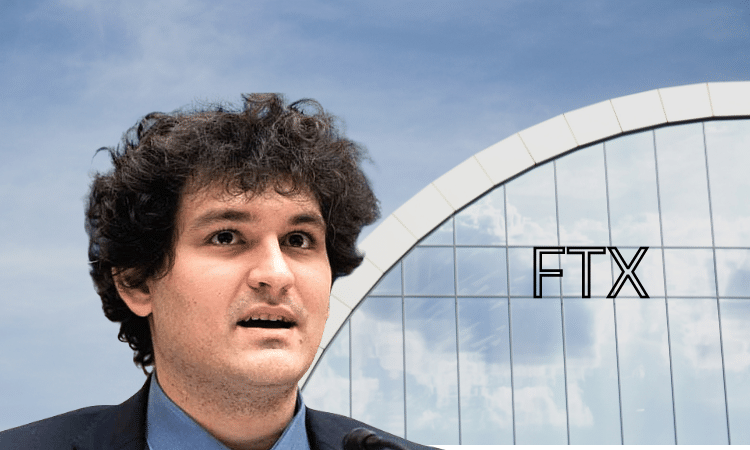
FTX chief Sam Bankman-Fried, SBF, in a tweet on Wednesday, has described Do Kwon’s online activity as “wild,” as the Terra founder continues to maintain an online presence despite an Interpol red notice issued against him.


The Terra founder had responded to a teasing tweet by famous crypto investor Eric Wall asking if Kwon wanted to “grab some food,” as Wall disclosed that he was in Singapore. Notably, Kwon trolled Wall by responding, “U buying?”

It bears mentioning that Do Kwon was last known to reside in Singapore. However, his current whereabouts are unknown. Singapore police confirmed nearly two weeks ago that Do was no longer in the country after South Korean authorities issued an arrest warrant for the Terra founder. The subsequent disappearance of Do prompted South Korean authorities to obtain a red notice from Interpol.

Do currently faces fraud charges and breaching the Capital Markets Act, amongst others in South Korea. It comes after months of investigation into the Terra ecosystem collapse that wiped out investor funds totaling over $40 billion. Notably, despite speculation to the contrary, the Terra founder maintains that he did not defraud investors but failed while acting in line with his advertised convictions of bringing decentralized money to decentralized finance (DeFi).

South Korean authorities believe that Do is on the run.

It bears mentioning that in the days following the Terra ecosystem collapse in May, SBF expressed the belief that Kwon is not guilty of fraud in response to comparisons between Terra and Theranos. While he believed that Terra was deeply flawed, he asserted that the Terra founder had not given a false representation of how the network and its failed stablecoin worked.

TFL Says They Won’t Disclose Terra (LUNA) Founder Location Because Of ‘Physical Security Risks’

0


Terraform labs will not reveal Do Kwon’s location.


In a statement to WSJ, TFL confirms that they have no intention of informing Do Kwon’s location.

Terra form labs (TFL) backed Kwon’s claim that he is not on the run. According to the company’s message, Kwon’s location has been kept private due to the enormous physical threats he received following the Terra ecosystem collapse.

“Do Kwon’s location has been a private matter for months due to ongoing physical security risks to him and his family,” the statement reads.

With no progress toward tracking Kwon’s location, Korean prosecutors obtained a red notice for him from the international policing organization Interpol to expand the search for Kwon into other regions outside the country.

As reported by The Crypto Basic, TFL Defends Do Kwon, Saying Terra Founder Did Not Violate Korean Laws As Luna Classic (LUNC) Wasn’t A Security.

Doge Founder Slams Dogecoin Tip Jar Proposal, Clarifies Tip Jar Was Not Created For Core Development

0


Billy Markus believes that resolving the tip jar debate does not help the community but only settles a dispute between four people.


In a Twitter thread on Wednesday, host of the Real Shibes podcast Jimmie made a 3 part proposal to resolve the current debates over how the Dogecoin tip jar should be allocated. According to Jimmie, as things stand, the funds believed to be for core developer payments will run dry in a year.

Jimmie proposes that 5 million DOGE sold in Q4 2021 to settle Dogecoin foundation bills be restored to the tip jar. Secondly, the idea that the tip jar is only for core development be revived. Then finally, he says two separate tip jars should be created for core development and the foundation.


Billy Markus Responds:

However, in response, Dogecoin co-creator Billy Markus has slammed the idea as “unsustainable,” he says it does not help the community but only settles a dispute between four people. Additionally, Markus asserts that community tips can not sustain paid development.

“this proposal is simply for optics, and is unsustainable (does not help dogecoin succeed, just helps fix an argument between 4 people),” tweeted Markus. “if paid development is going to succeed, not enough will come from community tips. not even close.”

The programmer clarified that the tip jar was never created to fund core development. According to Markus, these were just tips given to 4 core developers to use as they see fit. Markus believes that allocating the tip jar should be up to these people.


Markus asserts that the real problem is how to sustain development on the Dogecoin network. According to the co-creator, if the community plans to incentivize development, tips will be insufficient, and it is only by chance that these tips are worth something today.

The developer notes that the funding has to come from somewhere, highlighting the community’s opposition to financing from individuals or organizations with interests. Additionally, Markus cautions that financial incentives tend to corrupt open source projects.

It bears mentioning that the allocation of funds in the tip jar has been a significant talking point over the years. In August, core Dogecoin developer Patrick Lodder revealed plans to allocate 10% of the tip jar to reward core contributors.

About 2 weeks ago, sharing a similar sentiment that the core team should resolve the allocation, Markus said the “dissenter” should be given his share.

TFL Defends Do Kwon, Says Terra Founder Did Not Violate Korean Laws As Luna Classic (LUNC) Wasn’t A Security

0


TFL backs Kwon amid his ongoing legal troubles with Korean prosecutors.


TerraForm Labs (TFL), the company behind the Terra cryptocurrency project, has responded to South Korean prosecutors’ arrest warrant issued for Do Kwon. According to a statement sent to leading news outlet the Wall Street Journal, a spokesperson of TFL said the company’s founder Kwon, did not violate Korean capital-markets laws via Luna offering. 

TFL noted that Luna is not legally a security, adding that there is a tendency that the matter is being politicized to witch hunt Kwon and the Terra project. 

“We believe that this case has become highly politicized and that the actions of the Korean prosecutors demonstrate unfairness and a failure to uphold basic rights guaranteed under Korean law,” a spokesperson for the TFL said. 

TFL’s Further Assertions

The company added that the capital-markets laws would only apply to Kwon and TFL if it proved that Luna is security. TFL is confident that Luna is not a security, as the company believes the authorities are only trying to classify the cryptocurrency as one due to public pressure following the collapse of Terra.

“We believe, as do most in the industry, that Luna Classic is not, and has never been, a security, despite any changes in interpretation that Korean financial officials may have recently adopted,” TFL added.

Kwon’s Location Still Unknown

Recall that Kwon’s legal woes piled up two weeks ago after Korean prosecutors issued an arrest warrant for the TFL founder for allegedly violating the country’s capital-markets laws.

Since the development was made public, Kwon’s whereabouts are still unknown, with many suggesting that the Terra boss has gone into hiding. However, Kwon dismissed the rumors on Twitter, saying he is not on the run and has no plans to do so.

Do Kwon worldwide search began when Interpol issued a Red Notice for Terra’s founder.

While TFL Says They Won’t Disclose Terra (LUNA) Founder Location Because Of ‘Physical Security Risks.’

Bitcoin Miners Suffer As BTC Long Term Holders Profitability Falls To DEC 2018 Bear Market

0

Bitcoin Miner Balance Decreasing Ever Since The Price Fell below $24.5k, while long-term holders are selling BTC at an average loss of 42%.


Miner balance in the Bitcoin industry has experienced large outflows as the price of Bitcoin struggles below $20k.

Bitcoin’s price fall has caused problems for investors and miners. Individuals and companies have sunk millions of dollars into setting up BTC mining rigs in various regions.

Basically, Bitcoin network nodes operated by miners are responsible for keeping the network safe and secure. In this sense, a bad moment for miners could very well become a credible threat to the entire ecosystem. Recent data from Glassnode suggests that Bitcoin miners have been going through a rough patch for a while since the crypto market began a downward spiral at the start of 2022.


Miners Are Struggling To Break Even

Due to the current market hardships, Bitcoin mining is becoming less profitable than it used to be. For one, miners have to cover their operating costs before they can turn a profit. With the dwindling prices and increasing operating costs caused by inflation, breaking even is becoming difficult. Granted, this situation didn’t start yesterday. According to Glassnode, things started going south for miners when BTC’s price fell below $24.5k. Miners are now spending an average of 8,000 worth of BTC to cover operating costs.

Long-Term Holders In Jeopardy: Long-term profitability of Bitcoin holders is now in doubt amid the prolonged bear market.

Glassnode opines that this decline in profitability in 2022 mirrors that seen way back in December 2018. As a result, investors who have been HODLing BTC for a long are now facing a huge selling pressure that is forcing them to sell at a 42% average loss. They’re selling at the current low price after buying at an average price of $32k. Currently, Bitcoin is trading at around $19.3k and facing strong resistance at $20k. Interestingly, this is happening at a time when there are less than 2 million BTC to be mined.  Out of the total supply of 21 million, over 19 million Bitcoins have already been mined.


Can Bitcoin Recover

It’s worth noting that the BTC market is known to go through a market cycle switching between bears and bulls over a 4-year period that marks the market dynamics between any two halving events. As such, many people are still optimistic that the market will recover sometime in 2024.

Hong Kong-Based CoinEx Exchange Lists Shiba Inu’s BONE

0

Hong Kong-based Global Cryptocurrency Exchange, CoinEx, Confirms Bone ShibaSwap (BONE) Listing.


CoinEx, a global and professional digital coin exchange, recently announced its plan to add support for the Governance token of the Shiba Inu Ecosystem token, Bone ShibaSwap, via its official blog post.

As per the announcement, a low-fee cryptocurrency exchange will enable BONE’s deposit and withdrawal feature on September 29th, 2022 (UTC); trading for the BONE/USDT pair will go live today at 10:00 (UTC).

Hong Kong-based one-stop blockchain asset platform offers low-cost coin-to-coin trading in a wide range of cryptocurrencies. Founded in December 2017, CoinEx is one of the world-leading cryptocurrency exchanges with over 3 million registered users from 200 countries and regions. CoinEx supports the most popular digital assets, such as Bitcoin, Ethereum, Litecoin, Bitcoin Cash, and several other coins (Bytom, Bitcoin Candy).

According to CoinMarketCap, CoinEx is the 71st biggest cryptocurrency exchange based on the daily trading volume. CoinMarketCap data shows CoinEx has a trading volume of  $22,685,122 ($22.68M) in the past 24 hours.

Attorney Deaton Says Hinman’s Calendar Entries Show Ethereum Had Exclusive Access to SEC Leadership While Ripple Didn’t

0

Hinman’s SEC meeting schedule continues to raise controversies.


The recently-published meeting schedule of the former SEC director of corporate finance William Hinman has continued to stir up controversies in the crypto sector. Following the release of Hinman’s itinerary at the SEC, some crypto enthusiasts have noted that the former SEC exec paid more attention to Ethereum (ETH) than other crypto assets. 

As reported by TheCryptoBasic, between 2017 and 2018, Hinman had four scheduled meetings with Ethereum officials. While it is still unknown to determine what was discussed in these meetings, the events buttressed the sentiment that Hinman unfairly targeted a leading crypto project. 

Attorney Deaton’s Opinion on Hinman’s Calendar

Attorney John Deaton, the founder of Crypto Law, recently told Fox Business that the itinerary of the former SEC director of Corporation Finance indicates that Ethereum had exclusive access to the Securities and Exchange Commission. 

“The calendar entries demonstrate that Ethereum founders and investors had exclusive access to the leadership at the SEC,” Deaton said. 

However, he cannot say the same for other crypto projects, as the number of times Hinman scheduled a meeting with other digital currencies was fewer than that of Ethereum. 

“It was a very exclusive club, and Ripple and XRP were not in it,” Deaton added. 

Hinman’s Relationship With Ethereum

Notably, throughout the lawsuit between Ripple and the SEC, Hinman’s controversial 2018 speech, where he declared Ethereum a non-security, has been a major topic of discussion. It is alleged that Hinman made a comment based on his affiliations with the Ethereum project.

Before joining the SEC, Hinman was a partner at Simpson Thacher & Bartlett LLP, a member of the Enterprise Ethereum Alliance (EEA).

EEA was created for the sole purpose of marketing Ethereum as an enterprise solution. While Hinman was still at the helm of affairs at the SEC’s Corporation Finance, he had meetings with staff from Simpson Thacher even though he was told that the meeting violated SEC rules.

Meanwhile, after leaving the SEC, Hinman received over $9 million in profit earnings from Simpson Thacher.

These developments continue to indicate that Hinman may have given preferential treatment to Ethereum over other cryptocurrency projects.

Top French Fashion House Launches First Ever NFT Membership On XRP Ledger

0

Luxury Fashion House Balmain Launches Web 3 Hub And NFT Membership With MINTNFT Powered By The XRPL.


Balmain moves to create a central platform for all NFT projects.

As confirmed by Ripple in a tweet earlier today, luxury fashion house Balmain has launched a Web 3 hub with an NFT membership program. The hub, created in partnership with MINTNFT, an NFT studio and marketplace hosted on the XRP Ledger, would give members access to exclusive events, designs, and experiences. 

“Congrats to French fashion house Balmain for launching an industry-first NFT membership with MINTNFT, powered on the XRPLedger,” tweeted Ripple.


The hub, “The Balmain Thread,” launched yesterday and allows impending members to register for the waitlist. It bears mentioning that the luxury fashion house founded over 70 years ago is an NFT early adopter, first launching a collection in August of 2021 and several others in the following months. Notably, its most recent NFT project, dubbed Balmain X Barbie, released in January this year, held an auction with the help of MINTNFT.

With The Balmain Thread, the French fashion house hopes to connect all its projects with a central theme.

“My goal has always been to ensure that this house’s designs are timeless and tied together by a unifying thread,” said Balmain creative director Olivier Rousteing as reported by Vogue Business.

Admittedly, the fashion industry, in recent months, has been leading crypto adoption in various ways. For example, famous fashion brands like Gucci and Balenciaga have started accepting crypto for payments at select stores while also working to create unique metaverse experiences for customers. For these brands, NFTs and NFT communities generate a way to get direct access to their customers.

The Balmain Web 3 hub launch on the XRP Ledger highlights the versatility of the enterprise blockchain. It bears mentioning that the network’s push to create native NFT support hit a snag earlier this month as a bug that could max out a minter’s reserve came to light. However, the network is back on track as a fix has been released, with node operators encouraged to upgrade so voting can commence.

According to Wikipedia, “Pierre Balmain S.A., trading as Balmain, is a French luxury fashion house that Pierre Balmain founded in 1945. It operates 16 mono-brand stores, including New York City, London, Los Angeles, Las Vegas, Miami, and Milan’s Via Montenapoleone.”