
Home Blog Page 454

Here are 3 Reasons Bitcoin and Crypto Are Down Today Despite Macro Tailwinds 

0

The Bitcoin and crypto market have struggled to build momentum this week, even though several major economic factors should have given it a boost. 

Specifically, the Federal Reserve’s latest 25-bps rate cut, improving trade relations between the U.S. and China, and the plan to end quantitative tightening (QT) in December have all created a favorable backdrop. Yet, crypto continues to slip, with traders wondering why the market remains weak.

Bitcoin and Crypto Down Despite Macro Tailwinds

For context, the total crypto market cap has dropped from $3.9 trillion on Oct. 27 to about $3.66 trillion, erasing roughly $240 billion in four days. 

Amid this collapse, Bitcoin (BTC) has fallen nearly 4% since Oct. 27, struggling to stay above $110,000 and now trading around $109,983. Ethereum (ETH) has lost more ground, dropping over 9% in the same period to about $3,850. 

As investors question why the improving macro conditions are not leading to positive market reactions, analyst Miles Deutscher presented three possible reasons behind the weakness. 

Deutscher Spots 3 Factors Behind Market Weakness 

First, he explained that a Digital Asset Treasury (DAT) unwind has created pressure on both Bitcoin and Ethereum. Notably, this is because some treasuries are trying to protect their net asset values. While major holders like Strategy are unlikely to sell, smaller DATs have added strain to the market. 

Secondly, he pointed out that demand for crypto ETFs has weakened, with several weeks of net outflows cutting into institutional buying power. For context, over the past two days, Bitcoin ETFs have lost $959 million, while Ethereum ETFs have seen outflows worth $265.75 million.

For the third factor, Deutscher highlighted the fallout from October 10. Notably, the market crash on that day caused lasting damage to market sentiment and liquidity. He noted that the event hurt confidence after crypto had already underperformed compared to stocks. 

Notably, market makers are still untangling positions from that episode, and its full effect may not yet be clear. Meanwhile, retail investors have largely stepped back, discouraged by price swings and prolonged stagnation.

Despite the weak performance, Deutscher believes one strong Bitcoin rally could flip the market’s mood. He argued that Bitcoin often moves without a clear trigger, behaving more like a macro asset. As stock markets set new highs, he said a Bitcoin “catch-up rally” could still happen and possibly take prices to new record levels before the cycle ends.

XWIN Group Analysts Provide Additional Reasons

Meanwhile, XWIN Group analysts shared additional data in a recent CryptoQuant report. They noted that even the approval of an altcoin staking ETF briefly lifted spirits but failed to stop the decline in both Bitcoin and U.S. equities. 

They noted that another reason behind the weakness is fading institutional demand. For context has flipped negative again, indicating that U.S. buying activity has weakened.
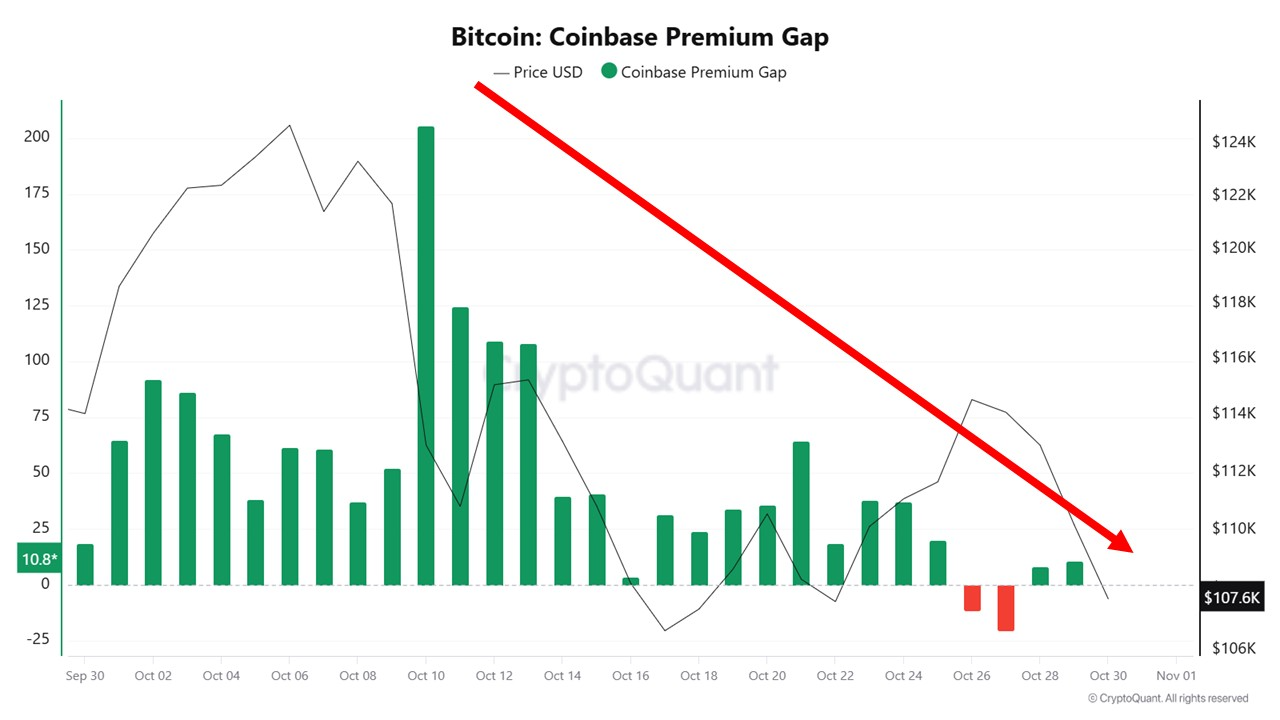
Bitcoin Coinbase Premium Gap CryptoQuant
Bitcoin Coinbase Premium Gap | CryptoQuant

The analysts also highlighted comments from Fed Chair Jerome Powell as a major factor. While he confirmed that QT will end on Dec. 1, he made it clear that another rate cut in December isn’t guaranteed. 

Moreover, geopolitical tensions have added more uncertainty. Although Washington and Beijing described their talks as successful, insiders called the outcome only a temporary truce. Friction over Taiwan remains, and reports of renewed U.S. nuclear testing have unsettled global sentiment. 

The analysts agree that the sell-off makes sense given the current mix of cooling momentum, reduced institutional participation, and unclear monetary direction. However, they see a brighter outlook ahead. Once QT ends in December, they expect liquidity to improve and investor appetite for risk to return by early 2026.

Here is the Next Timeline for XRP ETFs Approval As October Ends

0

As October ends without an SEC decision on the pending XRP ETF applications, a new potential launch timeline for the products is now on the horizon.

For context, the final decision deadlines for the XRP ETF applications submitted by Grayscale, 21Shares, Bitwise, and Canary Capital were scheduled for October 18, 19, 22, and 23, respectively.

Accordingly, XRP community members entered October with high expectations for the launch of several spot XRP ETFs. However, their optimism was soon dampened as the U.S. government commenced a prolonged shutdown, delaying the SEC’s approval process.

Government Shutdown Delays SEC Decision on XRP ETFs 

Due to the shutdown, the SEC significantly reduced its operational capacity. It retained only essential staff responsible for handling inquiries and addressing fraud and market manipulation. 

Notably, the Division of Corporation Finance, which is tasked with approving new investment products such as the XRP ETF, was among those impacted. This resulted in further delays to the XRP ETF launch.

As October comes to a close, a new timeline for the launch of XRP ETFs has emerged. 

Next Timeline for XRP ETF Launch 

According to Eleanor Terrett, host of Crypto in America, Canary Capital recently filed an updated S-1 registration statement with the SEC for its spot XRP ETF.

In the updated filing, Canary removed the “delaying amendment” clause from its XRP ETF application. Notably, this clause typically gives the SEC control over when a product can become effective. 

Following the update, Canary’s XRP ETF is now set to automatically take effect 20 days after its filing, making November 13 the potential launch date. However, the launch is dependent on Nasdaq approving Canary’s accompanying Form 8-A filing, which lists the ETF shares for trading. 

In the meantime, Terrett suggested that the timeline could change if the government reopens and the SEC staff proposes additional comments.

Notably, Canary and Bitwise leveraged the amendment to launch spot ETFs separately tied to Litecoin, Solana, and Hedera earlier this week. 

Meanwhile, Terrett noted that SEC Chair Paul Atkins recently signaled his support for companies using the 20-day auto-effective mechanism to roll out new products or go public. 

As Canary moves to leverage the auto-effective mechanism to launch its XRP ETF, other prospective issuers, including Bitwise, 21Shares, CoinShares, Grayscale, and WisdomTree, may follow suit in a bid to bring their respective spot XRP ETFs to market by November. 

Expert Remains Skeptical 

Notably, Bloomberg ETF analyst Eric Balchunas pointed out that XRP ETF issuers have not engaged in the same level of dialogue with the SEC as Solana ETF issuers did. According to him, that engagement gave Solana ETF issuers the confidence that their products were ready for launch. 

While Balchunas remains skeptical about whether the XRP ETFs are fully prepared to go live, he acknowledged that Canary’s decision to pursue the auto-effective route is worth trying.

Dogecoin Is Following Its First Cycle—Here’s the Target

0

Dogecoin is showing similarity with its first full bull cycle, and a full mirror could send the meme coin surging to unprecedented prices.

October ends today, and Dogecoin is deep in the red. The largest meme coin by market cap has corrected 20% since the start of this month, a stark contrast to its 41% growth in October 2024, 10% gain in October 2023, and 105% surge in October 2022.

8-Year Dogecoin Pattern Reincarnated

Amid the predominant bearishness, analyst Trader Tadrigrade has identified the similarities between the current price development and the one from Dogecoin’s first bull cycle. He drew this conclusion from his analysis of the DOGE 2-month chart.

Specifically, he highlighted that Dogecoin trended within a symmetrical triangle for over a year before a breakout to unprecedented prices. This happened between January 2016 and February 2017, with the token breaking out in March 2017. Following the outburst, it rallied an impressive 6,366% from $0.0003 to a high of $0.0194 in January 2018.

Before the symmetrical triangle formation, DOGE had a period of price depression, which the analyst marked in red in his accompanying chart. Interestingly, a similar consolidation was also noticed during the 2022 and 2023 bear market, strengthening the correlation.

Repeating Pattern on Dogecoin 2M Chart

Dogecoin entered its current triangle in late 2024 and has since developed within the structure. Notably, prices are tightening, and DOGE has filled the symmetrical triangle, sparking optimism for an imminent breakout.

Target Upon Breakout

Tardigrade deems this pattern bullish for Dogecoin, projecting an explosive price move upon breakout. Specifically, the chart shows a possible push to around $3.90, aligning with the first breakout target in 2018. The token trades at $0.18 at the time of writing, and this move would mark a 2,066% rise.

However, DOGE could rally higher. The chart indicates a potential surge toward an ambitious $48 price target. The 26,566% moonshot will increase the market cap of Dogecoin to $7.27 trillion if its circulating supply remains at 151.57 billion tokens, which is somewhat unrealistic for a meme coin.

Nonetheless, this is not the first ambitious price prediction for Dogecoin recently. JezzaBTC shared last month that Dogecoin could rally to $18, citing a recurring pattern in the coin’s chart. He believes that this move would make many holders wealthy, but it remains very unlikely.

Top Stablecoin Issuer Hints at Something Big Coming to Cardano

0

Members of the Cardano community are buzzing with expectation following a cryptic post from the official X account of stablecoin project Moneta (USDM). 

In a recent X post, Moneta (USDM on Cardano) teased an upcoming development, sparking excitement within the community. It referred to its tweet as a pre-announcement of a forthcoming reveal slated for today, October 31, 2025. 

Something Big Coming to Cardano? 

While the team did not reveal any specific details, the brief statement was enough to stir excitement within the Cardano community. So far, the post has garnered around 43,000 views, 230 likes, and 40 retweets. 

Interestingly, Mintern, the self-proclaimed Chief Meme Officer (CMO) of Cardano-based Minswap exchange, further amplified this excitement with a quoted comment, noting that “something big is cooking on Cardano.”  

Additionally, analytics platform TapTools also teased that the upcoming announcement is linked to a significant development on Cardano. These commentaries have amplified expectations that the forthcoming announcement Moneta hopes to make on October 31 could be a significant milestone for the broader Cardano ecosystem. 

Meanwhile, several X users have been speculating about the upcoming announcement, with some suggesting that Moneta may be planning to rebrand its USDM stablecoin.

USDM Dominates Cardano Stablecoin Market 

For context, Moneta is the official issuer of the dollar-pegged USDM stablecoin, which debuted on the Cardano network in March 2024. The USDM team designed the asset to serve as a key utility for payments and DeFi protocols, with the hope of driving the broader adoption of Cardano. 

Each USDM token is supported by U.S. dollar deposits and funds managed by asset manager Fidelity, ensuring transparency and stability. Since its launch, USDM has remained the largest stablecoin on the Cardano network to date. 

Out of Cardano’s total stablecoin market cap of $35.84 million, USDM accounts for $13.21 million, surpassing other stablecoins such as USDA at $10.63 million and IOG-backed Djed at $3.88 million. 

As the Cardano community eagerly awaits Moneta’s upcoming announcement, the details surrounding the reveal remain undisclosed at the time of writing.

XRP Is a Golden Goose, Expert Explains How to Make XRP Feed Your Family Forever

0

An XRP community figure recently suggested that assets like XRP are “golden geese,” explaining how one could make them feed one’s family forever.

Notably, as investors continue to anticipate an XRP rally to new highs, most of them still don’t know what they’ll do once XRP reaches those ambitious price targets besides selling it off for profit.

Most discussions focus on price predictions, but some experts believe planning what happens after the rally matters just as much as waiting for it. Jake Claver, CEO of Digital Ascension Group, recently highlighted what XRP holders should focus on to build lasting wealth rather than short-lived profits.

Claver Insists Investors Should Have a Strategy for When XRP Rallies

In a recent extended commentary, Claver noted that many crypto investors expect big returns but rarely have a strategy for handling those gains. 

He explained that most people will likely keep their XRP on exchanges, sell once the price hits their target, and lose much of their profits to taxes and careless spending. Claver warned that this approach leaves investors wondering where their money went, while a smaller group of disciplined planners keeps growing their wealth.

According to him, crypto investors already belong to a small and unique group since only 7% of the global population holds digital assets. Notably, Triple-A’s latest crypto adoption report corroborates this, confirming that 560 million individuals, representing 6.8% of the world’s population, hold crypto. 

Claver said tokens like XRP, XLM, XDC, AXL, and HBAR still have strong potential because of their real-world use cases, partnerships, and room for growth. He believes they could appreciate sharply in the coming years, but only those who manage their holdings wisely will benefit long-term.

A Better Retirement Approach

The pundit also criticized traditional retirement advice that encourages people to save for decades and live off limited withdrawals later in life. 

He said this system no longer works because the economy has changed, but the advice hasn’t. To him, investors should own assets that grow faster than their expenses, then use them as leverage to create income without selling.

He explained that wealthy individuals already follow this approach with stocks and real estate. Now that institutional crypto lending has matured, investors can apply the same strategy to crypto assets. 

According to Claver, they can borrow against their crypto holdings, use a portion of the loan to cover interest, and live off the rest, without triggering taxable events. He called this the “never sell” approach, which allows assets to keep growing while providing steady income.

Claver illustrated his point with an example. Specifically, if XRP reached $100 and an investor owned 10,000 tokens, this would amount to $1 million. 

Instead of selling, the investor could borrow 30%, about $300,000, against the holdings. Part of that could cover interest payments, while the rest could serve as tax-free liquidity. Claver said this approach protects investors from tax losses while letting their assets continue to appreciate.

“XRP is a Golden Goose, Keep It Alive and Feed Your Family Forever”

However, he warned that many XRP holders make serious mistakes by keeping their assets in their personal names. He explained that personal ownership leaves them vulnerable to lawsuits, audits, or family disputes that could force liquidation. 

He also noted that some investors create LLCs but fail to manage them properly, often mixing personal and business funds. Claver said this oversight causes courts to ignore the LLC’s protection and hold individuals personally liable.

He stressed that the real opportunity with XRP and other appreciating assets is in how investors protect and use them, not just in reaching a certain price. 

The community pundit encouraged holders to start preparing before prices increase by setting up proper structures, like transferring assets into Wyoming LLCs, using institutional-grade custody for large amounts, and building relationships with banks that understand digital wealth.

According to Claver, the next five years will separate those who simply make money from those who stay wealthy. 

He urged XRP investors to treat their holdings like a “golden goose,” noting that they should “keep it alive, borrow against it,” and feed their families forever.

Shiba Inu in 11-Month Bear Market, but Data Shows Explosive Phase Could Happen

0

A prominent market analyst has dissected Shiba Inu trends over the past two years, giving insight into what to expect when its bullish phase starts.

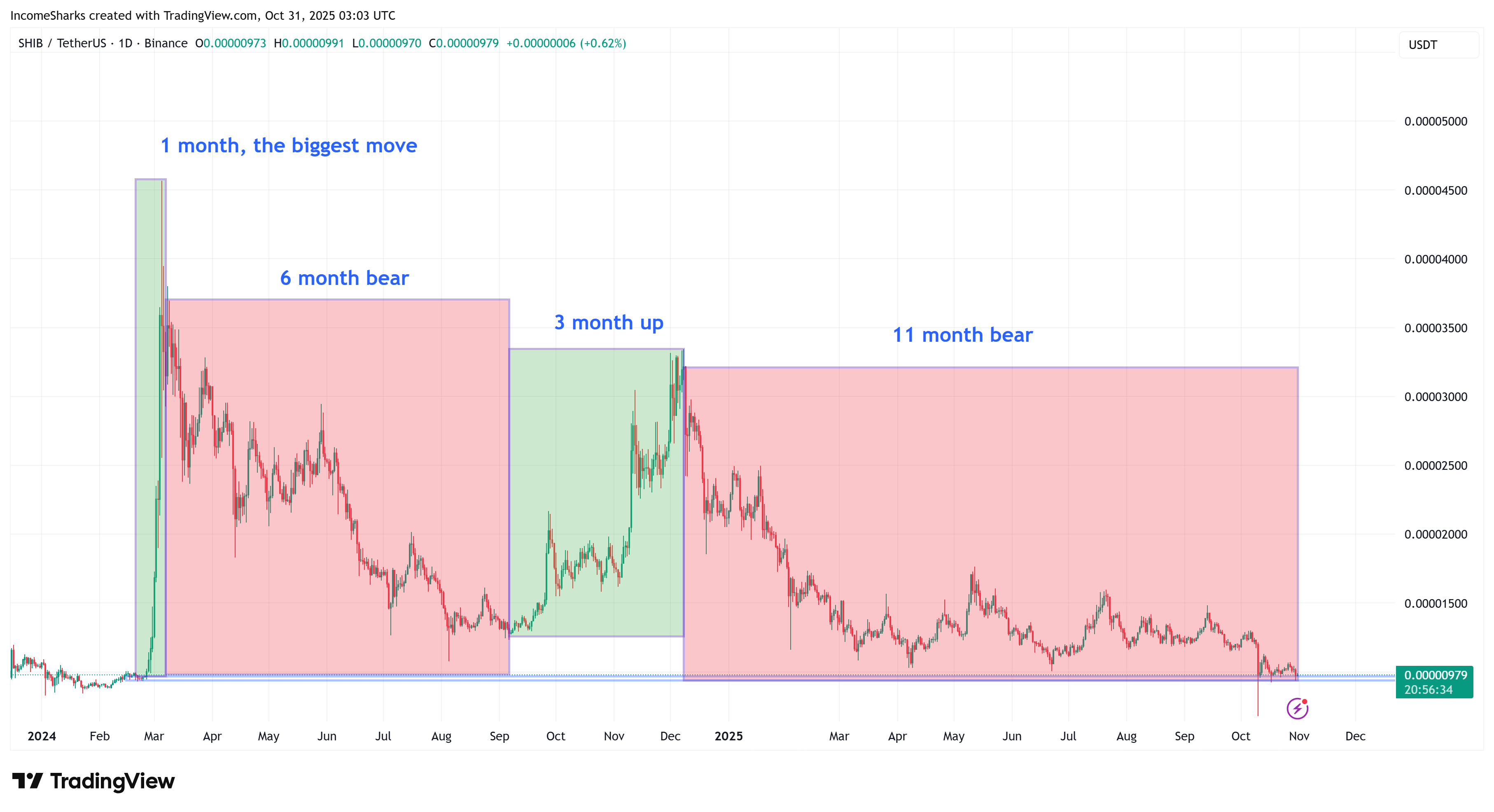
Specifically, Income Sharks, a widely followed analyst, highlighted several market phases for Shiba Inu. This involves a short period of explosive price actions and a more extended period of price consolidation after gains.

Shiba Inu Price Action Over the Past 2 Years

Remarkably, analysts have repeatedly voiced the sentiment that this bull cycle is different. This applies to Shiba Inu, which has been consolidating even during the supposed bull market phase of the crypto industry.

The post-halving year has historically come with massive price upside for Bitcoin and altcoins, but this has not been the case for Shiba Inu. Notably, data show that SHIB has corrected a staggering 53% year-to-date, with holders nursing portfolio downsides.

Amid this price action, IncomeShark highlighted how the price of the second-largest meme coin has developed over the past two years. After consolidating for the first two months of 2024, SHIB experienced rapid growth in March, rallying 144.7% from $0.0000307 to $0.00004567.

Holders felt they were back, but what followed was a price consolidation to the lows of $0.00001078 in August 2024. Notably, this consolidation lasted for 6 months before the next leg up.

11 Months of Price Consolidation

Following the 6-month consolidation, a relief rally kicked in from September 2024. The meme coin posted three green monthly candles between September and November 2024, peaking in December 2024. During this period, SHIB rallied from $0.00001231 to $0.00003343, representing a 171.5% growth.

Since then, Shiba Inu has entered an extended period of price correction, which has been ongoing for 11 months. The analyst highlighted that Shiba Inu has followed this pattern of a few months of price uptrend and an extended period of price decline.

Shiba Inu 2-Year Price Action

But Shiba Inu Could Bounce

Nonetheless, the chance of a rebound is not entirely off the chart for Shiba Inu. Remarkably, the asset has experienced periods of price consolidation like this before, but it has rallied extensively afterwards. Notably, SHIB consolidated for 11 months between March 2023 and January 2024 before experiencing a surge in February and March 2024.

If the token experiences a short period of explosive price action, as previously seen, patient holders could benefit significantly. Notably, analysts are already expecting this move, predicting that this long and boring period of consolidation will soon come to an end.

Analyst MMB Trader shared in his recent analysis that Shiba Inu always leaves it late, predicting a rebound to $0.00007730, representing a 684% rally from the current market price of $0.00000985.

Binance Founder CZ Refutes $30M ASTER Token Sale Rumors as “Fake News”

0

Former Binance CEO Changpeng Zhao (CZ) has denied reports alleging he sold a massive quantity of ASTER tokens. 

The rumors originated from a Riyadh-based crypto advocate known as Farzad, who claimed Zhao had liquidated 35 million ASTER tokens worth approximately $30.42 million.

The post rapidly circulated on X and other crypto forums, igniting speculation among traders. Given Zhao’s reputation and market influence, the allegation drew immediate attention.

CZ Calls the Reports False

Zhao was quick to dismiss the claims, taking to X to describe the reports as “Fake News.” He advised his 10.4 million followers to “unfollow the guys posting fake news.”

His direct response aimed to calm market participants and counter misinformation surrounding his alleged transactions.

Blockchain Analysis Confirms No Sale Took Place

Blockchain investigator EmberCN later validated Zhao’s denial through a detailed on-chain review. The analyst found no evidence of ASTER token sales linked to Zhao’s accounts.

EmberCN explained that the supposed transactions were routine transfers between Binance hot wallets, not personal trades by Zhao. One wallet address, 0x889, had been incorrectly identified as Zhao’s, which led to the misunderstanding.

In a public post on X, EmberCN clarified that “there are no corresponding on-chain transfers” matching the alleged sale and confirmed the movements were internal Binance transactions.

ASTER Faces Market Pressure Despite Clarification

Although the rumor was refuted quickly, the ASTER token continued to face downward pressure. As of press time, ASTER traded at $0.9379, down 8.81% in the past 24 hours, according to CoinMarketCap.

Notably, ASTER, the native token of decentralized exchange Aster, has drawn significant attention since its launch on September 17, 2025. It debuted at a token generation event (TGE) price of $0.02.

Following Zhao’s public endorsement, the token’s value surged over 10,000%, reaching an all-time high of $2.42 on September 24, 2025. However, the token has since declined 61.31% from that peak.

Forbes Says XRP Is Now a Very Different Beast Than It Was Just a Year Ago

0

Forbes has dramatically shifted its stance on XRP and Ripple, describing the company as almost unrecognizable compared to the version it profiled in early 2024.

Back then, XRP and Ripple topped Forbes’ list of “zombie blockchains” projects with billion-dollar valuations, but with supposedly minimal real-world usage.

Today, the outlet calls Ripple’s transformation a “$180 billion reinvention,” driven by acquisitions, regulatory clarity, and a surge of institutional interest in XRP.

Company Once Dismissed Now Revalued

Forbes highlighted that Ripple’s private market valuation has soared to around triple its starting point for the year, reaching the $22–$30 billion range.

Its performance now places it just shy of Circle’s market cap. This marks an extraordinary shift considering that Ripple previously attempted (and failed) to acquire Circle before the stablecoin issuer went public.

Moreover, the report highlighted that XRP itself has surged 366% in the last year, pushing its market cap above $150 billion. Notably, the renewed demand is not fueled by speculation alone.

XRP yearly chart CoinMarketCap

According to Forbes, multiple firms, including Evernorth, are adopting XRP as part of their treasury strategies, something it considers unthinkable at a time when Ripple was still under regulatory siege.

Freed From the SEC, Ripple Goes on an Acquisition Spree

Ripple’s five-year standoff with the SEC ended with a $125 million settlement, removing the cloud that had limited its options for half a decade. Once free, Ripple accelerated its strategy with aggressive, high-value acquisitions:

  • GTreasury – $1 billion
  • Hidden Road (Now Ripple Prime) – $1.25 billion
  • Rail – $200 million
  • Metaco – $250 million
  • Standard Custody – undisclosed

These deals push Ripple into treasury, custody, and prime brokerage, which are areas dominated by companies like Coinbase and Circle.

Redirect in Leadership, Strategy, and Perception

Forbes now frames Ripple not as a struggling payment token issuer but as a consolidating financial services conglomerate. Industry figures say the difference is visible. 

Commentators like Joe Naggar believe Ripple is demonstrating capital discipline, clearer leadership, and coordination across its expanding portfolio.

Other analysts now compare Ripple less to blockchains and more to large crypto financial institutions. They believe Ripple’s long-standing technology could become the backbone of a unified, institutional-level ecosystem if the company can successfully integrate its recent acquisitions.

Can Ripple’s Expansion Feed Value Back Into XRP?

While the XRP Ledger still trails major networks in developer activity and mainstream app usage, Forbes says the bigger test ahead is synergy. 

Ripple needs to prove that its rapid expansion ultimately strengthens the XRP Ledger rather than creating isolated business units with no connection.

Ultimately, critics are now acknowledging that Ripple is today a very different beast—bigger, bolder, and behaving like the multibillion-dollar player it has long been valued as.

Grayscale Research Chief Forecasts $5B Inflows for US Solana Spot ETFs

0

Zach Pandl, head of research at Grayscale Investments, believes Solana exchange-traded funds (ETFs) could soon rival the success of Bitcoin and Ethereum investment products.

He expects that within one to two years, about 5% of all Solana tokens could be held in regulated exchange-traded structures, a share worth over $5 billion at today’s prices.

Pandl made this prediction following the launch of Grayscale Solana ETF (GSOL) and Bitwise Solana ETF (BSOL) this week. Both products mark a new chapter for the fast-growing market of crypto-based investment vehicles.

Strong Debut for New Solana ETFs

Bitwise’s BSOL began trading on Tuesday, drawing $129 million in inflows within its first two days, according to Bloomberg ETF analyst Eric Balchunas.

Grayscale’s GSOL, which launched the next day, recorded $4 million on its first trading day.

Despite being a day behind, analysts described GSOL’s early performance as strong, given the increasingly crowded market. Pandl said Grayscale expects Solana ETFs to become multi-billion-dollar businesses as investor interest broadens.

From Niche to Mainstream: Crypto ETFs Gain Ground

Exchange-traded products (ETPs) allow investors to obtain cryptocurrency exposure through traditional brokerage and retirement accounts. This structure enables participation in the asset class without requiring direct ownership of digital tokens.

According to the Investment Company Institute, U.S.-listed ETFs held over $10 trillion in assets by the end of 2024, accounting for 26% of all managed assets.

Crypto ETFs represent only a small fraction of this total, but their growth has been rapid. Bitcoin ETPs currently manage $149 billion, while Ethereum products hold $26 billion, across roughly 20 funds.

Regulation Remains a Concern

Not all financial institutions share Grayscale’s optimism. Earlier this week, Charles Schwab warned that crypto remains lightly regulated, even as the U.S. Securities and Exchange Commission (SEC) continues to approve new ETPs.

“The SEC’s hands-off stance means higher risk for investors,” the firm said, noting that the crypto sector lacks the oversight applied to equities and bonds.

GSOL Evolution: From Trust to ETF

Grayscale’s Solana product, GSOL, originally launched as a private trust in 2021, holding around $100 million in Solana tokens.

Its conversion to an ETF this week makes the fund more flexible, allowing it to trade closer to the actual value of its holdings. The shift eliminates the large premiums and discounts often seen in closed-end crypto trusts.

Pandl said the conversion opens access to a broader range of investors while improving liquidity and pricing transparency.

Competition and Diversification Ahead

Solana’s debut comes as Hedera and Litecoin ETFs also enter the market, though their inflows remain modest. More than a dozen additional crypto-based funds are expected to seek approval soon.

Pandl expects investor interest to gradually shift toward diversified crypto ETPs, which provide exposure to multiple tokens simultaneously.

“Many investors will prefer simpler, diversified options that reduce the complexity of evaluating each token,” he said.

Staking Adds a New Source of Yield

Unlike Bitcoin ETFs, Solana investment products can offer staking rewards, a feature unique to proof-of-stake networks. By locking Solana tokens to help secure the blockchain, investors can earn an estimated annual yield of 5.7%, according to Solana Compass.

Pandl confirmed that GSOL will distribute 77% of staking rewards to its holders, calling it “a game changer for crypto demand.” He described staking as a new income stream that could help investors diversify portfolio returns.

Distinct Roles for Solana and Ethereum

Pandl said Solana and Ethereum will likely develop distinct roles in the digital asset ecosystem, despite both being smart contract platforms. He pointed to growing adoption of stablecoins and tokenized assets as key drivers of institutional interest.

“They differ in design, and that gives each blockchain its own lane,” Pandl explained. “Investors can benefit from holding both as part of a balanced crypto strategy.”

Cardano Founder Says Cardano Safe From Jim Cramer Endorsement: Details

0

Cardano founder Charles Hoskinson is cautious of the Inverse Cramer effect, particularly after Solana co-founders met with the CNBC Mad Money host.

Solana could be in trouble, a reaction from Hoskinson suggests. Notably, he teased this in an X post following a meeting between Solana’s top stakeholders and Jim Cramer in the Mad Money show on Thursday.

Cardano Founder Says Cardano Free of Cramer’s Endorsement

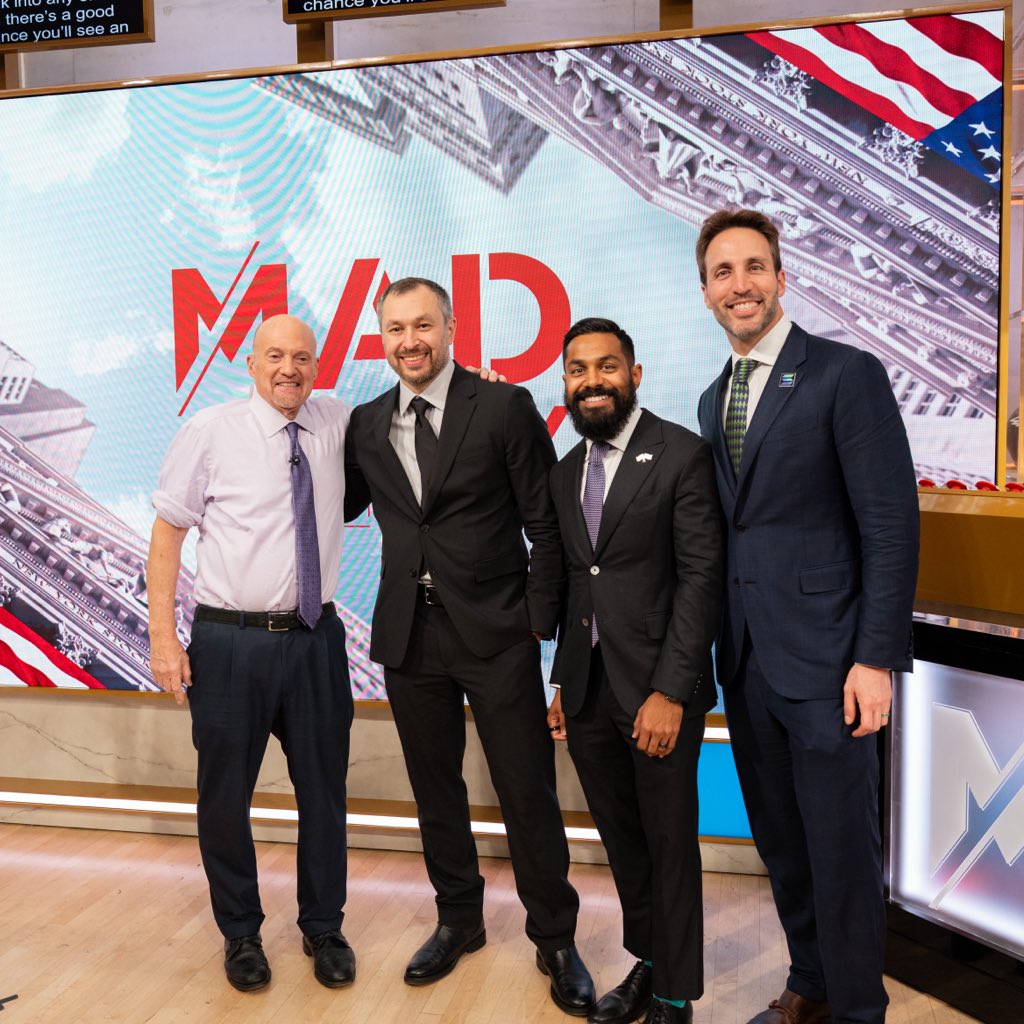
Specifically, Hoskinson stated that Cardano “is marked safe” from Cramer’s endorsements, taking a subtle jab at the prominent market analyst. His reaction came in response to a post from Solana’s official account featuring Cramer, Solana co-founders Anatoly Yakovenko and Raj Gokal, alongside Multicoin Capital’s managing partner Kyle Samani.

The trio showed up at the New York Stock Exchange to celebrate the launch of the Bitwise Solana Staking ETF (BSOL) on the exchange on Thursday. After the event, the post shows that they met up with Cramer, who hosts his “Mad Money” show in the NYSE building every weekday.

Solana co-founders meet with Jim Cramer

Meanwhile, the post has since gone viral, with Cramer’s effect the central point of the humorous discussion across crypto circles. Notably, the “Inverse Cramer” effect ties to the TV host, a concept that suggests his predictions and endorsements usually go the opposite way.

Even the Solana account admin teased this concept with his “work your magic” caption, along with a tearful emoji. Hoskinson jumped into the conversation, claiming that Cardano remains safe as Cramer has not yet endorsed the project.

Community Reactions Trail Hoskinson’s Comment

For the uninitiated, there have been several instances where the Mad Money host has made predictions that have ultimately led to an opposite outcome.

While he accurately predicted a bounce for the crypto market on October 22, he has not nailed most of his other assertions. Recall that Bitcoin lost $130 billion from its market cap after Cramer endorsed the asset in November 2024, calling it “a winner.”

Meanwhile, some reactions followed this view, with users asking Cramer not to mention Cardano. Some others suggested that Solana might correct from here, with a particular comment calling the endorsement “fatal” and joking that “they are never going to recover from this.”

The reactions on the Solana post also have similar sentiments. Solana enthusiasts joked about the meeting, hoping he is bearish on the project. Some noted they were selling their SOL bags, with a reaction stating that “Solana speed about to meet cramer lag.”