Home Blog Page 1718

XRP Seals Path to $0.90 in Recent Pennant Formation 

0

XRP has triggered optimism in its journey to the $0.90 price territory amid the recent formation of a pennant pattern that could indicate an impending uptrend.

For the uninitiated, a pennant is a short-term continuation pattern shaped like a small symmetrical triangle. It forms after a significant price movement, indicating a brief consolidation before the previous trend resumes. 

Notably, the direction of the previous trend typically determines the direction of the asset when it breaks out of the consolidation. XRP’s pennant formation has come up on the daily chart following a sustained uptrend over the past month.

XRP had dropped to $0.4878 on Oct. 18 amid a battle with the bears. However, the bulls took control of the scene on Oct. 19, leading to a 6.54% surge that day. This marked the start of an impressive multi-week run. XRP maintained the momentum until Nov. 6, surging to a high of $0.7324. This rally resulted in the formation of the pole.

However, the run slowed upon hitting resistance at this price level. This led to a subsequent price consolidation and mild occasional swings and lows. This pattern has continued since Nov. 7, leading to the formation of the pennant (or flag).

XRP Pennant Formation 1D Chart 083007
XRP Pennant Formation 1D Chart

It bears mentioning that most pennants form horizontally. Nonetheless, as observed in the daily chart, the recent XRP pennant appears to slant downward mildly.

This is due to the bears exerting more pressure on the asset’s price amid the consolidation phase. However, it does not invalidate the pennant at the current position.

XRP Targets $0.90

Turkish XRP investor and trader Be’lakor called attention to this formation in a post on X. Furthermore, an intriguing disclosure suggested that XRP could be gearing up for a rally to $0.90 once it breaks out of the current consolidation phase.

As earlier highlighted, most pennants result in a breakout to the previous trend. The analyst noted that the $0.90 price target rests on the pivotal Fibonacci level at 0.382. The last time XRP saw this price territory was on July 13 when it soared on the back of Judge Analisa Torres’ ruling.

Nonetheless, Be’lakor believes the bulls need to push for a return to the $0.67 zone within the pennant. XRP is currently changing hands at $0.6101, having relinquished the $0.67 zone to the bears on Nov. 14. A resurgence of selling pressure has impacted the asset’s price more.

Further declines at this point could invalidate the formation of the pennant, resulting in a steeper collapse. To hedge against this, the bulls must break above the $0.6686 resistance at Fib. 0.236.
Over 1,500 Projects Now in the XRPL Ecosystem, with Multiple Use Cases

0

Data shows that the XRP Ledger (XRPL), the blockchain powering the XRP ecosystem, is now home to over 1,500 crypto projects.

According to details provided on the official XRPL website, more than 1,500 applications and exchanges have been established on XRPL since its inception. 

These development efforts span a wide range of applications. They cut across sectors such as non-fungible tokens (NFTs), gaming, security, payments, central bank digital currencies (CBDCs), custody services, and other use cases.

Infrastructure, Tooling, Interoperability-based Projects

XRPL empowers teams to construct and manage elements or systems crucial to the operation of the XRP Ledger. 

These include nodes, developer tools, storage solutions, security measures, and other essential components. Examples of established XRPL-based projects providing infrastructural services include XRP Toolkit, XRPScan, and Towo Labs.

In developer tooling, developers can harness the power of open-source libraries, software development kits (SDKs), and other resources to facilitate project construction and access vital XRPL functionalities.

Successful XRPL projects in this aspect include X-Tokenize, 3zy Labs, Evernode, and Blockforce.

Also, XRPL empowers developers to build interoperable solutions for the crypto industry. Specifically, XRPL interoperability allows developers and node operators to construct and operate custom sidechains using the XRPL’s streamlined and efficient feature set.

Wallet, Custody, DEX

Furthermore, XRPL has empowered teams to create digital wallets for secure password storage and engagement with diverse blockchains. It has enabled them to build custody solutions and apps that facilitate the movement of cryptocurrencies. Successful projects in this endeavor include Xumm, Edge, GateHub, and Crossmark.

Moreover, the XRP blockchain has enabled entrepreneurs to construct advanced exchange platforms that enable users to invest and trade cryptocurrencies. The facility encompasses services for other investment vehicles such as stocks, ETFs, and commodities. Existing DEX platforms on XRPL include Sologenic.

NFT and Gaming

In addition to supporting non-fungible tokens (NFTs), XRPL facilitates the creation of IOUs representing currencies of any value. An IOU is a written acknowledgment of debt, stating one party owes the other a certain amount. 

Prominent NFT and IOU projects based on XRP include Aesthetes, NFTMASTER, Peerkat, and Sologenic.

Significantly, with its dependable throughput, low fees, and sidechain interoperability, XRPL facilitates high-speed gaming experiences. XRPL games include Forte and Ledger City.

Payments, CBDC

Notably, a proprietary iteration of the XRP Ledger offers financial institutions a secure, regulated, and adaptable solution for issuing and managing central bank-issued digital currencies called CBDCs.

With a private ledger, the prominent payment firm Ripple is helping various central banks worldwide to pilot CBDC projects.

Security Platform on XRPL 

Notably, XRPL facilitates the development of services and tools designed to proactively prevent and address fraudulent activities. An example of such a platform is AnChain.AI.

Expert Explains Why SEC Sued Crypto Exchange Kraken 

0

Attorney Deaton explains why the United States Securities and Exchange Commission (SEC) charged Kraken with operating an unregistered exchange. 

The U.S. SEC has filed a fresh lawsuit against Kraken, alleging that the crypto trading platform operated an unregistered exchange, broker, and clearing agency. 

SEC Allegations Against Kraken 

According to a November 20 filing, the SEC claimed Kraken failed to register with the regulator despite unlawfully facilitating the buying and selling of crypto assets since 2018. 

In the complaint, the Securities and Exchange Commission listed 16 crypto assets it considers securities, including ADA, MATIC, NEAR, ALGO, and SOL. 

The development marks the SEC’s latest move, under the leadership of its chair Gary Gensler, to bring the emerging assets under its regulatory purview. The Gensler-led SEC considers all crypto assets, other than Bitcoin, as securities. 

Based on this assertion, the regulator has filed multiple lawsuits against US-based crypto exchange businesses, including Coinbase and Binance. 

The SEC’s lawsuits against Binance and Coinbase are similar to Kraken’s in certain ways, especially its claim that they all operated as unregistered securities exchanges. 

Kraken Commingled Customers’ Assets 

However, the SEC’s recent allegation against Kraken took a different twist. Citing Kraken’s independent audit report, the SEC alleged that Kraken exposed its clients to significant risks by commingling customers’ assets of up to $33 billion with its own corporate assets. 

Per the SEC, Kraken sometimes paid its legitimate business expenses from the same bank account it also holds customers’ assets. 

Kraken Denies Allegation, Pledges to Defend Itself 

Reacting to the development, Kraken CEO Dave Ripley said the exchange disagrees with the SEC’s claim, asserting that the firm will vigorously defend its position. 

“Its [SEC’s] allegations are factually incorrect, contrary to law, and the wrong way to create policy in the United States. As an industry leader, we will stand up to these allegations and defend the crypto industry’s right to exist in the U.S.,” Ripley added. 

Furthermore, Kraken published a blog post indicating its position in the SEC’s latest lawsuit. The development comes months after Kraken paid $30 million to settle SEC charges tied to its staking service. 

Pro-XRP Explains Why SEC Sued Kraken  

As expected, the SEC’s latest suit against Kraken has stirred reactions among crypto enthusiasts, with top stakeholders speculating on the rationale behind the legal tussle. 

Prominent legal expert John Deaton suggested that the securities regulator is worried about the motion filed by Coinbase to dismiss its charges. He pointed out that while the Coinbase suit is in the District Court of the Southern District of New York (SDNY), the SEC sued Kraken in the Northern District of California. 

Deaton has previously argued that the Coinbase motion to dismiss the SEC’s claim has “bone to it,” suggesting that the San Francisco-based exchange has a better chance of winning the lawsuit. 

XRP Missing as SEC Lists Crypto Tokens Alleged to be Securities in the Kraken Lawsuit

0

The U.S. SEC has filed a lawsuit against Kraken for offering cryptocurrency services on assets the regulatory agency alleges to be securities, but XRP does not make the cut.

On Monday, the SEC accused Payward and Payward Ventures, operating as Kraken, of serving U.S. customers as a securities exchange, broker and clearing agency without proper registration with the agency. According to the SEC, Kraken deals on crypto assets considered securities.

“Many of the crypto assets available through Kraken are securities,” the SEC said in its lawsuit, filed in a U.S. District court in the Northern District of California. The agency alleged that Kraken put its investors at risk by offering these assets since 2013 without proper registration.

XRP Unsurprisingly Missing

In a list of the assets in question, the SEC mentioned ADA, MATIC, NEAR, COTI, CHZ, ALGO, ATOM, SOL, FIL, AXS and several other tokens. Most of these assets made the list of alleged securities in the SEC’s cases against Binance and Coinbase.

Amid the ensuing chaos, an interesting observation is the sustained absence of XRP in these lawsuits, including the latest Kraken case. Recall that the SEC alleged that XRP was an unregistered security in its lawsuit against Ripple and its executives.

After over two years of legal tussle, Judge Analisa Torres ruled that XRP in itself is not a security. The legal victory rekindled hope in the crypto community at a time when the SEC’s onslaught against the industry had triggered concerns of sustained regulation by enforcement.

Notably, Kraken had suspended support for XRP shortly after the SEC charged Ripple in December 2020. However, following the pivotal ruling in July this year, the U.S.-based exchange joined other platforms to resume support for the asset.

Despite re-onboarding XRP, the SEC’s recent lawsuit against Kraken fails to mention XRP among the alleged securities. This pattern prevailed in the Binance and Coinbase lawsuits, solidifying the common belief that XRP is the only crypto asset with legal clarity in the U.S.

Although the SEC also avoids Bitcoin (BTC) and Ethereum (ETH) in these lawsuits, the status of ETH remains contested, as Gary Gensler, the agency’s chairperson has declined to categorize the asset as a security or a commodity. Meanwhile, BTC has not undergone a trial on its status.

Kraken Aims to Defend Itself This Time

In the wake of the SEC’s charges, Kraken revealed plans to defend itself against the allegations. Crypto exchanges Coinbase and Binance took a similar stand. 

On the other hand, the trading platform Bittrex agreed to pay $24 million in settlement to the SEC three months back after the agency’s charges in April. Interestingly, Bittrex recently announced plans to shut down, a similar fate to LBRY shortly after the SEC’s case.

The recent lawsuit would not be Kraken’s first run-in with the securities regulator. In February, the SEC filed a similar lawsuit against Kraken, alleging that its staking-as-a-service program was an unregistered securities offering. Kraken agreed to discontinue the service and pay a fine of $30 million.

Terra Classic (LUNC) Multi-Year Algorithmic Price Prediction

0

Machine learning algorithms from CoinCodex, a crypto analytics platform, have predicted a slower-than-expected price surge for Terra Classic (LUNC) in the coming years.

Terra Classic, once a star of the crypto world with its historical highs pegged at $119.8, fell from grace when its associated algorithmic stablecoin TerraClassicUSD (USTC) depegged last year.

With proactive restorative efforts ongoing in the community, the question remains whether or not LUNC can rebound from its current lows. 

The Machine Learning LUNC Predictions

Human predictions sometimes hinge on sentiments and a somewhat flawed analysis of fundamental events, however, with the help of Artificial Intelligence (AI), the story changes. The prediction from CoinCodex utilizes the historic trends of LUNC to predict what the future holds.

According to the platform, LUNC will trade at a low price of $0.00007736 in 2024 with the maximum price projected at the same amount. This is particularly troubling as the algorithm is suggesting LUNC will see no significant upshoot in the coming year.

LUNC currently has a market valuation of $0.00007652, up by 0.24% overnight. Per CoinCodex’s projection for 2024, it implies the token will grow by a mere 1.09% from the current level. 

The predictions get more interesting as the algorithm believes LUNC will have low and high prices of $0.00007736 and $0.00007737 in 2025, $0.00007736 and $0.00007736 in 2026, and $0.00007736 and $0.00008757 in 2027. As presented, the first major significant gain LUNC will record will come in 2027. 

LUNC, per the CoinCodex algorithm, might not erase one zero from its price until 2028 when its price may soar to a high of $0.000326. 

In 2029, the market might see LUNC price trade at $0.000726 but things may get worse from this point onward going by the AI prediction. As such, the hopes of returning LUNC to its ATH remain impossible in the near future, according to CoinCodex.

LUNC Community Begs to Differ

Despite the bearish outlook presented for LUNC by the CoinCodex data, the Terra Classic community continues to demonstrate bullish sentiments.

The community believes that with consistency in burning as many LUNC as possible and the introduction of upgrades that can enhance the usability and demand for the token, restoration may come to the project. Some even postulate LUNC might return to $1 price tag. Some of these upgrades are already underway.

Cardano to Welcome First Privacy Token Protocol This Month

0

The Cardano ecosystem pushes on toward innovation, with a new privacy-enhancing token protocol set to launch later this month.

The Cardano ecosystem is set to welcome its first privacy-focused protocol as the demand for confidential blockchain transactions becomes prominent. ENCOINS revealed Monday that its new token-based protocol would launch on the Cardano mainnet on November 30. 

Dubbed the ENCOINS Protocol, the new solution will ensure transaction confidentiality using zero-knowledge proof (ZKP) cryptography. On the user-facing end, the project will enable users to lock ADA coins to mint ENCOINS (ENCS). The team calls the ENCOINS a “bundle of NFTs.”

Since each NFT records the encrypted value of the locked assets, users can move the NFT privately with on-chain data, not revealing the amount in ADA being transferred.

Meanwhile, using the protocol, users can redeem the locked ADA anytime by burning their ENCOINS allocation. Encoins notes that only the user with the minting key can redeem ENCOINS locked in the protocol. 

Meanwhile, the Encoins Protocol will use decentralized relayer networks to sign and approve transactions. This creates a utility for the project’s ENCS token, which validators will stake for a chance to confirm and earn fees in ADA. Additionally, end users can stake to validators to receive a portion of staking yields and fees.

Looking beyond its imminent launch, Encoins also disclosed plans to release a second version of its protocol in 2024. The team is further exploring the potential of building on Cardano’s privacy-focused Midnight protocol.

More dApps Building on Cardano

It is noteworthy that ENCOINS is just one of the many new decentralized applications that has emerged on Cardano in recent times. According to a recent developer update, there are now over 1280 projects being built on Cardano.

The increase in the number of protocols has also attracted more investors to Cardano, with the total value of assets locked on the blockchain recently hitting new highs. Cardano has surpassed Bitcoin’s TVL and remains firmly poised for growth as new protocols go live on the mainnet.

Terra Classic (LUNC) Projected to Stagnate for Four Years Before Tanking 100% by 2030

0

Terra Classic’s (LUNC) future appears uncertain, with predictions suggesting four-year stagnation followed by potential 100% devaluation by 2030.

In 2022, Terra Classic (LUNC), called Terra LUNA at the time, experienced an unprecedented 99.99% decline. At its peak, LUNA traded above $100.

As a result of the fiasco, LUNC transformed into a high-risk digital asset akin to numerous meme coins in the market after being a crypto gem during its prime.

Regardless of LUNC’s tarnished reputation, many LUNC community members remain optimistic about the digital asset, actively advocating for a potential comeback. They ponder a future where Terra Classic can reclaim its past glory.

Notably, the answers to the query preoccupying the community could be found through insights from AI tools. CoinCodex, a notable player in the AI-based prediction space, has offered specific price targets for LUNC in the coming years.

Per data from CoinCodex, the predictions for LUNC for the next seven years exhibit a mixed outlook.

LUNC Short-term Outlook

According to CoinCodex, LUNC may maintain its current value of $ 0.00007614 over the next five days, specifically a neutral 5-day projection.

Interestingly, the analytic platform anticipates a period of relative stability in the price of LUNA from 2024 to 2026. In particular, CoinCodex noted that LUNC will maintain a yearly high and low of $0.00007736 throughout 2024, 2025, and 2026.

Screenshot 2023 11 20 154532
LUNC’s projected price up to 2030 | CoinCodex


These projections paint a somewhat pessimistic picture for LUNC, considering the prolonged period of stagnation. Moreover, CoinCodex highlighted that 2027 would similarly see a yearly low of $0.00007736. In other words, LUNC could be in for a four-year stagnation around $0.00007736.

Meanwhile, LUNC enthusiasts can expect a significant shift in 2027, with LUNC potentially hitting a yearly high of $0.00008757. 

LUNC Outlook for 2028 to 2030

As for the following year, 2028, CoinCodex projected a more turbulent outlook for LUNC. The analytic firm argued the digital asset could crash over 63% from $0.00008757 to trade at $0.00003169.

Looking ahead, LUNC is poised to experience a more significant devaluation, with additional zeros being introduced to its existing four decimal figures. CoinCodex stated that in contrast to the current price, Terra Classic could experience a loss of 100% by 2030.

Screenshot 2023 11 20 154556
CoinCodex argues 100% crash in LUNC by 2030


Specifically, the analytic platform argued that LUNC could become worthless in 2030 with a potential yearly low of $0.0000000005525 and a high of $0.000000003168.

These projections suggest a potentially challenging period for the token, marked by substantial fluctuations in its value.

XRP ETF Hoax Fooled Many Investors: Here are Lessons Learnt

0

The crypto community became riled with disdain after credible sources discredited a fake XRP spot ETF product filed about a week ago in Delaware.

The fake XRP ETF caused a massive upshoot in the price of the digital currency as many traders moved to “buy the rumor”. This misguided XRP fundamental proved to be quite costly as the price reversed its gains, leaving many traders who bought the top at a loss.

Profiling the XRP ETF Hoax

Despite more than a week passing since the XRP ETF news went mainstream, detailed feedback on who the perpetrators are remains elusive. An analysis of the event shows that the details in the filing make it hard to decipher who the masterminds are.

Per the analysis, anyone could apply and input the name of any registered agent. Coindesk’s Nikhilesh De observed that the ETF filers copied the name of the Managing Director at BlackRock from the Ethereum ETF filing the company submitted earlier. He noted that details from the Bitcoin spot ETF did not feature in the XRP filing as the information contained was different.

Nikhilesh pointed out that many people fell for the filing as deciphering the filer through signatures, emails or other resources was practically important based on the current system. 

Speculative as the crypto ecosystem can be, many in the industry had already started profiling what XRP ETF can mean for Ripple On-Demand Liquidity, positioning investors’ minds to go all out in the hope the filing was legit. 

The confirmation that the filing did not originate from BlackRock triggered a $6.2 million liquidation in XRP Futures, an event that marks one of the key avenues investors suffered from the hoax.

One key lesson learned from this ordeal is to cautiously ride the tide and to always make decisions only after there’s confirmation on major news from verified sources. Maintaining proper risk management also ranks high as that prevents investors from undue liquidations.

Will BlackRock File XRP ETF?

Though many investors were disappointed with the fake XRP ETF filing, speculation within the XRP community now points toward a possible application of the product by BlackRock. However, this remains a conjecture.

The investment management giant has already submitted applications for both Bitcoin and Ethereum spot ETF filing. As a result, many question why the firm has not looked to XRP, the only altcoin with regulatory clarity in the US. 

Cardano Founder Debunks “Pathological Liar” Claims As New Evidence from Ethereum Days Emerges

0

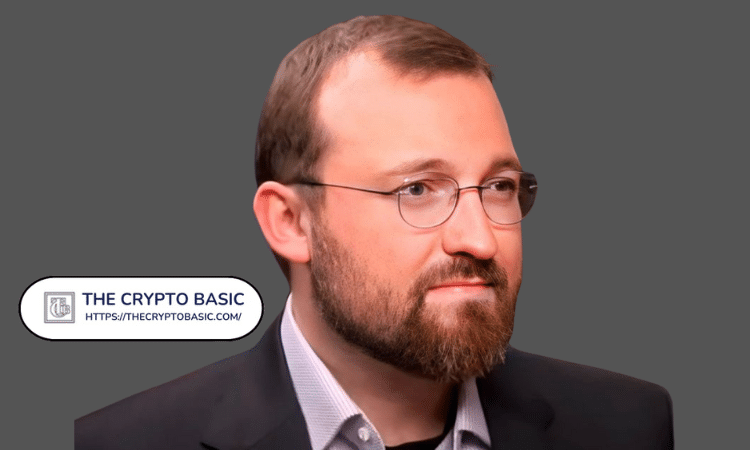
Cardano founder Charles Hoskinson sought to clear the air after new evidence emerged about his past involvement with the Ethereum Foundation.

Cardano’s founder, Charles Hoskinson, has often been haunted by the experience he had in his early days in the blockchain ecosystem, especially while working on Ethereum.

In the latest development, the Cardano founder was compelled to speak in a 22-minute livestream in which he dispelled the rumors and provided clarity to listeners.

At the heart of the current matter was a video and documentation shared by Steven Nerayoff. Nerayoff was an early Ethereum advisor who had access to essential communication within the team. In the documentation being sold as an NFT, Nerayoff shared previously private information on a troubling period in Ethereum’s history.

At the time, the Ethereum team wanted to restructure the project and called on Nerayoff for advice, leading to a lengthy call between the advisor and Ethereum’s co-founder, Vitalik Buterin. With or without Vitalik’s permission, Nerayoff recorded the call, which he now wants to monetize as an NFT. 


Notably, Charles Hoskinson was among the major subjects of the call. A transcript of the call shows that Charles was mentioned 69 times, with Nerayoff speaking favorably of the entrepreneur’s involvement with Ethereum.

New Evidence Clarifies Charles Hoskinson’s Reputation with Ethereum

Steven Nerayoff’s latest reveal suggests that Charles Hoskinson was a valuable member of the Ethereum Foundation. During the conversation with Vitalik Buterin, Nerayoff spoke highly favorably of Charles Hoskinson and urged the team to bring him back into the ranks, given his experience and strengths.

Reviewing this part of the conversation, Charles Hoskinson said in the recent livestream, “He [Nerayoff] was trying really hard to bring me back into the fold. At this juncture, I was already deep in the thick of things, starting Input Output [Cardano’s engineering arm].”

According to Charles Hoskinson, Nerayoff’s documentation and call with Vitalik dispel three main accusations that were leveled against him by naysayers. The allegations include that ‘Charles is a pathological liar, never contributed to the crypto space, and constantly overstated his role in Ethereum’s early development.’

The Cardano founder, alluding to recent reports by crypto journalist Laura Shin, added that half-baked stories have helped foster those lies. However, such lies hold no water compared to Nerayoff’s independently released information.

Meanwhile, Hoskinson reiterated his long-term commitment to building out Cardano and his reputation in the crypto space. He noted that he has been in cryptocurrency for over 10 years and has had no “class action lawsuit, legal issues.”

Additionally, the entrepreneur has sustained an impressive track record, having ‘built a $12 billion dollar valued blockchain, collaborated on over 200 academic research papers, and written a lot of code.’

“You can disagree with the economic value of these things. [Yet] You can’t disagree with the fact that I’m here and I’ve been building things,” Charles Hoskinson added.

Notably, Cardano (ADA) has consistently ranked among the top ten cryptocurrencies by market capitalization in recent years. At the same time, the blockchain has seen increased DeFi TVL in the past few months, underlining its continued growth.

19 Banks Report Exposure to XRP in Total €9.4 Billion Investment Positions

0

Banks from North America, Europe, and other parts of the world have declared investments in crypto assets, with XRP holding prominent positions.

The Basel Committee on Banking Supervision (BCBS), a foremost global authority on regulation for banks, has published a report capturing the exposures of its 45 member central banks on cryptocurrencies such as XRP.

BCBS noted that its committee had undertaken various analytical and supervisory initiatives in response to cryptocurrency over the last five years. It mentioned a novel crypto data collection template was implemented as a component of these efforts.

In the report, BCBS stated that 19 banks submitted crypto asset data. Of this total, ten banks came from North America, seven from Europe, and two from other regions. It disclosed that the banks collectively reported €9.4 billion in crypto asset exposures or $10.27 billion.

Meanwhile, the report highlighted that crypto exposures exhibit an uneven distribution among reporting banks. Specifically, two banks account for over half of the total, and four additional banks represent just under 40% of the remaining exposures.

XRP Exposure 

According to the Basel committee findings, XRP ranked as the third largest altcoin in which the reporting banks disclosed commitments. Specifically, it was identified that XRP constituted 2% of the total exposure of €9.4 billion. This percentage translates to total XRP positions worth €188 million or $205 million.

Exposures to Bitcoin and other Crypto

Furthermore, the report mentioned that most bank crypto exposures predominantly consist of Bitcoin (BTC) and Ethereum (ETH). The dominance also applies to instruments that track BTC and ETH as the underlying digital assets.

Specifically, BTC and ETH exposures account for 31% and 22%, respectively, and in terms of investment vehicles tracking the assets, BTC and ETH amounted to 25% and 10%, respectively.

Among the top 20 reported crypto assets by exposure, other noteworthy entries include Polkadot (DOT, 2%), Cardano (ADA, 1%), Solana (SOL, 1%), Litecoin (LTC, 0.4%), and Stellar (XLM, 0.4%). 


Crypto asset exposure

Overall, Bitcoin, Ethereum, and XRP constitute nearly 90% of the reported exposures from the banks. Additionally, the banks reported smaller amounts for a stablecoin and tokenized assets.