Home Blog Page 1831

Analyst Predicts XRP Drop to $0.28 Before Rallying to $1, Sets Entry Points on Monthly, Weekly, and Daily Charts

0

Prominent analyst shares elaborate XRP analysis on three different timeframes, envisioning a potential slump to $0.28 before a surge to $1.

Poseidon, a notable crypto analyst, recently shared an in-depth analysis of XRP on the daily, weekly, and monthly timeframes. The elaborate analysis envisions a potential slump to $0.28, followed by a rally to $1 once the bull run kicks in.

Daily Chart

Poseidon points out a series of rapid price movements in XRP on the daily chart. The asset broke below the range high at $0.5496 on August 29. XRP experienced a swift downturn following this drop, leaving behind an inefficient region.
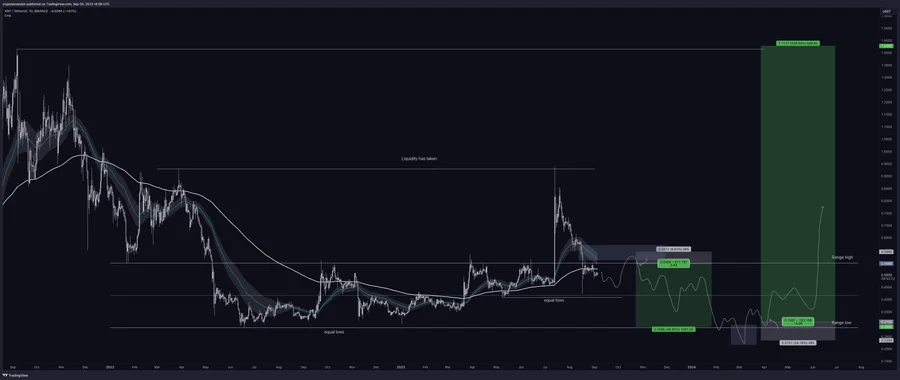
XRP daily Chart
Image source: https://twitter.com/CryptoPoseidonn/status/1699063107493199945

Poseidon suggests that if this area fills up and daily closes occur below the range high once again, it might be time to consider a short position, targeting a five times return. This indicates that XRP could continue to slump in the short term.

Poseidon advises patience for those eyeing long-term investments until XRP falls to $0.28. Once this occurs, he suggests it’s time to consider long positions for a potential 15-time return. This suggests a conviction that XRP would rally from the $0.28 price.

The analyst acknowledges that he is uncertain of XRP’s potential to return to the ATH of $3.31 during this rally. However, he maintains optimism if the broader bull market rekindles. Should this occur, he believes the likelihood of XRP reaching $1 again is high.

For XRP to reclaim parity with the dollar, it would need to rally by 98% from its current position. The last time XRP saw the $1 price was in December 2021. Since dropping below the position, the closest it has been to recapturing it was on July 13.

Weekly Chart

On the weekly chart, Poseidon highlights a sudden break in XRP’s long-term accumulation phase triggered by news-related volatility.
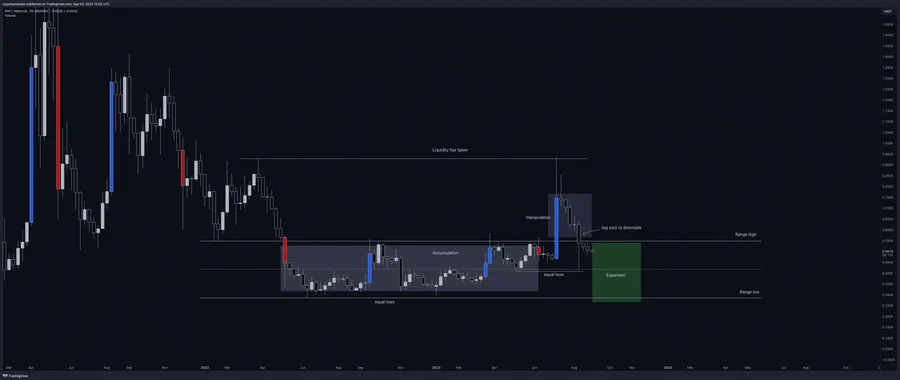
XRP weekly Chart
Image source: https://twitter.com/CryptoPoseidonn/status/1699063107493199945

To sustain this momentum, XRP needed to stay above the high at $0.5496. However, the market lacked sufficient buyers to support this move. As long as XRP remains below the high at $0.5496, it could retest the $0.40 level.

After clearing this point, Poseidon predicts a pump to the upside to eliminate late shorts, eventually leading to a return to the $0.28 range low level.

Monthly Chart

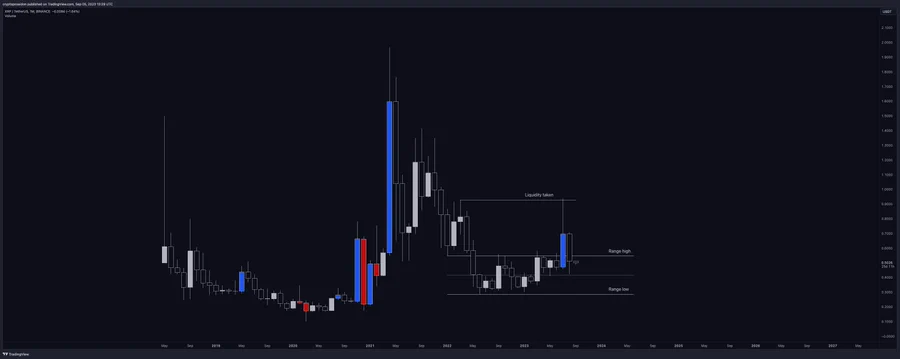
Turning to the monthly chart, Poseidon points out that XRP experienced significant growth compared to other large-cap coins during the echo bubble. Echo bubbles are sudden rallies on the heels of the news, market sentiment, or speculation.
XRP Monthly Chart
Image source: https://twitter.com/CryptoPoseidonn/status/1699063107493199945

XRP’s abrupt upward spike following news of the lawsuit victory was met with a lack of buyer participation. This buyer apathy resulted in a bad rejection candle in July, eliminating the gains picked up during the echo bubble.

August saw XRP close back within the range. The analyst believes this is not a good sign and a correction is imminent. Poseidon’s analysis suggests that with this correction, XRP will likely retest the $0.40 (mid-range) and $0.28 (range low) levels before a new bull market emerges. 

XRP is trading for $0.5035 as of press time, down 0.35% over the last 24 hours. Despite a 7.10% decline in the past seven days, the asset has fiercely defended the $0.50 territory. 
Cardano Project Catalyst: Dissecting the Imbalance in Voting Power

0

New statistics showcase the concentration of voting power within Cardano’s Project Catalyst, demonstrating significant imbalances between large and small ADA holders.

A mere 1.5% of wallet holders control over half of the total voting power. Most wallet holders with 1M to 5M ADA disproportionately influence the system. The bottom 50% of wallets barely register, holding only 1% of the total voting influence.

In a recent analysis of Project Catalyst, Cardano’s decentralized innovation engine, startling figures have emerged regarding the distribution of voting power among its participants. The analysis, derived from data collated by the LidoNation Catalyst tool, raises serious questions about decentralization and equitable representation within the platform.


According to the statistics, Project Catalyst currently has 57,118 registered wallets holding a combined total of 4.5 billion ADA. While this might suggest a decentralized landscape at first glance, a deeper look at the numbers reveals a more complicated picture. Alarmingly, the top 1.5% of all wallet holders control a staggering 56% of all voting power. This means that a very small fraction of the community has a disproportionately large say in the project’s direction.

But the imbalance does not end there. The data further divulges that the bottom 50% of wallet holders have virtually no influence, controlling a mere 1% of the voting power. Even more concerning is that the bottom 85% of wallets control only 8.5% of the overall voting power, making it evident that a select few hold the lion’s share of influence.

The analysis also highlights that the largest group of influential wallets fall in the 1M to 5M ADA range. They make up only 1.35% of total wallets but possess an astonishing 33% of all voting power. These middle-majority holders are significantly more powerful in shaping the project’s decisions than the vast majority of smaller wallet holders.

The highest single wallet holds 82.8 million ADA, further illustrating the concentration of power. With such a significant stake, this particular wallet has the capability to influence Project Catalyst’s innovation and development pathways dramatically. At the press, Cardano’s price is at $0.2566, with a decrease of 0.05 percent in the past 24 hours, indicating a sideways trend.

In summary, these statistics serve as a crucial reality check for the Cardano community and those interested in democratizing decentralized systems. The data reveals that Project Catalyst may need to reassess its voting structure to ensure a more equitable influence distribution. Otherwise, the platform risks becoming a playground for the elite few at the expense of the many, thus defeating the purpose of decentralization it aims to uphold.

Visa Launches Stablecoin Settlement Capabilities on Solana

0

Visa will be onboarding two payment companies to test the movement of USDC to the Solana blockchain.

Global payments giant Visa announced the expansion of its stablecoin settlement capabilities to include high-speed layer 1 blockchain, Solana. According to a press release on September 5, Visa will start testing the settlement with two large payment firms, WorldPay and Nuvei.

Initially, when users make digital payments, Visa receives the funds in its treasury and sends them to the merchant’s bank. Following its partnership with Circle in 2021, the payments company began transferring the stablecoin from Visa’s treasury to merchants’ custody.

Through its newly secured partnership with WorldPay and Nuvei, Visa will be able to complete fiat-denominated transactions authorized over VisaNet, the payment network powering Visa’s electronic payment processing.

It is worth noting that the latest move by Visa is a wake from a slumber that ensued months back.

Visa to Pilot Stablecoin Settlement on Solana

Based on clients’ demand, Visa opted to utilize the Solana network, a shift from the natively used Ethereum blockchain. According to the details of the deal, Solana is preferred due to its speed, high throughput, low costs, and decentralization. Ethereum has a long history of slow payment settlements.

Cuy Sheffield, Head of Crypto at Visa, stated that employing a blockchain network like Solana will help accelerate cross-border settlements and provide a modern option for clients to send or receive funds from Visa’s treasury quickly.

“Visa is committed to being on the forefront of digital currency and blockchain innovation and leveraging these new technologies to help improve the way we move money,” he added.

Sheffield adds that the speed common to Solana will not initially be introduced during the pilot program. Rather, fast transaction settlements may likely be introduced in the future.

Notably, following Visa’s announcement, Solana’s native cryptocurrency SOL saw a decent 5% increase. The asset is currently traded at $20.5, a price rebound from the lows earlier today.

Shiba Inu Team Shares 9 Game-Changing Offerings of Shibarium to Businesses

0

As Shibarium becomes operational, the Shiba Inu team highlights some of its offerings for enterprises.

In a recent tweet, the Shiba Inu team spotlighted the usefulness of Shibarium to small businesses and companies. In particular, Lucie, Shiba Inu marketing representative, reiterated that Shibarium has become live and functional. 

Lucie added that, among other things, Shibarium offers several teams a cost-effective ecosystem for business operations.

9 Shibarium Offerings to Businesses

According to Lucie, Shibarium can help development teams save costs and manage their financial budgets efficiently. This cost-saving component is courtesy of the minimal fees of the blockchain. 

Lucie also pointed out the scalability feature of Shibarium. She highlighted that the blockchain effortlessly accommodates business growth at lower costs. In her words:

“It scales effortlessly as your business grows, without high transaction costs.”

Furthermore, the Shiba Inu representative mentioned Shibarium’s efficiency in processing transactions. Lucie noted that Shibarium processes transactions faster, saving time for business operations.

Additionally, Lucie pointed out that Shibarium is accessible to all, given its low barrier to entry. Moreover, she mentioned that with Shibarium, businesses can easily connect to a broader audience. This is because Shibarium has a Global Reach, per the team update.

Also, the Shiba Inu marketer stated that Shibarium is built upon the robust security architecture of Ethereum. Therefore, the Shibarium network reliably keeps a business’ assets safe and secure. 

Moreover, Lucie mentioned the use of smart contracts on the Shibarium platform. This component enables Shibarium to automate tasks, reduce reliance on intermediaries, and streamline business operations.

Meanwhile, the Shiba Inu team spotlighted Shibarium’s role in facilitating entry into the decentralized finance (DeFi) space. According to Lucie, DeFi entry with Shibaruim is possible due to its inherent design of affordable fees.

Ultimately, Lucie highlighted Shibarium’s friendly impact on the environment. In particular, she noted that Shibarium is eco-friendly. This feature implies building on Shibarium poses no environmental threats as it consumes less energy as a PoS network.

The Role of BONE

Notably, the Shiba Inu team highlighted the place of Shibarium’s gas token, BONE. 

The statement read:

“… let’s not forget the BONE gas token. It’s not just about savings; it fuels Shibarium, making it affordable and paving the way for SHIB’s & Leash’s governance role.”

Moreover, the Shiba Inu team foresees a future where Shiba Inu empowers users around the globe. They believe the BONE token will make such a future possible. 

Shibarium Surpasses 1M Transactions in 8 Days as Wallets Cross 1.1M

0

Shibarium, the Shiba Inu ecosystem layer-2 solution, has finally surpassed one million transactions, with wallets crossing 1.1 million a mere eight days after relaunch.

The Shiba Inu (SHIB) ecosystem has continued to hit new milestones, as adoption for its layer-2 scaling solution Shibarium sees an impressive uptick. Most recently, Shibarium surpassed the 1 million transaction threshold amid the surging user influx.

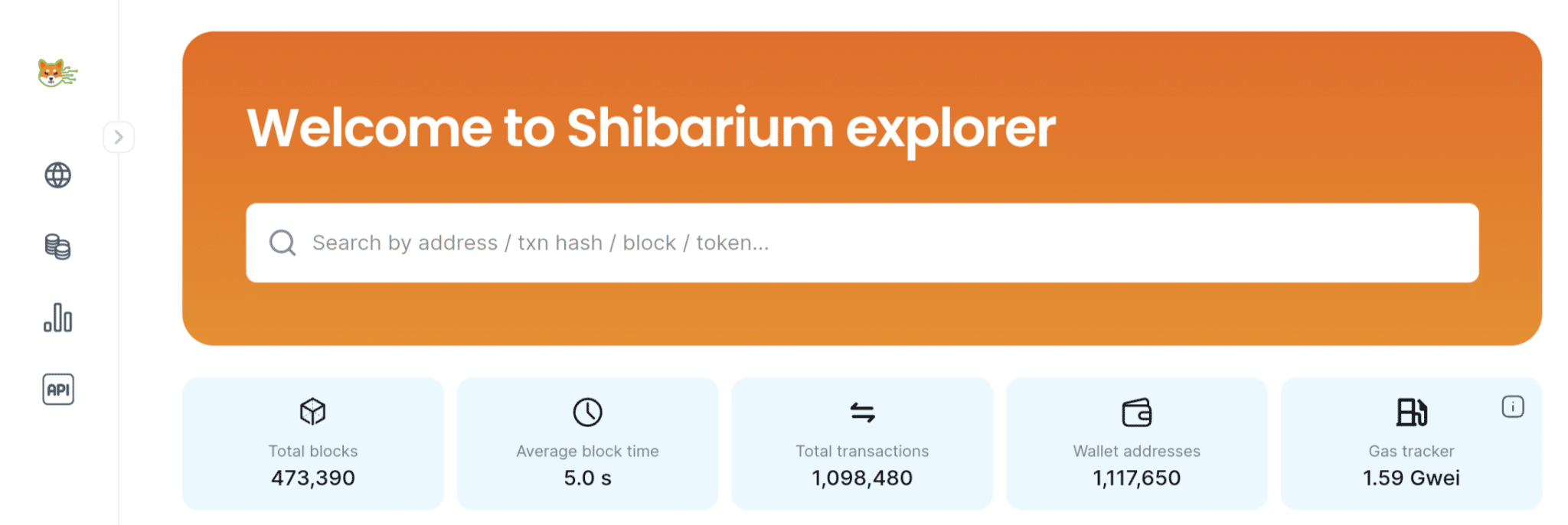
Per data from Shibariumscan, the network’s dedicated explorer, Shibarium now boasts 1,098,480 transactions as of press time. This feat comes a mere eight days after the development team relaunched the network for public use.

Shibarium stats 2
Shibarium Stats | Shibariumscan

Recall that the team, led by pseudonymous developer Shytoshi Kusama, put Shibarium in private mode amid a setback upon launch. Kusama confirmed that the issue did not come from Shibarium but from an unexpectedly high influx of users.

The developer announced on August 28 that the team had relaunched the solution for public use. Despite the initial setback, the network still witnessed another round of user influx. This increasing adoption has remained sustained until now, resulting in the 1 million transaction milestone.

An Astronomical Surge in Wallets

Accompanying this milestone is a rapid surge in the number of wallet addresses on Shibarium. Notably, The Crypto Basic disclosed on September 2 that the network had crossed the one million wallet threshold. 

The number of hosted wallets has spiked to 1,117,650 at the reporting time. This figure stood at 1,005,384 on September 2. The latest data indicates that Shibarium welcomed over 112K wallets in three days. 

For context, Cardano, one of the top mainstream networks, only saw 49K+ new wallets in all of March. In addition, the XRP Ledger (XRPL), another leading network, witnessed 114K+ wallets from January to March this year. 

Cardano only has a little above 4 million wallets in its six years of existence. The XRPL has 4.7 million wallets in 11 years. Interestingly enough, Shibarium has crossed 1.1 million wallets in just eight days.

Other Shibarium Stats

In addition to the impressive growth rate in transactions and wallets, Shibarium also boasts an average block time of five seconds. The network has so far processed 473,390 blocks as of press time, making it one of the fastest solutions in the industry.

Staked BONE on Shibarium
Staked BONE | Shibarium.shib.io

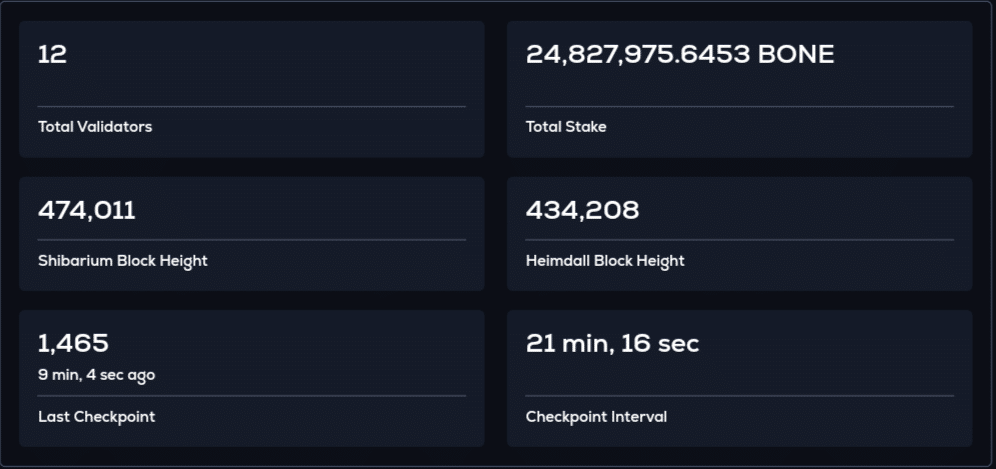
Regarding staking, users have continued to commit their funds to validators to help secure the network. Staked BONE tokens have increased to 24.8 million, valued at $25.3 million. This figure was 22 million on September 1, indicating an increase of 2.8 million BONE in four days.

Pundit Claims Ripple Cannot Succeed Without XRP Succeeding

0

Nietzbux, a notable XRP community figure, believes the chances of Ripple gaining prominence and achieving more success are contingent on XRP’s success.

Prominent XRP community figure Nietzbux has argued that for Ripple to succeed on its grand scale, the digital asset XRP, with which it shares close ties, must equally record massive success. 

This assertion contrasts Ripple’s narrative, which has consistently emphasized the independence of XRP from the company itself.

Nietzbux’s argument hinges on an assertion that Ripple’s non-XRP innovations lack the transformative impact that the industry demands. 

As the global scene aims to move towards transferring assets across borders instantly, Ripple’s focus on solving cross-border challenges sets them on a unique trajectory. Per Nietzbux, the firm has bigger goals than most DeFi entities.

Ripple Needs XRP to Succeed

However, Nietzbux points out that if Ripple wishes to sustain its growth, XRP would need to thrive, or the firm would have to go public through an IPO. He believes both events playing out would also turn out fine. 

According to him, this assertion lies in the fact that Ripple’s XRP products play an indispensable role in the company’s long-term plans. While their existing non-XRP offerings have garnered significant business, the necessity to sell XRP remains.

Ripple’s overarching objective is to transcend its current stature. However, Nietzbux notes that its current trajectory of innovation would not help it achieve this objective, as other firms are involved in similar products.

According to him, Ripple needs to integrate with the broader financial system through proper business development. Nietzbux believes the firm can achieve its objective with such integration.

Despite Ripple’s accomplishments in onboarding clients for their non-XRP products, they are still far from this ultimate objective regarding widespread, live adoption.

Recall that Ripple’s CTO David Schwartz confirmed in May that he does not recommend building products that require XRP.

Ripple’s Aware of This

Nietzbux remains resolute in his belief that XRP’s success is essential for Ripple, and he suggests that Ripple is well aware of this fact. 

Their actions, such as substantial hiring during bear markets and their tenacious legal battle against the SEC, all indicate a conviction that XRP’s destiny is intertwined with Ripple’s own.

Nietzbux’s assertion echoes the sentiment that XRP is Ripple’s secret weapon. Ripple has invested substantial resources, including over $100 million in legal fees, to ensure XRP’s regulatory clarity for U.S. usage. 

This level of commitment underscores that Ripple regards XRP as pivotal to its mission.

Nietzbux further speculates that Ripple, as stewards of a significant portion of XRP’s supply, is poised for substantial success, and this triumph will not be despite XRP succeeding but because of it.

The General Consensus

It’s imperative to note that Nietzbux’s views diverge from Ripple’s and the broader XRP community’s stance, which emphasizes the autonomy of XRP from Ripple as a company. 

XRP is an inherent part of the decentralized XRPL, and its value primarily relies on market conditions. Ripple highlighted this independence in its Q2 2018 XRP Markets Report.

Nevertheless, Ripple’s actions and its close association with XRP continue to influence the asset’s trajectory, leading to an ongoing debate about the interdependence of Ripple and XRP.

XRP Limps Around $0.5: Reasons Behind Decline and Price Levels to Watch

0

Heavy selling on offshore exchanges behind XRP decline, as investors eye moves to key support and resistance levels.

The euphoria that followed XRP’s recent highs and the landmark ruling in July has eventually faded. The fifth-largest cryptocurrency by market capitalization is down 46% from recent highs, losing more value than other altcoins offer the same timeline.

However, recent reports have uncovered the reason behind the decline, while the charts reveal support and resistance levels that XRP holders must watch out for as market conditions evolve. Inevitably, broader market conditions and pending legal issues may have the final say on where XRP ends up in the long term.

Heavily Selling Pressure From Offshore Exchanges Behind XRP Decline

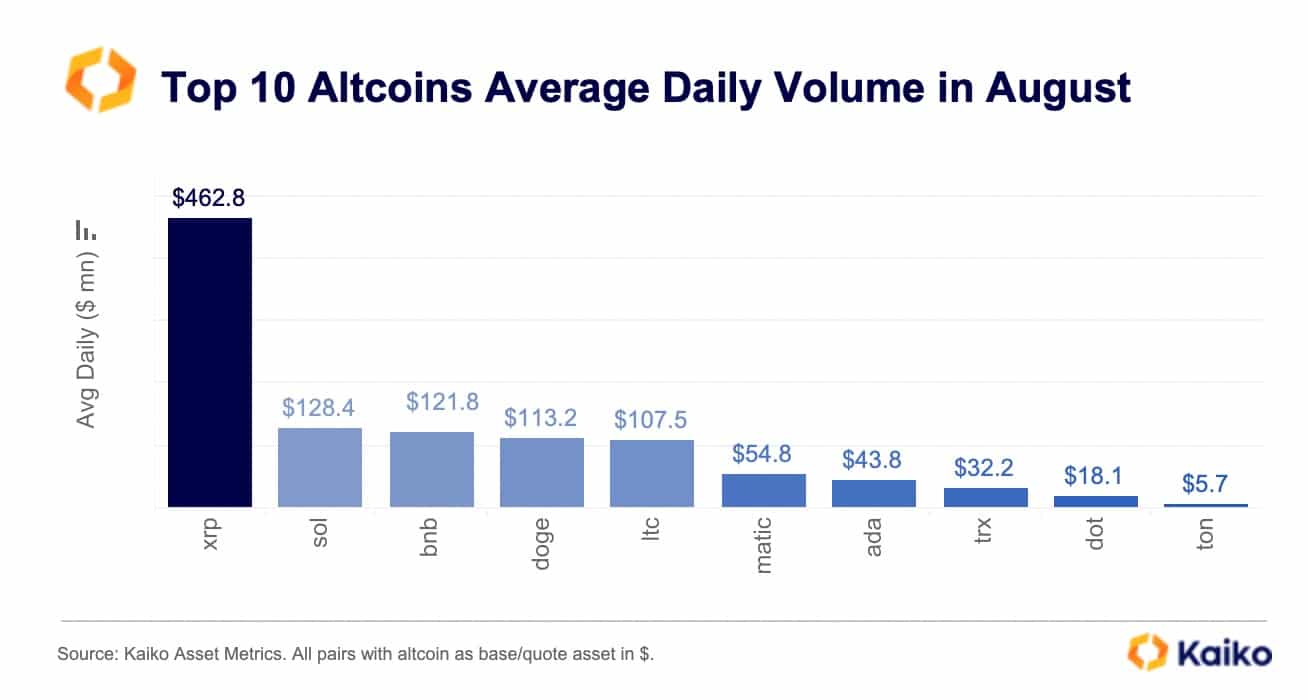
As previously reported by The Crypto Times, August was an excellent month for XRP as its trading volume soared as high as $462.8 million. The figure was significantly higher than volumes for alt majors such as BNB, SOL, ADA, and LTC.

The increase in trading volume, however, did not translate to a price increase for XRP. Instead, the asset succumbed to heavy selling pressure. According to data from Kaiko Research, investors on offshore exchanges, including OKX and Upbit, led a sell-off in XRP. 

Upbit and OKX recorded 55% and 54% of sell-order shares, respectively, in August. The selling pressure on Upbit was most notable as the South Korea-based exchange controls a significant portion of the global XRP trading volume. Hence, the data would indicate that South Korean investors who largely led the XRP uptrend in July have also locked in profits and reevaluated their exposure to the asset.

On the bright side, both Binance and Coinbase saw higher buying demand for XRP during August. The surge in XRP interest on Coinbase may be attributed to US investors regaining exposure to the asset. Yet, the increase in US demand and high buying pressure on Binance was not high enough to stop XRP from dropping 17% against its BTC pair in August.

Support and Resistance Levels to Watch 

The price of XRP hovers around $0.50 at the time of writing, with the asset maintaining a tight range over the past 72 hours. Analysts underline $0.43 and $0.35 as the levels to watch if market conditions remain bearish in the coming days.

A reversal in market fortunes, though, could propel XRP above $0.60, delivering gains to investors who buy at current price levels. Meanwhile, a move above $0.67 would ultimately unlock new territory and give XRP a shot at reaching new highs.

Top European Exchange Moves Over 9 Trillion Shiba Inu In Three Days

0

Bitvavo has moved 9,246,061,354,748 Shiba Inu tokens to an unknown wallet this month.

The community-based automated tracker of significant crypto movement, Whale Alert, has captured a substantial transfer of Shiba Inu in the past day.

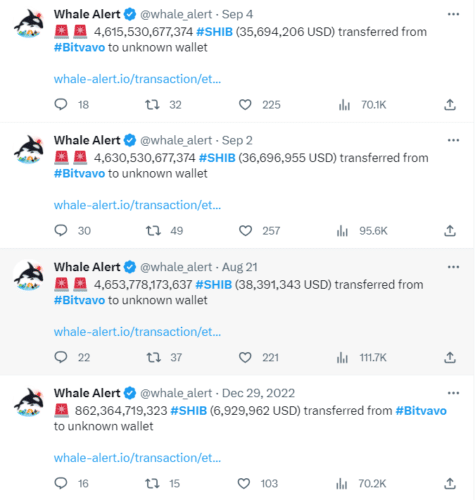
In a tweet on Monday, Whale Alert disclosed that over 4.6 trillion Shiba Inu tokens were sent to an untagged wallet. The market tracker noted that the transfer came from Bitvavo, a prominent European crypto exchange. 

Specifically, Bitvavo moved 4,615,530,677,374 SHIB to an unknown wallet. The assets were worth $35,694,206 at the time of the transfer.

In response to this noteworthy transaction, Loch Chain, an on-chain intelligence resource, shed light on the mysterious recipient wallet. The platform pointed out that this particular wallet is a new wallet, as no prior transactions are associated with it. 

Notably, while Whale Alert called the receiving address an unknown wallet, data from the blockchain explorer confirmed the wallet is a Bitvavo-controlled address. Additionally, the wallet has just one entry in its transaction history.

Bitvavo Transferred Over 9T Shiba Inu

Interestingly, the recent transaction from Bitvavo is not the first of its kind this month. Three days ago, the exchange moved a similarly large amount of Shiba Inu to a wallet. In particular, the transaction was 4,630,530,677,374 SHIB tokens. It was worth $36,696,955 at the time.

In sum, Bitvavo has moved 9,246,061,354,748 (over nine trillion) within the last three days of this new month. Meanwhile, the exchange only moved 4.6 trillion SHIB in one transaction throughout August.

Bitvavo also moved a significant significant amount of Shiba Inu in December 2022. Interestingly, the exchange’s Shiba Inu transfers have been outflows to unknown wallets. Whale Alert has captured no inflow from untagged wallets back to the exchange.


Bitvavo Shiba Inu movement Whale Alert

Despite Bitvavo’s recent increased movement of Shiba Inu, the token accounts for less than 2% of the exchange’s total trading volume in the last 24 hours. 

Tether Now Holds $72.5B in US Treasury Bonds, Surpassing UAE, Mexico, Australia, and Spain

0

Tether is now the 22nd largest holder of US T-Bills, surpassing UAE, Mexico, Australia, and Spain.

Tether, the issuer of the world’s largest stablecoin USDT, currently holds $72.5 billion in US Treasury Bills (T-Bills), according to a statement from the company’s CTO Paolo Ardoino. This makes Tether the 22nd largest holder of T-bills globally, surpassing the United Arab Emirates, Mexico, Australia, and Spain.

Tether Continues to Increase Its T-Bills Holdings

The holdings mark a significant increase from the $53 billion Tether held as of March 2023.  

The latest development underscores Tether’s efforts to continue backing the USDT with the most secure reserves while increasing transparency around the stablecoin. In its 2023 second-quarter report, Tether revealed an $850 million increase in excess reserves to reach $3.3 billion.

In its Q2 report, Tether revealed consolidated total assets of $86.4 billion against consolidated total liabilities of $83.17 billion. At the same time, the leading stablecoin issuer’s operational profits exceeded $1 billion, marking a significant increase of 30% from the previous quarter.

USDT is the world’s largest stablecoin and the third-largest cryptocurrency, with a market cap of $82.8 billion, according to CoinGecko. As stated by Ardoino, USDT is the most used stablecoin globally, with a major focus on emerging markets.

USDT Market Cap Faces Decline 

Meanwhile, the latest report comes as USDT’s market cap is declining amid a growing shift in the stablecoin ecosystem. According to a Bloomberg report that cited researcher CCData, the market cap of USDT dropped 1.2% to $82.9 billion in August.

While the decline marked USDT’s market cap first in almost a year, the stablecoin still maintained a significant lead over its closest rival, USDC, which shed nearly half its market cap. Per the report, the overall size of the stablecoin market has also declined for the 17th consecutive month, dropping by 0.4% to around $125 billion.

XRP Trading Volume Surpasses BNB, ADA, LTC Despite Heavy Selling Pressure on Upbit and OKX

0

While platforms such as Binance and Coinbase are recording more XRP buys, exchanges like Upbit and OKX are seeing heavy selloffs.

Analytics research conducted by blockchain data provider Kaiko shows that the increased interest in XRP enabled its average daily trading volume to rise as high as $462.8 million in August.

Notably, this figure surpasses values recorded by other altcoins like Solana’s $128.4 million and Binance Coin (BNB) $121.8 million, Doge $113M, LTC $107M, ADA $43.8M. The chart below shows XRP topping the chart of the top 10 altcoins in August.

XRP trading volume against SOL, BNB, ADA, LTC and others
XRP Trading Volume | Kaiko

Since winning a partial court victory in mid-July, global payments company Ripple has seen massive user engagement. XRP, an asset the U.S. Securities and Exchange Commission (SEC) once defined as security, has also seen soaring interest.

The increase is evident in XRP’s daily trading volume, which jumped to 4.84 billion XRP on September 1st alone.

Investors Are Selling Off XRP

Amid the steady record seen by XRP, investors on some crypto exchanges like Upbit, Kraken, and OKX are selling off their holdings.

Upbit, the largest South Korean crypto exchange, saw the highest selling pressure by as much as 55%, despite an interest in XRP demonstrated by Korean investors. OKX followed closely with a 54% sell order share.

On the other hand, users on crypto exchanges like Binance and Coinbase are embracing XRP. The leading American exchange, Coinbase, saw the highest buying pressure last month, followed closely by Binance.

While the reason for the sell-off action is unidentified, some market watchers attribute the bearish trend to uncertainty regarding the legal case between Ripple and the SEC, as the regulatory agency seeks to appeal the firm’s victory.

Meanwhile, Kaiko identified a growing pattern of buying pressure on Coinbase following the lawsuit victory. According to the report,

“XRP average trade size has also increased on Coinbase, surpassing all top ten altcoins. This could suggest that buying demand was driven by large traders in the U.S. as investors re-gained access to the token after the July court ruling.”

Nonetheless, XRP currently ranks as the sixth most traded altcoin in the United States while leading the charge on exchanges outside the country, as affirmed in a recent report by The Crypto Basic.