Home Blog Page 1933

US Legislation Set for July to Determine Whether Crypto is a Security or Commodity

0

To shed more light on the status of cryptocurrencies and stablecoins, the U.S. House committee in charge of finance will debate and vote next month.

According to The Block, preparations are in high gear for the U.S. House Finance Services Committee to undertake a crucial vote to determine whether digital assets are securities or commodities. Furthermore, the stablecoin framework will be discussed.

Regulatory gaps and clarity have been burning issues in the cryptocurrency space. For instance, the United States Securities and Exchange Commission (SEC) has been cracking the whip on crypto exchanges acting as clearinghouses and unregistered securities, with Coinbase and Binance being on the receiving end.

Therefore, the House committee debate will deliberate on the way forward and offer a clear picture of the transition of digital assets from securities to commodities, according to the chair Patrick McHenry.

This development is a welcome call for the crypto market because commodities face less stringent regulations and reporting. For the bill to become law, it requires the backing of Democratic senators, as well as President Joe Biden’s signature.

Delving Deeper into Stablecoins

The other bill that the McHenry-led committee will debate touches on stablecoins as they continue to gain momentum in the crypto space.

Stablecoins are digital assets whose value is pegged to a financial instrument, commodity, or fiat currency like the US. dollar. The common ones include Tether (USDT) and USD Coin (USDC).

Therefore, the July vote will offer a clear picture of what stablecoins have to offer.

Meanwhile, Singapore has collaborated with leading financial players, such as JPMorgan, Amazon, and IMF, to comprehend stablecoin, tokenization, and CBDC standards, The Crypto Basic reported.
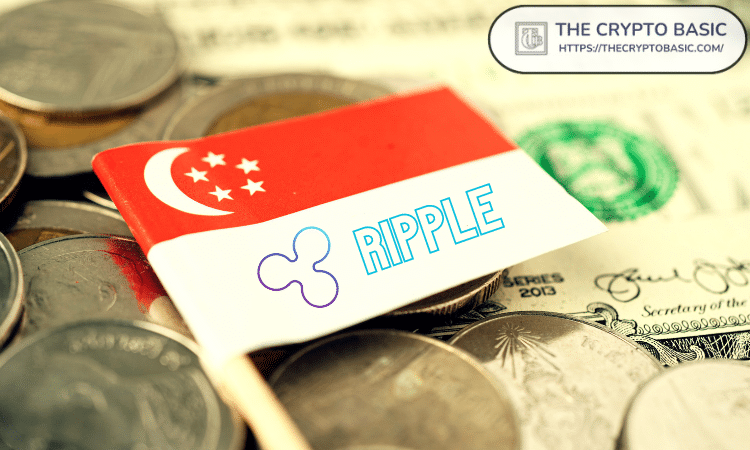
Ripple Now Among Top 20 Firms Granted In-Principle Approval for MAS MPI License in Singapore

Ripple secures significant approval for MAS MPI license, expands presence in APAC region; CEO Brad Garlinghouse proud of Singapore’s crypto approach.

In a significant development for the crypto industry, Ripple, a leading blockchain company, has achieved a remarkable feat by securing in-principle approval for a Major Payments Institution (MPI) license from the Monetary Authority of Singapore (MAS).

This highly coveted approval places Ripple among an exclusive group of fewer than 20 firms to receive such recognition for digital payment token services, according to Brad Garlinghouse, the CEO of Ripple, while reacting to the development.

In a recent tweet, Garlinghouse expressed immense pride, acknowledging Singapore’s pragmatic and innovative approach to the crypto landscape. He commended the country for its forward-thinking stance, emphasizing Ripple’s privileged position as one of the select few firms to be granted the MAS MPI license.


Ripple MPI License Implies Entry into APAC Region

According to Ripple’s official press statement, the approval allows Ripple’s Singapore-based arm, Ripple Markets APAC Pte Ltd, to offer regulated digital payment token products and services within the city-state.

This significant milestone sets the stage for Ripple to scale its customer base and facilitate the use of crypto-enabled payments not just in Singapore but also across the Asia-Pacific (APAC) region.

Ripple has been a driving force in revolutionizing cross-border payments with its cutting-edge solutions. The company’s payments platform has experienced remarkable growth in APAC, prompting the doubling of its Singapore office workforce to cater to the rising demand in the region.

This achievement aligns with Ripple’s commitment to providing seamless and efficient cross-border payment services to businesses and financial institutions.

Singapore has long been recognized as a global financial hub that embraces digital innovation. As The Crypto Basic reported last year, Ripple successfully partnered with a Singapore-based payment giant to facilitate cross-border payment.

Ripple’s recent success is a testament to Singapore’s commitment to fostering a conducive environment for crypto companies and driving the adoption of blockchain and crypto solutions.

Ripple CLO Reacts

Stuart Alderoty, Chief Legal Officer of Ripple, praised Singapore’s leadership in developing a clear regulatory framework for the crypto industry.


He emphasized the importance of MAS’s in-principle regulatory approval, as it allows Ripple to better assist forward-looking customers in leveraging blockchain and crypto technologies to create a more inclusive and borderless financial system.

Ripple Recent Success in Singapore Market 

Since establishing its Asia Pacific headquarters in Singapore six years ago, Ripple has recognized the immense potential that the region holds. As The Crypto Basic reported in April, Ripple facilitated $30 billion out of 20 million transactions in 70 Payout Market, which included Singapore.

The recent in-principle approval marks a significant milestone in Singapore’s journey towards embracing digital assets and positions Ripple as a critical player in the progressive crypto adoption.

Ripple’s approval sets a positive precedent, inspiring other crypto firms and encouraging further innovation and collaboration with regulatory bodies.

Shiba Inu Lead Developer Shares Latest Updates on SHIB in Informative Post

0

Shiba Inu’s lead developer has shared details about Shibacals and how the product will be used.

Shiba Inu lead developer Shytoshi Kusama has revealed the much-anticipated mysterious physical product and other updates.

According to a blog post yesterday, Kusama introduced the “physical” item, dubbed Shibacals: Authenticated Collectibles.


Shibacals Introduced 

Notably, the project will serve as an authentication layer for collectibles, leveraging NFC chips to authenticate physical items digitally. 

According to Kusama, Shibacals focuses on authenticity and aesthetic appeal while fostering an authentication layer that supercharges the concept of collectibility.

Kusama stressed that top companies like eBay are already authenticating physical items. However, Shiba Inu’s digital authentication of physical items through NFC chips is unique, he said, adding:

“Our unique approach of digital authentication of physical items through an NFC chip, creation of the items in-house, and blockchain transaction sets us apart and demonstrates just one use-case for Shibarium.”

Per Kusama, the chips can link to dynamic destinations, thus creating unending opportunities that are ideal for businesses.

“[…] People who sell on ETSY or have their own website for creating products can simply add a Shibacal NFC tag and decide how they want to use this tag for their creations,” he said.

Shiba Inu Partners Champion Apparel

Kusama further noted that Shiba Inu has partnered with Champion Apparels to create SHIB-themed merchandise.

The initiative is the brainchild of the Shibacals team. Notably, the initiative will mark the first use of authentication tags and NFC chips to authenticate these merchandise.

Interestingly, Shiba Inu community members have finally got their wish. Recall that the community has been calling on the U.S.-based sportswear brand to create SHIB-themed hoodies. A top Shiba Inu influencer SHIB_Head started the campaign last year. As expected, it did not take long before other Shiba Inu enthusiasts asked Champion to create SHIB-themed apparel.

The campaign yielded positive results, as Shiba Inu finally secured the rights to create “Shiba Inu merchandise on Champion Apparel.”

Meanwhile, Shiba Inu also revealed the first batch of Shibacal, SHIB-themed, NFC authentication tags.

Created by Hewlett Packard, the tags will be placed on the first edition hoodies.

Shiba Inu Announces Shibacals: Hoodie Contest

The team behind Shiba Inu has announced a community-wide hoodie design contest. Shiba Inu noted that it will accept three designs from the community. However, the team said two of these designs would come from SHIB_Head and THESHIBLIFE. 

Notably, Shiba Inu will select three designs per category to be voted on by SHIB community members on Discord. In addition, the top 12 designs will be moved to the next round. The contest is scheduled to end on June 28, 2023.

Shib World paper

Furthermore, the blog post also introduced Shiba Inu’s World paper, a comprehensive guide to the SHIB ecosystem. The Worldpaper will provide a deep dive into everything related to Shiba Inu, including its ecosystem tokens, platforms, products, and services. More so, the initiative will also explain the long-term plan for Shiba Inu’s full decentralization

Terra Classic L1JTF Seeks to Launch Community-Owned Mobile Wallet App & L2 Team

0

The Terra Classic L1 Team proposed creating a LUNC Station wallet owned by the community and managed through governance.

Steve, commonly known as LuncBurnArmy (LBA), the project manager of the Terra Classic L1 Team, has submitted a proposal to create a Station wallet owned by the community. The proposal also aims to introduce an L2 Team tasked with managing updates to the wallet.

This endeavor seeks to achieve objectives such as enhancing the existing Station wallet’s codebase, diversifying client wallets, and alleviating the burden on TFL (Terraform Labs) in terms of testing Station for LUNC upgrades pushed by the L1 Team.

LBA recently released the proposal on Commonwealth and further called public attention to it through his Twitter handle.

To ensure widespread accessibility, the community-owned wallet will be made available across various platforms. These platforms include a user-friendly web version of Station, a mobile application compatible with iOS and Android devices, and a Chrome extension. 

To ensure complete independence from the Terraform Labs, the community had previously encouraged the development of forked versions of the official Station wallet, such as the Rebel Station. However, these wallets are under the control of specific groups or individuals. The L1 Team’s proposal seeks to create one controlled by the community.

By placing ownership and governance of the wallet in the hands of the community, this move aims to foster inclusivity and sustainability, offering users a dependable and regularly updated wallet experience. 

The funds required for the initial stages will come from the L1 Team’s computing budget. As a result, there will be no need for a separate proposal regarding community expenditure at this juncture. However, the L1 Team recommends setting up a monthly budget of up to $3,000. This is for covering management, maintenance, and upgrades of the wallet.

Introduction of a Terra Classic L2 Team

The proposal also seeks to create a separate L2 Team independent of the existing L1 Team. Working autonomously in the Terra Classic ecosystem, part of this L2 Team’s work will include ensuring stable wallet operations, particularly in the aftermath of updates. They will work in collaboration with the L1 Team.

In the event of a significant change in the features of the community-owned wallet, the L1 Team will put up a proposal for a community governance vote. In addition, should the L2 Team discover the need to include further development resources in the future, a governance proposal for such inclusion will come up.

This latest proposal came up a week after the L1 Team successfully upgraded Terra Classic to v2.1.1, introducing parity to Luna 2.0 and Cosmos. However, following the upgrade to parity, the LUNC blockchain faces a series of issues. 

The aftermath of the parity upgrade has affected community opinion on this wallet proposal. While some Terra Classic proponents support the proposition, others first call for a resolution of the post-parity issues.

Bitrue Offers XRP Investors 50% APR on Their Holdings

0

Bitrue announces an exclusive Earn Event with up to 50% APR for XRP investors following the success of its Super Power Piggy Event.

Bitrue, a prominent crypto exchange based in Singapore, has announced another exciting opportunity for XRP enthusiasts and investors to earn significant rewards through an exclusive Earn Event. 

In a tweet today, Bitrue unveiled the details of the remarkable opportunity, urging XRP enthusiasts to join the platform and take advantage of the potential rewards. The Earn Event promises a lucrative annual percentage rate (APR) of up to 50%, presenting a good opportunity for investors to maximize their profits.

This implies that XRP investors can earn a significant APR by staking their XRP tokens on Bitrue. This move follows a previous announcement from the exchange about its Super Power Piggy Event that offers XRP enthusiasts a 10% ROI, as reported by The Crypto Basic. 

In the Piggy Event, while users could earn up to 18% APR on XRP, participants also had the opportunity to share a generous prize pool of $5,000 USDT. Additionally, Bitrue introduced a Referral Piggy Campaign, which has already started and will last until June 26, 2023.

Interestingly, this strategic support for XRP exhibited by the Singapore-based exchange has propelled XRP to dominate its staking pool. As The Crypto Basic reported early this month, XRP ranked as the most staked asset on Bitrue’s Piggy campaign. 

Other Avenues Offering XRP Bonuses 

Like Bitrue, the leading BitMart crypto exchange has announced a flash sale about XRP, offering 50% off, as reported by The Crypto Basic. The sale, which kicked off today, is expected to end on June 22, 2023. XRP enthusiasts must obtain a ticket via BitMart Launchpad for a gateway to participate in the flash sale. 

In a similar development, a blockchain game based on the XRP Ledger launched its full version, allowing users to earn XRP with each battle directly to their Xumm wallet. While these initiatives provide earn opportunities, it is advisable for investors to conduct proper research before committing any funds.

Venezuela’s Crypto Fortunes Go South Amid Mining Ban 

0

A crypto mining ban is turning the tables on Venezuela’s significant strides in this sector.

According to Bloomberg, the progress made by Venezuela in the crypto sector is dwindling thanks to a temporary halt in cryptocurrency mining activities.

President Nicolás Maduro oversaw a vibrant crypto industry as he spearheaded the use of digital assets, especially a sovereign coin called Petro that the government provided.

Petro was deemed an ideal alternative to the national currency, the Venezuelan bolivar, as US sanctions and hyperinflation continued to bite.

Nevertheless, the country is facing a crypto mining ban, which is crippling the industry. This ban was triggered by a huge corruption syndicate linked to crypto wallets allegedly utilized when redirecting payments from Petróleos de Venezuela SA, an oil company run by the nation.

The oil scandal has seen nearly eighty people arrested, including Hugbel Roa, who served as the technology minister.

As Venezuela enters the third month amid the crypto mining ban, nearly 75,000 mining apparatus have ceased operations, as acknowledged by mining groups.

Alexis Lugo, the leader of the educational cryptocurrency program Criptoneros, pointed out, “It is unfortunate that after going through so much trouble to formalize and do things right, we are now in this situation.”

Juan Blanco, BitData CEO, echoed these sentiments and stated that the innocent were feeling the pinch thanks to the misdeeds of a few.

The about-turn made by the Venezuelan administration regarding crypto friendliness has jeopardized the nation’s quest of being a mining haven.

The rain started beating the crypto sector on Venezuelan soil after the government slapped transactions with a new tax back in February this year. This was a calculated move to revamp the nation’s currency, The Crypto Basic previously reported. 

Novogratz Admits Shares in Ripple, Says He Never Met Hinman, XRP Community Reacts

0

XRP enthusiasts react as Galaxy Digital CEO Mike Novogratz says he is a day one Ripple investor and has never sold his share in the past ten years.

Galaxy Digital CEO Mike Novogratz disclosed that he had been an early investor in cryptocurrency behemoth Ripple Labs. Novogratz added that he has never sold his shares in the past ten years.

Debate Between Novogratz and XRP Enthusiast

Notably, Novogratz made this known in response to a recent allegation from a top XRP community member Mr. Huber (@Leerzeit).

For context, Mr. Huber alleged that William Hinman, former director of SEC’s Corporation Finance, gave “insider knowledge” about his regulations to some venture capitalists, including Novogratz and his son- Nate Hinman.

Mr. Huber attached a short video clip of Novogratz claiming that he had to bet “dimes to doughnuts” on the exact thing Hinman would say during his June 14, 2018, speech.


Recall that Hinman declared Ethereum and Bitcoin as non-securities during the speech. Apparently, Novogratz purchased huge amounts of ETH before Hinman declared the coin as a non-security. 

Reacting to the allegations, Novogratz claimed he had never met Hinman before. Additionally, the American investor said he has not spoken nor corresponded with Hinman in the past.


Furthermore, Novogratz claimed the only person he has spoken to about SEC matters is Ripple CEO, Brad Garlinghouse. According to Novogratz, Garlinghouse was visiting the SEC regularly at the time.

“Have been a day one investor in Ripple Labs and have not sold any of my shares in the past ten years,” he added.


In response, Huber said he considers Novogratz’s claim to be an excuse. Per Huber, Ripple’s business model heavily relies on XRP, adding that the company will be a normal software company without the coin. 

Huber also asserted that Ripple would not have fought the SEC lawsuit if XRP was not involved. Notably, Huber said it makes no sense that Novogratz would invest in Ripple while thinking XRP is a scam. 

“Seems to me like “plausible deniability.” I’m pretty sure that if you could have bought 0.5% of the XRP supply for $500k as you did with Ethereum, things would look very different,” Huber added.


XRP Enthusiasts React 

As expected, the back-and-forth debate between Huber and Novogratz stirred reactions from XRP enthusiasts. Dizer Capital founder Yassin Mobark asked why Novogratz had been “disparaging” XRP and promoting ETH despite his stake in Ripple.


Interestingly, other top XRP enthusiasts also reacted to the development.


Hinman’s Emails 

Meanwhile, XRP community members have been commenting on Hinman’s controversial speech since Ripple released Hinman’s emails. The email relates to internal deliberations at the SEC leading to the build-up of the speech.

According to Hinman’s emails, the former director ignored all warnings regarding the speech from top SEC officials, including the Head of Trading & Markets. These officials warned that the speech is divorced from Howey factors and would cause greater confusion in the market.

However, Hinman ignored the warnings and gave a controversial speech, declaring ETH as a non-security.

Fox Journalist Uncovers Ethereum Founder Buterin’s Connection with Prometheum

0

A recent investigation by Fox Journalist Terrett revealed that Ethereum founder Buterin has close ties with a firm with part ownership in Prometheum.

In what came up as an unexpected revelation, Ethereum founder Vitalik Buterin has been revealed as a co-founder of Wanxiang Blockchain Labs, a non-profit research institute funded by Wanxiang Holdings. Wanxiang Holdings is one of the owners of Prometheum, with a major stake in the company.

Prominent Fox Journalist Eleanor Terrett disclosed this information in a recent tweet. 

A Web of Connections

Essentially, China Wanxiang Holdings is a holding company that manufactures auto parts through its subsidiary firms. Wanxiang’s Executive Director is Dr. Feng Xiao. Terrett’s recent disclosure suggests that Wanxiang Holdings is behind the funding of Wanxiang Blockchain Labs, a non-profit organization.

Furthermore, Ethereum founder Buterin and Dr. Feng Xiao are two of the three founders of the non-profit Wanxiang Blockchain Labs. In addition, Dr. Xiao is one of the earliest sponsors of Ethereum.

A Medium article by Wanxiang Blockchain reveals that Dr. Xiao proposed to donate $500,000 to the Ethereum Foundation in April 2015 to support the Ethereum mainnet launch. This proposal was made to Buterin in Wanxiang headquarters, and the donation was made under Wanxiang.

The disclosure further reveals that Wanxiang Holdings is one of the owners of Prometheum, with a major stake in the company. An SEC filing by Prometheum shows that HashKey, a partner of Wanxiang, bought 68.8 million Prometheum shares and others for $12 million in 2018.

HashKey also entered a negotiation to acquire 10% of Prometheum for $12.5 million. The deal was to go through after the SEC and FINRA approved Prometheum as a broker-dealer. 

Interestingly, Dr. Xiao, Executive Director of Wanxiang, is also the Chairman of HashKey. Following the purchase of Prometheum shares, Dr. Xiao became a member of Prometheum’s board of directors.

Connecting the Dots

The disclosure has garnered attention from the broader crypto community, given the fact that Prometheum is the only crypto-focused company lauding the SEC’s crackdown on the crypto industry. Prometheum has received a license to operate as a digital asset securities platform, positioned by the SEC as the ideal compliant company.

The recent discovery unlocks the connection between Prometheum and Ethereum co-founder Buterin at a time when SEC Chairperson Gary Gensler has refused to label Ethereum a security despite asserting that all assets using the proof-of-stake mechanism are securities.

Moreover, the recently released Hinman documents reveal that Bill Hinman, former SEC Director, aimed to make his infamous 2018 speech about Ethereum. The documents disclosed that Hinman would later go on to speak with Buterin following the speech. This raised speculations of a collusion between the SEC and Ethereum.

The latest revelation has fueled these speculations, especially as it has uncovered that the SEC appears to have been protecting two crypto entities with close ties to Buterin: Ethereum and Prometheum.

Recall that reports of Ethereum being “Chinese-controlled” emerged two years ago following a report from Ripple in the wake of the SEC lawsuit. The Ripple report claimed that Bitcoin and Ethereum were “susceptible to Chinese control.” Buterin dismissed these claims and alleged that Ripple was out to throw Ethereum under the bus in an attempt to save its “sh*tcoin.”

Furthermore, the XRP community speculated that the SEC and Ethereum insiders colluded to attack XRP which was perceived as a competition to Ethereum then. Cardano founder Charles Hoskinson previously dismissed these claims as “conspiracy theories.”

IMF Quietly Recognized XRP for Cross-Border Payments in 2018

As IMF works on a global CBDC platform, the institution recognized Ripple and XRP’s potential in cross-border payments.

While the International Monetary Fund (IMF) has been vocal in its cautious and skeptical crypto stance, a document from five years ago reveals how the institution had recognized Ripple Labs and XRP in a favorable light.

The IMF’s recognition came during a 2018 September presentation on “The Regulation of Virtual Currencies,” where they classified XRP as a coin Ripple utilizes for digital payments. The IMF also highlighted the capabilities of XRP in facilitating cross-border transactions, a challenge the IMF is striving to address for central banks worldwide.

Similarly, a presentation from November 2018 showed Ripple’s selection to be part of an esteemed High-Level Advisory Group on Fintech, with Ripple’s Executive Chairman, Chris Larsen, serving as a distinguished member of the group.

The IMF has often expressed concerns about the risks associated with digital assets, including money laundering and illicit activities. However, in a more recent report, the IMF also recognizes the legitimate applications of crypto, such as XRP, in remittances and cross-border payments.

Nonetheless, it emphasizes balancing crypto assets’ potential benefits and risks while developing appropriate regulatory frameworks.

IMF’s Lastest Move with CBDC

Recently, IMF Managing Director Kristalina Georgieva announced that the IMF is actively working on a global central bank digital currency (CBDC) platform. Georgieva emphasized the need for CBDCs to foster efficient and fair cross-border transactions, promoting interoperability between countries.

Recall that Ripple representatives participated with IMF last month in a symposium about the next steps for cross-border with CBDC, as reported by The Crypto Basic.

By establishing a common regulatory framework for digital currencies, the IMF aims to prevent a fragmented landscape that crypto could potentially fill. Georgieva warns that without a unified approach, a vacuum may form, leaving room for crypto to take the lead.

The significance of the IMF’s recognition of XRP in 2018 becomes even more apparent, considering Ripple’s expertise in cross-border payments. As The Crypto Basic disclosed last week, Ripple’s solution is now the basis for CBDC pilots in five countries. 

IMF, Amazon, and JPMorgan Make Their Mark in Singapore’s Digital Asset Space

0

As Singapore seeks to comprehend standards in the digital asset space, it has sought insights from different industry players, such as the American global bank JPMorgan.

Through a technical whitepaper dubbed Purpose Bound Money (PBM), the Monetary Authority of Singapore (MAS) has disclosed its collaboration with the International Monetary Fund (IMF), Amazon, JPMorgan, DBS Bank, and Korean and Italian central banks to try and figure out the utility of digital assets.

According to the MAS, smart contracts, well-regulated stablecoins, tokenized bank liabilities, and central bank digital currencies (CBDCs) could act as mediums of exchange in the new crypto era. Nevertheless, their usefulness must be shown above and beyond the current e-payment networks.

The report also noted that digital money seeks to be a game-changer through programmability features, but this is subject to debate and discussion.

As investors and leading banks continue eyeing the crypto sector, the MAS believes a uniform standard should be incorporated in the digital asset sector.

As a result, the financial watchdog suggests the rolling out of the Purpose Bound Money (PBM) concept, which was introduced during Project Orchid. This program intends to make digital money readily available in the future through a robust blueprint and digital infrastructure.

Therefore, the PBM design will not depend on any technology. As a result, it will work across distinctive assets and ledgers.

Per the report:

“A PBM consists of two main components: a wrapper that defines the intended use; and an underlying store of value that serves as collateral. This design allows existing digital money to be deployed for different purposes without altering its native property.”

Meanwhile, as CBDC development continues to gain steam, Ripple’s efforts have not gone unnoticed.

As reported by The Crypto Basic, American Banker highlighted that Ripple was setting the ball rolling through its CBDC platform that would enable financial institutions and governments to enhance the issuance of their own digital currencies and stablecoins.