Home Blog Page 2046

Shiba Inu Lead Launches Fund to Empower Female Creators on Shibarium 

0

Following massive contributions from several parties, the fund has now raised a whopping $50,000 to provide support for women in blockchain.

Shytoshi Kusama, the community-appointed Shiba Inu lead, recently launched a fund dedicated to the empowerment of women in blockchain, as well as female creators on the layer-2 network Shibarium.

The development was uncovered in an exclusive piece from the prominent American business magazine Forbes. Charlie Fink, a Forbes contributor, disclosed that he had spoken with Marcie Jastrow – Shiba Inu’s Metaverse Advisor – and Shytoshi Kusama at the third annual International Women of Blockchain (IWB) conference in Washington, DC.

According to the article, Kusama launched a fund aimed at providing support for women in blockchain. He started the fund with a personal contribution of $25,000. NFA Labs jumped on the initiative, pledging $10,000 to support the campaign. Moreover, individuals such as Lisa Watts, Sherri Cuono and Jastrow also poured in their own contributions.

Responding to the Forbes report, Kusama acknowledged that the fund was specifically created for the International Women of Blockchain event as a way to bolster female participation in blockchain and the building of female-led projects on Shibarium.


He further disclosed that the fund has now raised $50,000 following a $10,000 contribution from Unification, the blockchain platform whose team is behind Shibarium. 


In response, the Unification team expressed their pride in supporting the ecosystem through several avenues, including the provision of decentralized tools and the financing of important initiatives such as the international women in blockchain.


“Women are powerful influencers in the decentralized community as well as leaders on Shib branded projects. At SHIB we have a woman’s led group called #shibwomen and we are trying to grow this part of the community through mentorship, positive influence and inclusiveness,” Jastrow remarked.

Kusama also discussed the recent Shibarium FUD with Fink, further dispelling the previous rumors that the Shibarium testnet was a Rinia fork. With the resolution of the situation and the release of the Shibarium documentation, the community remains on track to eventually welcome Shibarium once it launches on the mainnet.

Koyo Starts the Week with Massive 795M Shiba Inu Burn

0

Koyo (KOY) Continues Burning Shiba Inu (SHIB), Torches another 794.85 Million in Record Transaction.

Koyo, a community-driven token launched on March 10th, has continued its burning spree and has recently burned another 794,858,822 (794.85M) SHIB using the official SHIB Burn Portal in a record transaction executed about an hour ago.


@Tezza4Ryoshi Shared the achievement in the tweet:

This is the second significant SHIB burn transaction by Koyo in the last seven days, with the first being a whopping 733,024,321 (733.02M) SHIB burned on March 21st, 2023. In total, Koyo has permanently removed 6,159,062,480 (6.15B) SHIB from circulation through multiple transactions, using a 2% sell tax to burn Shiba Inu.
Koyo Burned Another 79485 Million SHIB

The recent massive transaction has caused Shiba Inu’s burn rate to skyrocket by 61765.36% over the last day when only 24,364,785 (24.36M) SHIB has been permanently taken out of circulation through eight transactions.

SHIB Burn Rate Skyrockets Over the Past 24 Hours

Shiba Inu Community collectively has set fire to a humungous 834,804,461 (834.80M) SHIB through eighty-two separate transactions in the past week alone.

Following the development, Shiba Inu’s value rose 1.01% over the last day to $0.00001078, with a 24-hour trading volume of $199,282,511 ($199.28M).

71% of Shiba Inu Holders are At Loss or Breakeven Due to Shibarium FUD

0

Analysts believe a massive selling pressure could be triggered when the asset reclaims $0.000011.

Shiba Inu’s (SHIB) recent price action leaves up to 71% of its holders at a loss or a breakeven point. Most of these investors, amounting to 66.85%, are registering losses in their holdings. This bearish turn of events has been ascribed to the latest FUD campaign targeted at Shibarium.

The Data Nerd, a blockchain-based crypto Twitter handle, called attention to today’s unfavorable development, citing data from IntoTheBlock.


Data reveals a large concentration of SHIB buyers at the price territory between $0.000011 and $0.000014, suggesting that most investors currently witnessing losses on their bags procured the asset within that price range.

Nonetheless, up to 371.9K addresses, accounting for 29.06% of Shiba Inu holders, amassed their SHIB tokens below its current price of $0.00001098. Moreover, data suggests that 52.26K addresses, representing 4.08% of total SHIB holdings, procured their tokens between $0.000010 and $0.000011, currently leaving them at a breakeven point.

As a result of the concentration of most buyers within the price range of $0.000011 to $0.000014, analysts believe Shiba Inu’s eventual surge to the $0.000011 price level could trigger a selling pressure on investors who would look to sell off their assets at breakeven.

Furthermore, the fact that Telegram activity on Shiba Inu has been on a steep decline since 2022 further adds to the angst observed among investors. There are theories that this pattern could add to the selling pressure.

Notwithstanding, these are mere speculations and should not serve as investment advice. Although positive sentiments surrounding SHIB have waned recently, there has also been a massive decline in negative sentiments. In addition, Shibarium developers have addressed the FUD that contributed to the asset’s recent underperformance.

Shiba Inu Registering Modest Gains

SHIB has struggled to reclaim the $0.000011 price territory since dropping below it on March 21. Following the release of the Shibarium documentation and the change of the Puppynet Chain ID to 719, positive sentiments surrounding SHIB have seen an uptick recently.

The asset now registers modest gains, trading for $0.000010098 as it targets $0.000011. With a 2.54% gain in the past 24 hours, Shiba Inu is the second biggest-gaining asset among the top 20 cryptocurrencies by market cap, second only to XRP, which is seeing a 6.08% gain within the time frame.

Community Burns 834 Million Shiba Inu in a Week

0

Shiba Inu Community Torches Over 834 Million Shiba Inu (SHIB) Tokens in Week-Long Burning Frenzy.

Shiba Inu Community has made headlines again by burning many SHIB tokens in the past week. A total of eighty-two transactions were performed, resulting in the elimination of 834,804,461 (834.80M) SHIB.

Biggest Burn of The Week

The record-breaking burn occurred on March 21st when the Shiba Inu Community reduced the circulating supply of SHIB by a staggering 758,951,740 (758.95M) tokens through nine separate transactions. Koyo (KYO), a newly emerged token, was the biggest burner that day, sending a massive 733,024,321 (733.02M) SHIB to the inferno address in one transaction.

On the same day that is March 21, the Coinbase-associated wallet tagged “Coinbase 10” destroyed 18,323,408 (18.32M) SHIB in a separate transaction, further reducing the circulating supply of Shiba Inu tokens.

Past 24 Hours

Over the past 24 hours, Shiba Inu Community has eliminated 34,039,159 (34.03M) SHIB through nine separate transactions.

Mysterious Wallet

According to data from Etherscan.io, the unknown wallet has destroyed an enormous 10,052,157 (10.05M) SHIB in a single transaction executed approximately 14 hours ago from press time.

Mysterious Wallet Burned 1005 Million SHIB

The wallet now holds 29,965,973 (29.96M) SHIB, valued at $315.24, suggesting that more SHIB burns might occur in the near future.

SHIB Super Store

In addition, the SHIB Super Store has tweeted that it has removed 9,674,374 (9.67M) SHIB from circulation forever in a single transaction using SHIB Burn Portal. Alongside the burns, the individual SHIB Burn project has also distributed 9.5 Million Shiba Inu among the Community as a reward.

24-Hour Burn Rate

These massive burns have caused the overall Shiba Inu burn rate to surge by 1107% over the past day.

Shiba Inu Burn Rate Surges Over the Past Day

As of writing, Shiba Inu is trading at the price of $0.00001051, down -0.32% over the past day with a 24-hour trading volume of $134,941,972 ($134.94M).

Whales Are Eyeing Polygon (MATIC) And RenQ Finance, Here’s Why!

0

Polygon (MATIC) and RenQ Finance (RENQ) have recently gained the attention of crypto whales. These two projects have shown significant growth potential, and their unique features have attracted the attention of investors.

In this article, we will explore why whales are eyeing Polygon and RenQ Finance and what makes these two projects stand out in the crypto market.

Polygon (MATIC)

Polygon (formerly known as Matic Network) is a Layer 2 scaling solution for Ethereum. The project aims to solve Ethereum’s scalability issues by offering faster and cheaper transactions while still maintaining its security and decentralization. Polygon uses sidechains and a modified version of Plasma to achieve its goal.

The Polygon network has shown significant growth in recent months. Its daily active users (DAUs) have increased by over 1,000%, and the number of transactions has increased by over 3,000%. This growth can be attributed to the network’s low fees, fast transaction speeds, and ability to interact with Ethereum’s ecosystem seamlessly.

Another reason why whales are eyeing Polygon is its partnerships. Polygon has partnered with several projects, including Aave, SushiSwap, and Decentraland. These partnerships have brought more users to the Polygon network and increased its adoption.

Moreover, Since the start of 2022, Polygon (MATIC) has emerged as one of the top-performing cryptocurrencies in the market. The coin has witnessed a surge in open interest volume, leading many crypto traders to become bullish on MATIC.

As of writing, MATIC is trading at $1.14, with a market capitalization of $9,992,361,264 and a 24-hour trading volume that has increased by 4.27%. The circulating supply of MATIC coins is approximately 8,734,317,475 MATIC, as per the crypto market tracker CoinMarketCap.

RenQ Finance (RENQ)

Apart from MATIC, RenQ Finance has also caught the attention of whales in the crypto market. RenQ Finance is a cross-chain DeFi platform that aims to provide a comprehensive solution for traders.

RenQ Finance is a DeFi protocol that aims to provide a one-stop solution for all trading requirements. The project aims to connect all isolated blockchains and establish a cross-chain asset exchange network, providing all necessary underlying support for the DeFi ecosystem.

One of the main reasons why RenQ Finance has caught the attention of whales is its hybrid infrastructure model. RenQ Finance uses a combination of on-chain and off-chain solutions to provide institutional, liquid, and slippage-free trading to the DeFi community. The off-chain order book used by RenQ Finance provides a speed advantage compared to that of conventional centralized perpetual exchanges, making it an attractive option for traders.

RenQ Finance also provides significant liquidity through its aggregation protocol. The protocol obtains liquidity from various exchanges and can distribute a single trade transaction across multiple DEXs to obtain the most competitive prices. This feature ensures that traders get the best deals and allows RenQ Finance to provide high leverage of up to 100x.

Another reason why whales are eyeing RenQ Finance is its governance portal. The portal allows users to add new markets or propose other protocol changes, making the project more community-driven.

RenQ Finance also offers farms, allowing users to earn RENQ tokens while supporting liquidity by staking LP tokens. This feature has attracted many users and has contributed to the growth of the RenQ Finance ecosystem.

Conclusion

Polygon (MATIC) and RenQ Finance are two projects that have shown significant growth potential in the crypto market. Both projects offer unique features that have attracted the attention of crypto whales. Polygon’s low fees, fast transaction speeds, and ability to interact with Ethereum’s ecosystem seamlessly have contributed to its growth.

RenQ Finance’s hybrid infrastructure model, high leverage, significant liquidity, and community-driven governance have also contributed to its growth. Both projects have partnerships, initiatives, and features that make them stand out in the crypto market.

As such, they are worth watching closely as they continue to develop and grow.

Click Here to Buy RenQ Finance (RENQ) Tokens.

Visit the links below for more information about RenQ Finance (RENQ):

Website
Whitepaper

Ripple CTO David Schwartz Makes a Case for XRP’s Value as a Collateral

The XRP buyback theory resurfaces again, but with a twist.

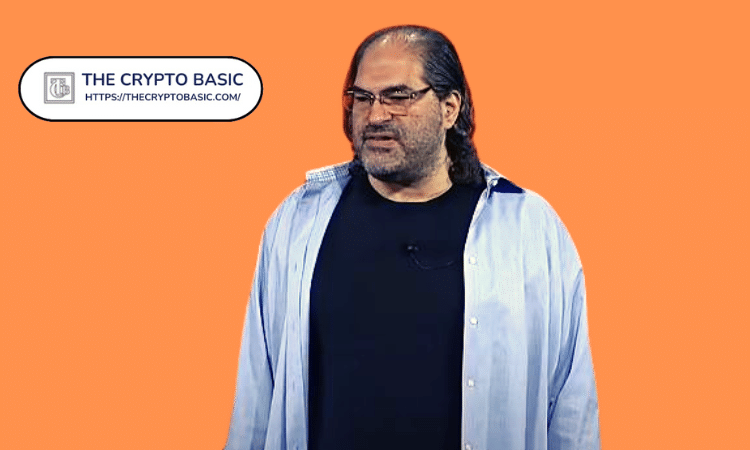
Valhil Capital Managing Director Jimmy Vallee has proposed a new variation of the XRP buyback theory, sparking debates over the viability of using XRP as collateral. These debates have prompted a response from Ripple Chief Technology Officer David Schwartz. 

As highlighted in previous reports, Vallee proposed the XRP buyback theory in 2021. It is a theory based on the assumption that XRP would become the world’s reserve currency. Following this assumption, Vallee posited that governments must own large amounts of XRP, necessitating the proposed buyback. 

The securities lawyer suggested that this buyback would not happen on the secondary market but at an agreed fixed price similar to the buyback of gold when the U.S. backed the dollar with the highly valued commodity. Considering XRP’s limited supply and the fiat supply, Vallee placed the value of 1 XRP between $37,500 and $50,000. Unsurprisingly, this price estimate and the theory have sparked discussions over the years. 

Now, in an interview on Thursday, Vallee has suggested a new proposal where instead of selling to the government, XRP holders use their holdings as collateral for a bank tentatively dubbed “People’s Bank.”

While not many appear to be paying mind to Vallee’s latest scheme, it has led to debates over whether XRP is a suitable asset for collateral. XRP Ledger validator rippleitin.nz (@rippleitinNZ) unwittingly kicked off the debate by asserting that XRP had no value to lend or borrow against.

“I wonder if anyone has told Jimmy that XRP has no value to borrow or lend against,” the validator tweeted, adding, “How can you use it as collateral?”

To buttress his point, rippleitin.nz claimed that collateral must have “redemption value.” On the other hand, he asserts that XRP only has value when it is in transit from a holder to a buyer. 

For context, a redemption value is a price at which an issuing company can repurchase stock before maturity. 

Schwartz responding to rippleitin.nz arguments in a series of tweets yesterday pointed out that a company only repurchases its stock at redemption value when it is contractually required. Otherwise, like other buyers, it purchases the stock at the fair market price determined by demand and supply factors, just like the value of XRP. Consequently, the value is not guaranteed. 

The primary reason stocks are good collateral for loans is that they are liquid, Schwartz noted, arguing that the potential of redemption would hardly be considered. Consequently, Schwartz outlined XRP’s liquidity and easy-to-track spot market price as qualities that could make it a good collateral. While he concedes that its volatility is a drawdown, he notes that loans backed by XRP can be overcollateralized, guaranteed by other means of payment or, in the most undesirable case, have high-interest rates. 

As highlighted by Schwartz, overcollateralized crypto-backed loans are already popular in decentralized finance (DeFi). It allows users interested in holding certain assets over a long period to borrow against them and engage in other trades. Schwartz wrote:

“… there are people who hold a lot of crypto and might want to borrow against their positions, possibly to get a leveraged buy and possibly to buy other things. This is a common DeFi use case. … I’m not super-interested in helping crypto wealthy folks take a bit more risk. But I am interested in the lending side as a potentially low-risk way to get a return on stored value for people who have little to no access to things like conventional brokerage firms.“

Cardano Founder Reacts to Cointelegraph Errors About ADA Staking

0

Charles Hoskinson is not pleased with Cointelegraph’s errors about ADA staking.

A Cardano enthusiast, Philippe Le Long, shared a screenshot of Cointelegraph’s recent article, highlighting “the risks of staking Cardano.”

Cointelegraph’s Assertions on ADA Staking

The cryptocurrency media outlet noted that while users can earn passive income by staking ADA, some risks are still associated with the service. It claims that staking ADA attracts a high transaction fee, adding that Cardano stake pools are vulnerable to attacks since they are required to be available on a 24/7 basis.

In addition, Cointelegraph claims users can lose their ADA coins if a stake pool operator is not focused on enhancing its security.

Reacting to the article, Long knocked Cointelegraph for making three major errors in five sentences. Long said he was unsure whether the crypto news outlet made a mistake because it lacked access to credible information. However, he provided corrections to the errors made by the crypto news outlet.

It is worth noting that Cardano transaction fees are relatively lower compared to other prominent Proof-of-Stake networks, including Ethereum. Cointelegraph’s claim that Cardano staking pools must be online 24/7 is false. Cardano’s Ouroboros, the consensus protocol powering the blockchain, creates room for dynamic availability, allowing staking pool operators to have some downtime without threatening the blockchain’s security.

In contrast to one of Cointelegraph’s claims, users do not risk losing their funds due to pool operators’ negligence, as staking on Cardano is non-custodial.

Cardano Founder Reacts

Reacting to the development, Hoskinson said: “Cointelegraph gonna Telegraph.” 

Hoskinson has been vocal about crypto media outlets’ hostilities toward Cardano. For Hoskinson, Cardano has not received much support from media outlets, including CoinDesk.

In December 2022, CoinDesk described Cardano as a vaporware network. It also predicted that Cardano might eventually become a Zombie Chain this year. CoinDesk noted that as “speculative money” leaves Cardano, the prominent blockchain may fall below the top 10 crypto rankings.

Furthermore, following Cardano’s brief network outage earlier this year, Coindesk staff sparked wild laughter and mocked the blockchain during an episode of The Hash, discussing whether the Cardano is centralized. Their attitude did not sit well with many ADA supporters, who threw jabs at them. Cardano’s founder also reacted to their attitude by indirectly calling them “high school kids.”

Ripple Data API Used To Source XRP Circulating Supply is Stuck

0

The data has not been updated since Feb. 12.

In a tweet yesterday, Leonidas Hadjiloizou, an XRP proponent and crypto researcher, asserted that the Ripple Data API, which provides crypto exchanges and data aggregators with information about XRP’s circulating supply, is stuck again.

As highlighted by the analyst, it is a frequent happening. The data shows that XRP’s circulating supply data was last updated on Feb. 12.

In a separate tweet, Leonidas maintains that it is not a significant problem. But he notes that failing to fix it would mean that crypto exchanges continue reporting erroneous figures.

An API- short for Application Programming Interface- refers to functions allowing users to interact with and access data from external systems.

Leonidas’ finding has prompted calls for the XRP Ledger Foundation (XRPLF) to take over the maintenance of the API, as reflected by a poll made by Hansen.xrp (@joeahan1). At the time of writing, the poll has received 271 responses, with 79% in favor of the XRPLF foundation maintaining the API.

Not an Innocent Mistake?

It is worth noting that the Ripple Data API and XRP’s circulating supply are often subject to controversy. Messari, in a series of reports in 2019, alleged that Ripple’s quarterly reports and the Ripple Data API offered misleading information to “significantly understate the pace of selling pressure from Ripple and its founders and affiliates.” The first of these reports suggested that these discrepancies meant XRP’s market cap was inflated.

“Not only does this report contain several inaccurate assumptions around lockups and selling restrictions, but the entire report is also based on an incorrect calculation of market cap,” a Ripple spokesperson told Forbes in response to the initial 2019 report.

In 2017, Ripple locked up 55 billion of the 100 billion XRP supply in escrow in 1 billion token tranches for scheduled monthly sales, much to the chagrin of XRP community members. The firm has unlocked 1 billion tokens at the beginning of every month since- with a few exceptions- selling an average of about 200 million tokens while locking up the rest once more. Leonidas, in 2020 estimated that it would take Ripple about 20 years to sell off its XRP holdings.

Ripple, in recent years, has clarified that its XRP sales are restricted to customers of its On-Demand Liquidity (ODL) product, who use XRP as a bridge currency in cross-border border transactions. In October, The Crypto Basic reported that Ripple held less than 50% of XRP’s supply for the first time.

Here are Shibarium Benefits For Shiba Inu

0

The network promises many advantages, including transparency, security, and low-cost transactions.

Shibarium, the Shiba Inu layer-2 network, promises a wide range of benefits for investors, from the security of user assets to low transaction costs at an unparalleled rate. These benefits were highlighted in the recently-released documentation and further compiled by Lucie, a prominent Shiba Inu influencer.


Security 

Shibarium pledges to deliver top-tier security using a hybrid system that leverages the Plasma framework and PoS validators.

The Plasma framework is a proposed scaling solution introduced initially by Vitalik Buterin and Joseph Poon in 2017. It is designed to increase the transaction processing capacity of blockchain networks, making them faster and more scalable.

It scales transactions by creating a hierarchical system of “child” blockchains connected to a “parent” blockchain, such as Ethereum. The framework also includes a set of security mechanisms designed to protect child blockchains from fraudulent or malicious activities, such as submitting invalid transaction data.

Shibarium also employs PoS security by utilizing Bone ShibaSwap (BONE), which users can stake to earn rewards and simultaneously contribute to the security of the network. 

High Transaction Speed

As detailed in the Shibarium documentation, the layer-2 network promises a fast transaction speed at an unprecedented scale. The documentation mentions that Shibarium’s transaction speed can outperform Ethereum’s.

Lower Transaction Fees

Despite promising a higher transaction speed than Ethereum, Shibarium offers lower transaction fees. Its transaction fees are expected to be 10,000 times lower than Ethereum’s average fees.

Decentralization

Similar to most blockchains, Shibarium is highly decentralized, with no central point of control. Consequently, the network’s security is sustained by the community through staking and network validation, thus safeguarding the network and eliminating the possibility of a central authority having control over it.

Transparency 

As a blockchain network, Shibarium inherently possesses the traditional transparency that characterizes blockchain technology. This enables investors to seamlessly monitor all transactions executed on the network through the dedicated blockchain scanner.

Shiba Inu Burns

As an exclusive benefit to the Shiba Inu ecosystem, Shibarium has been touted as a SHIB furnace. The network is expected to burn Shiba Inu with up to 70% of its base transaction fees, thereby bolstering the Shiba Inu burn initiative. This should provide support for the asset’s price.

Deaton Responds to Coinbase Legal officer, Calls XRP and Ripple Regulatory Sacrifices

0

Deaton Reacts to Coinbase’s Legal Officer’s Comment.

Attorney Deaton backs Coinbase’s Chief Legal Officer, who claimed that SEC’s legal tussle against the exchange is an attack against all of crypto.

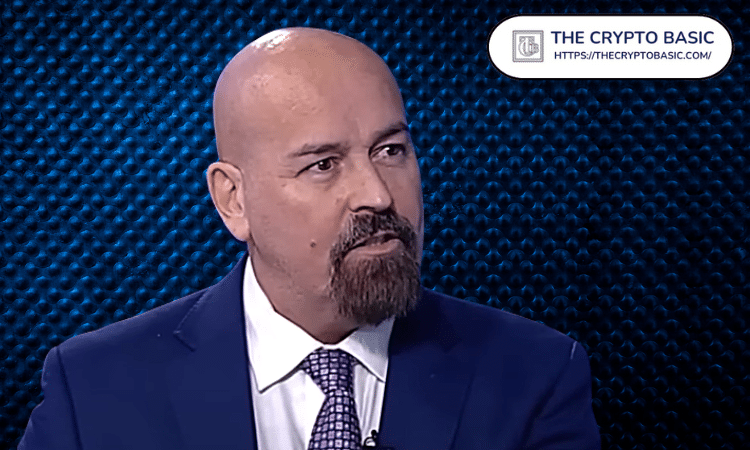
In a recent tweet, attorney John Deaton said Coinbase’s Chief Legal Officer Paul Grewal is right to assert that the recent Wells notice received by the exchange from the SEC is a shot against the entire crypto industry and not just Coinbase alone.

Notably, Grewal commented on a recent Unchained Crypto podcast hosted by Laura Shin. Grewal noted that if the SEC could come after Coinbase despite being a publicly-traded company, then nobody is safe in the crypto space.

“[…] This is not just a fight for Coinbase. This is a fight for all of the crypto [because] if responsible actors with serious AML and KYC programs, publicly listed that are filing petitions for rulemaking and attempting to engage with the government can be treated in this fashion, nobody else is safe either,“ Grewal was quoted as saying.

The podcast prompted a series of reactions from members of the XRP community who believe Grewal’s assertion is a little too late. 

Deaton’s Reaction

Attorney Deaton noted that while many XRP holders believe that Grewal’s comment is two years late after it delisted XRP, he still believes Grewal is on track to claim that the Wells notice is a shot at crypto.

Deaton said XRP and Ripple were seen as a regulatory sacrificial lamb. He further said the San Francisco-based cryptocurrency exchange promoted XRP use in cross-border settlements and presented a report to the SEC in January 2019 stating that the cryptocurrency was not a security. Coinbase listed the coin in February 2019.


The CryptoLaw founder said Coinbase would never have listed XRP if the SEC had suggested that the coin was a security because it needed the regulator’s approval to go public. 

“I know how XRP Holders feel about the delisting. At the time, I publicly disagreed with Coinbase for delisting it, but the sad reality is delisting XRP was probably not a very difficult choice for Coinbase to make considering it sought approval for an IPO and wanted harmony with SEC,” attorney Deaton added.

Response to Deaton’s tweets

Reacting to Deaton’s tweets, Bill Morgan, a pro-XRP lawyer, said he understands why Coinbase delisted XRP. Still, the cryptocurrency exchange did not support Ripple during the company’s legal battle with the SEC.

According to Morgan, Coinbase would have backed its initial decision that XRP was not a security. However, Morgan said the company chose not to destroy its relationship with the SEC because of its plans to go public.  

“But then, after Coinbase was listed, it still did not publicly affirm the correctness of its original decision to list XRP based on its understanding it was not a security. Again self-interest because it was trying to deal with the SEC,” he added. 

Morgan said it was after the crypto exchange received a Wells notice from the SEC, Grewal is now claiming “it was shot against all of crypto.” He added that Ripple and LBRY lawsuits were both shots at crypto, adding that the exchange’s hypocrisy needs to be called out.

It is noteworthy that not all XRP community members are furious with Coinbase. Recall that shortly after Coinbase received a Wells notice from the SEC, Ripple’s Chief Legal Officer Stuart Alderoty tweeted an ancient proverbial expression: “the enemy of my enemy is my friend.”

Despite Morgan’s claims that Coinbase did not support Ripple in its fight against the SEC, it is noteworthy that the crypto exchange filed an amicus brief supporting Ripple.