Home Blog Page 2019

Binance Recognizes Shiba Inu “High Level of Standard,” Removes Shib From Innovation Zone

0

Big Boost for Shiba Inu as Binance Now Trusts SHIB as a Regular Coin, Removes it from Innovation Zone.

The development comes nearly two years after the exchange supported Shiba Inu.

Binance, the world’s largest exchange by daily trade volume, has decided to move Shiba Inu (SHIB) out of the innovation zone following an extensive review of the asset’s tokenomics and behavior. The move indicates that the exchange now trusts SHIB as a regular asset worthy of full, undiluted support nearly two years after it listed it.

Binance plans to take SHIB, along with three other assets, out of the Innovation Zone on April 18, according to an official announcement today.

The exchange noted that the decision was made based on recent token reviews.

Binance Says:

“Overtime, some of these projects have proven their worth and meet the high level of standard that we expect. When we identify such projects during our periodic project review, we will move them out of the Innovation Zon.”

Binance created the Innovation Zone in September 2020 to allow its users to trade new and potentially innovative crypto assets. The Innovation Zone demands traders have a good understanding of the risks involved in trading crypto.

Assets in the Innovation Zone are considered highly risky and volatile. Binance only moves assets out of the Innovation Zone when the review finds them worthy of full and undiluted support.

Various factors are evaluated when assessing assets in the Innovation Zone, including team commitment, development activity, trading volume, network stability, communication level, responsiveness, ethical conduct, and contribution to the crypto ecosystem, among others.

Taking Shiba Inu out of the Innovation Zone grants SHIB a place among fully supported tokens such as Bitcoin (BTC) and Ethereum (ETH), further underscoring the token’s rising prominence in the crypto scene. Binance listed SHIB in the Innovation Zone in May 2021, nine months after the token launched.

Wen Bone?

The move from Binance comes amid a period of heightened social activity surrounding the Shiba Inu ecosystem fueled by the launch of Puppynet, the Shibarium beta network, and its growing adoption rate. The test network continues to make giant strides in transaction count and the number of wallets.

However, the Shiba Inu community has continued to call on Binance to list Bone ShibaSwap (BONE), the governance token of ShibaSwap, and the gas token for Shibarium. A petition was officially launched on Change.org ten months ago in this regard.


Shiba Inu: Dubai Top Exchange To List BONE As Coin Tops Poll

0

Dubai-based Cryptocurrency Exchange, CetoEX to list Bone ShibaSwap (BONE) soon.

CetoEX, a leading cryptocurrency exchange, has announced that it will soon add support for the Shiba Inu’s Governance token, BONE, on its platform.

The decision comes after CetoEX conducted a Twitter poll, allowing its followers to vote for the next project they want the exchange to list. The options included FLOKI CEO (FLOKICEO), Vita Inu (VINU), Bonk (BONK), and Shiba Inu’s BONE.

The poll saw 12,792 votes cast, with Bone emerging as the clear winner, securing 41.9% of the total votes. Vita Inu came in second with 28.1% votes, followed by FLOKICEO with 26.6%. BONK garnered only 3.3% of the total votes cast.

CetoEX, headquartered in Dubai, is one of the fastest-growing global cryptocurrency exchanges. CetoEX offers its users a secure and efficient platform for buying, selling, and trading over 100 digital currencies, including popular options such as Bitcoin, Ethereum, Ripple, Litecoin, Binance Coin, and Neo, among others.

The good thing about Dubai is that it is becoming an Asia crypto hub by bringing clear rules for crypto.

BONE And Shibarium

As Shibarium prepares for its highly anticipated launch, all eyes are on Bone ShibaSwap – the native gas token for the network – which has been generating significant attention from cryptocurrency exchanges.

Recently, London-based Swapika and Singapore-based Cryptocom joined the growing list of exchanges that support BONE. Crypto.com also introduced new trading pairs for BONE, such as BONE/SHIB.

Shibarium beta, on the other hand, is expanding very fast; as reported by The Crypto Basic, total wallets on the Shibarium testnet are now more than 5.5M.

Recall that Top Payment Gateway NOWPayments is also interested in building on Shibarium.

EmeraldsDAO: Gemstones With NFT Tokenization

0

EmeraldsDAO is an investment project based on blockchain technology that allows investing in gemstones through NFT tokenization. Gemstones have been considered one of the most valuable objects in the world for centuries, and thanks to EmeraldsDAO, now anyone can invest in this exclusive market.

The EmeraldsDAO project was created by a group of blockchain and gemstone enthusiasts with the intention of creating a decentralized platform that would enable investing in gemstones using blockchain technology. The company uses funds from gemstone investments and platform development.

Gemstone tokenization

NFT tokenization of gemstones is the process of representing gemstones as NFT tokens on the blockchain, enabling their sale, exchange, and storage in personal wallets. NFT gemstones can have unique characteristics such as size, color, clarity, and other properties, making them very attractive to collectors and investors. The actual gemstones will be deposited in a safe house in Switzerland.

NFT tokens of gemstones are based on the ERC-721 standard, which is a popular NFT token standard on the Ethereum blockchain. Each NFT token of a gemstone has a unique identifier that is recorded on the blockchain, ensuring the security and immutability of the NFT token owner.

The value of NFT tokens for investors

NFT tokens of gemstones have many values for investors. Firstly, owning an NFT token of a gemstone allows for the ownership of a real gemstone in digital form, which is an ideal solution for people who want to invest in this exclusive market but do not want or cannot own a physical gemstone.

Secondly, owning an NFT token of a gemstone can bring significant profits, as the value of gemstones is constantly rising and is one of the safest ways to invest funds. Additionally, it allows for easier exchange, sale, and storage of gemstones, making the investment more attractive.

Investment tokens

The EmeraldsDAO project has also issued investment NFT tokens, which give investors the opportunity to participate in the company’s profits. These tokens are separate collections called EmeraldsDAO Invest. Owning Invest tokens gives investors the ability to vote on matters related to company management and to decide on the allocation of financial resources. Additionally, owning these tokens enables access to unique benefits such as access to exclusive gemstones and special events organized by the company.

EmeraldsDAO currently has the following main collections:

  • Investor Collection – allows participation in profits and additional benefits.
  • Miners Collection – a collector’s collection with large rewards for collecting.
  • 1 Carat Collection – 1 token corresponds to 1 carat of emerald. This is the perfect token for beginners.
  • Charity Collection – funds are donated to poor children in Brazil.

You can read about the details of each collection on the project’s website.

The project intends to launch its own platform for trading gemstones, also in digital form.

The project is progressing according to plan. The first step was to sign a preliminary agreement for the purchase of an emerald mine in Brazil. The agreement with Save House for the use of safe deposit boxes for storing emeralds was signed last week in Switzerland.

The next step will be to sign an agreement with the GIA Institute, which will certify the extracted gems. The project also focuses on acquiring partners such as jewelry companies, top jewelry salons, jewelry designers, and fashion designers.

We invite everyone interested to visit the EmeraldsDAO project website and join the social media channels, including Discord, to learn more details about this innovative investment project.

Links:

EmeraldsDAO

OpenSea

Discord


Top 5 GameFi Projects To Watch Out For

0

There are a lot of great things in store for the future of video gaming, and one company that is at the forefront of this revolutionary change is GameFi. Based out of Los Angeles, GameFi is a startup that is focused on developing new technology that will shape the future of gaming.

Some of their most promising projects include synthetic reality, which is a form of virtual reality that uses artificial intelligence to create realistic environments, and haptic feedback, which allows gamers to actually feel the sensations of their game in real time.

With projects like these in development, it’s no wonder that GameFi is one of the most buzzed-about companies in the gaming industry. Be sure to keep an eye on their progress in the coming years; they are sure to change the face of gaming as we know it.

Here are five GameFi projects that are worth keeping an eye on:

Axie Infinity

Axie Infinity is a blockchain-based game that allows players to collect, train, and battle digital pets called Axies. The game features multiple game modes, including a single-player adventure mode and a multiplayer arena mode.

Players can earn in-game currency by winning battles, completing quests, and selling their Axies on the game’s marketplace. The game is designed to be highly decentralized, with all data stored on the blockchain. This allows for a high degree of transparency and fairness, as well as the ability to trade or sell Axies outside of the game.

In addition, the game’s developers have plans to launch a number of community-based initiatives, such as tournaments and leaderboards, to further incentivize player engagement. As a result, Axie Infinity has the potential to become one of the first truly successful blockchain-based games.

Axie Infinity is a game that allows you to breed, train, and battle cute creatures called Axies. The game is based on the Ethereum blockchain, which means that you can use real-world currency (like Bitcoin) to buy in-game items. The aim of the game is to collect as many Axies as possible and train them up to be the best fighters around. As the BTC price rises, so does the value of in-game items.

This makes Axie Infinity a great way to invest in cryptocurrency in such a way that you can trade your SLP or AXS for ERC20 tokens such as SHIB. These ERC20 tokens can also be used in trading pairs such as BTC/USDT.

Splinterlands

Splinterlands is a digital card game that combines the best elements of collectible card games, role-playing games, and online multiplayer games. In Splinterlands, players take on the role of summoners, powerful mages who call upon creatures from other dimensions to do battle in the Splinterlands.

There are six different factions in Splinterlands, each with its own unique creature types and abilities. Players can earn rewards by defeating other players in battles, completing quests, and participating in tournaments.

The game is free to play, but players can also purchase booster packs and other items to enhance their collections. Whether you’re a seasoned veteran or a first-time player, Splinterlands offers an exciting and enjoyable gaming experience for all.

Sandbox

A sandbox is a type of game that allows players to experiment with different game mechanics and objects within the game environment. The term “sandbox” comes from the fact that these games are often set in open-world environments where players are free to roam and explore at will. Many popular games, such as Minecraft and Grand Theft Auto, are sandboxes.

Unlike traditional video games, which are often linear and have a set goal or objectives, sandboxes encourage player creativity and exploration. This freedom can be both exhilarating and frustrating, as there is often no clear objective or goal to strive for. However, this freedom also allows players to experiment and create their own unique experiences within the game.

Sandbox games are often praised for their creative potential and replay value. Whether you’re looking for a relaxed gaming experience or a challenge that will push your creative boundaries, a sandbox game may be right for you.

Defi Kingdoms

DEFI KINGDOMS
DEFI KINGDOMS

Defi Kingdoms is a new game on the Ethereum blockchain that allows players to earn rewards by staking their Ether. The objective of the game is to become the King of your own little kingdom, and to do so you’ll need to collect a variety of resources.

These can be acquired by playing the game’s various minigames, or by trading with other players. As you progress, you’ll also want to upgrade your kingdom’s buildings and defenses to help protect your turf from invaders.

In addition to Ether, Defi Kingdoms also features its own native currency, DEFY. This can be used to purchase in-game items and upgrades, and can also be traded on decentralized exchanges. So if you’re looking for a fun and rewarding way to earn some extra Ether, be sure to check out Defi Kingdoms.

Win NFT Horse

Win nft horse – gamefi is a new and exciting game that allows players to purchase, breed, and own virtual horses. The game uses blockchain technology to create a secure and transparent environment where all transactions are recorded on the public ledger.

This ensures that all players have a fair chance of winning, and that the game cannot be cheated. Players can purchase horses using in-game currency, and they can also earn rewards for successfully breeding and racing their horses.

The game is still in its early stages, but it has already attracted a large community of horse lovers from all over the world. With its unique gameplay mechanics and innovative use of blockchain technology, Win nft horse – gamefi is poised to become one of the most popular online games.

Polygon (MATIC) Future In Jeopardy Post-Ethereum Transition, RenQ Finance (RENQ) Being Seen As A Replacement By Experts

0

Polygon (MATIC), a Layer-2 scaling solution for Ethereum, has been a popular choice for developers due to its fast and cheap transactions. However, its future may be in jeopardy as Ethereum transitions to a proof-of-stake (PoS) consensus mechanism, which is expected to significantly reduce gas fees and increase transaction speeds. This has led experts to consider RenQ Finance (RENQ) as a potential replacement for Polygon.

Overview of Polygon (MATIC)

Polygon was designed to address the scalability issues of the Ethereum network by creating a Layer-2 scaling solution that allows developers to build decentralized applications (dApps) with fast and cheap transactions. The platform achieves this by using sidechains, which are essentially separate blockchain networks that can interact with the Ethereum network.

Polygon has gained significant traction in the crypto community, with several popular dApps such as Aave and SushiSwap migrating to the platform to take advantage of its benefits. However, the upcoming Ethereum transition to PoS is expected to render Polygon obsolete as Ethereum itself becomes faster and cheaper.

Overview of RenQ Finance (RENQ)

RenQ Finance is a decentralized finance (DeFi) platform built on the Ethereum blockchain. The platform offers a range of DeFi services, including a DEX, liquidity pools, yield farming, and lending protocols.

What sets RenQ Finance apart from other DeFi projects is its modular and composable architecture, which makes it easier to integrate with other DeFi projects.

RenQ Finance has gained significant attention in the crypto community due to its innovative approach to DeFi and its impressive presale stage, which reached different milestones within a short period. The platform has also been working on building a range of other services, including a launchpad for new projects and an NFT marketplace.

RenQ Finance’s lending protocol is a standout feature of the platform, providing money markets for both lending and borrowing. Interest rates are determined algorithmically based on the supply and demand of the asset, which improves liquidity, creates transparent interest rates, reduces speculative risks, and streamlines the lending process without the need for a counterparty.

The platform’s technology and use cases make RenQ Finance a promising investment opportunity for those interested in decentralized finance. With its innovative features, strong community support, and potential for growth, RenQ Finance is an attractive option for investors looking to participate in the DeFi space.

Why RenQ Finance is Being Seen as a Potential Replacement for Polygon

Experts believe that RenQ Finance could replace Polygon as a Layer-2 scaling solution for Ethereum due to its speed and low transaction fees. The Ethereum – Binance smart chain blockchain on which RenQ Finance is built can handle many transactions per second, making it one of the fastest blockchain networks in the market. This is significantly faster than Polygon’s current transaction speed, which is limited by the Ethereum network’s capacity.

In addition, RenQ Finance’s modular architecture allows for seamless integration with other DeFi projects, making it an attractive option for developers looking to build on a scalable network. The platform’s range of services, including its launchpad for new projects and NFT marketplace, also suggest that it has a bright future ahead.

Furthermore, RenQ Finance’s early success in its presale stage is a testament to the platform’s potential and investor confidence in its future prospects. This could lead to more adoption and growth in the future, making it a viable alternative to Polygon for developers and users alike.

Conclusion

The Ethereum transition to PoS is expected to significantly reduce gas fees and increase transaction speeds, which could render Polygon obsolete as a Layer-2 scaling solution.

RenQ Finance is being seen as a potential replacement due to its speed, low transaction fees, and innovative approach to DeFi. While the future of Polygon is uncertain, RenQ Finance’s early success and potential for growth make it an attractive investment opportunity for those looking for a scalable blockchain network.

Click Here to Buy RenQ Finance (RENQ) Tokens.

Visit the links below for more information about RenQ Finance (RENQ):

Website
Whitepaper

Beginner’s Guide To Testnets: Blockchains On The Testnets & Mainnets

0

Blockchain technology can revolutionize various industries by providing secure, decentralized, and transparent systems for transactions and data storage. The technology has grown rapidly since the release of Bitcoin in 2009. Blockchain technology has advanced significantly in recent years, and testnet and mainnet apps are at the center of this progress.

Testnet (test network) and mainnet (main network) are two significant concepts in the blockchain ecosystem that describe different phases in a blockchain network.

A blockchain network’s mainnet is its actual, live version, which is used for real transactions and stores blockchain data for public use. The testnet, on the other hand, offers an alternative environment that imitates the functionality of the mainnet to enable developers to build and test products without needing to support live transactions.

While a testnet offers a secure setting for testing and development, the mainnet serves as the foundation of the blockchain ecosystem and is where the actual value is stored and exchanged. This fundamental difference allows developers to test their applications and smart contracts with confidence and guarantee the efficient operation of the network on the mainnet.

As a result, understanding their distinction is critical for everyone working in the blockchain space. The key difference between the two environments will be covered in this article, alongside their significance, functionality, and use cases.

What is a Testnet

Let’s delve deeper into testnet and understand how the environment works.

Testnet Definition

A testnet is a blockchain network created for testing purposes. It is similar to the mainnet or production network. However, it is used by developers to test and experiment with new features and applications without risking real assets or compromising the stability of the main network.

Testnets are essential for blockchain development because they allow developers to test smart contracts, transactions, and other functionalities in a simulated environment without using real cryptocurrency or creating real-world consequences. This will enable developers to find and fix any bugs or security issues before launching on the main network.

Testnets are usually set up using similar code and protocols as the main network but with a lower difficulty level for mining or staking and with test tokens or coins that can be obtained for free. Different blockchain networks like Ethereum, Bitcoin, and Cardano have various testnets, each with unique features and limitations.

Purpose and Benefits of Testnet

A testnet’s primary purpose is to provide developers and users with a sandbox environment where they can test new features, smart contracts, and other applications. The benefits of a testnet include the following:

Safe testing: Testnets provide a safe environment for developers to experiment with new blockchain features and applications without risking real money or assets.

Real-world simulation: Testnets simulate the real-world conditions of the mainnet. This allows developers to test their applications’ performance and scalability in a realistic environment.

Community feedback: Testnets provide a platform for developers to receive feedback from the community, enabling them to improve their products before launching them on the mainnet.

Network stability: Testing on a separate network allows developers to identify and fix potential bugs and vulnerabilities, improving the blockchain network’s stability and security.

Early adoption: Testnets also allow early adopters to get a feel of new blockchain features and applications, helping to promote their adoption and use on the mainnet.

Examples of Testnet Projects

Here are some examples of testnet projects:

1.     Ethereum Testnet

Ethereum has multiple testnets that enable developers to test and experiment with smart contracts and other dApps before deploying them on the mainnet. The most popular Ethereum testnets are:

Ropsten: Ropsten is the longest-running Ethereum testnet. Ropsten uses a proof-of-work (PoW) consensus algorithm, much like Ethereum’s mainnet before it switched to proof-of-stake (PoS).

Rinkeby: Rinkeby is another popular Ethereum testnet that uses the PoA (Proof-of-Authority) consensus algorithm. The testing environment is designed to be low-cost and low-stress for developers to test their dApps and smart contracts.

Kovan: Kovan is a popular testnet that uses the PoA consensus algorithm. It is known for its high level of security and stability and is often used for testing Ethereum-based dApps and other applications.

Goerli: Goerli is a newer Ethereum testnet that uses PoA consensus algorithm. Goerli is designed to be a fast and reliable test environment for developers to experiment with their dApps and smart contracts. In addition,  Goerli was created to address some of the issues with the previous testnets, such as spam attacks and security vulnerabilities.

2.     Cardano Testnet

The Cardano blockchain provides a secure, sustainable, and scalable infrastructure for dApps. Cardano’s test network called the Cardano Testnet, allows developers and users to test their applications and experiments before deploying them on the main Cardano network.

The Cardano testnet operates on a separate blockchain with its own rules and features similar to the main Cardano network. The Cardano Testnet features the native ADA test token, enabling developers to test applications and transactions without using real ADA tokens.

To use the Cardano Testnet, you must download a Cardano wallet that supports the test network, such as Daedalus or Yoroi. You can then connect to the Cardano Testnet and generate ADA tokens for testing.

3.     Venom Testnet

Venom is a blockchain that supports the development and execution of smart contracts. Like most existing blockchains, Venom will potentially launch on the testnet before going live on the mainnet. Some of the goals Venom will aim to achieve with its testnet launch include the following:

  1. Test the network’s functionalities in a controlled environment to identify bugs, security vulnerabilities, and other challenges that must be addressed before launching the mainnet.
  2. Gather user, tester, and developer feedback to help improve the project’s features and functionalities.
  3. Test new features and functionalities before integrating them into the mainnet, ensuring that the features work as intended without issues that could negatively impact the mainnet.
  4. Build a community of developers and users who can contribute to the project.

How to use a Testnet

Using testnet is a great way to learn and experiment with new features and applications without real-world risks. Here are some general steps on how to use testnet:

  1. Choose a cryptocurrency with a testnet version: Not all cryptos have a testnet version, so ensure your preferred crypto has an available testnet.
  2. Download and install a wallet that supports the testnet: A wallet is a software program that stores, sends, and receives digital assets. Your preferred wallet should support the testnet version of your preferred cryptocurrency. You can find a list of wallets that support testnet on the cryptocurrency’s official website.
  3. Obtain testnet coins: Unlike the main network, testnet coins have no real-world value and can be obtained for free from various sources. Some cryptocurrencies have a faucet that distributes testnet coins, while others require you to contact their developers or community for testnet coins.
  4. Start experimenting: Once you have the wallet set up and testnet coins in your account, you can start experimenting with the features and applications on the testnet. You can send and receive testnet currencies, test smart contracts, etc.

What is a Mainnet?

Here are critical things to know about mainnet:

Mainnet Definition

Mainnet refers to the main blockchain network of a cryptocurrency or blockchain-based project. It is the primary network where the transactions of the cryptocurrency or the project take place. A mainnet is the live version of the blockchain network where nodes validate transactions, execute smart contracts, and maintain the blockchain ledger.

Before a blockchain project launches its mainnet, it typically undergoes a testing and development period on a testnet or a simulated network environment. Once the developers and community are satisfied with the testnet’s performance and security, the project launches its mainnet, the blockchain’s official version.

Significance of Launching a Mainnet

Launching a mainnet is a significant milestone for a blockchain project. It signals the transition from a theoretical concept to a functional and operational network that users and developers can use. Once a mainnet is launched, the project’s native cryptocurrency can be traded and used for transactions on the network.

Examples of Mainnet Projects

There are many examples of blockchain-based projects that have launched their mainnets. Here are a few:

  1. Bitcoin: Bitcoin is the first and most well-known cryptocurrency, and its mainnet was launched in 2009.
  2. Ethereum: The Ethereum blockchain enables the creation of dApps and smart contracts. Its mainnet was launched in 2015.
  3. Chainlink: A decentralized oracle network that provides secure and reliable data feeds to smart contracts. Its mainnet was launched in 2019.
  4. Cardano: A third-generation blockchain that aims to provide a more efficient and secure platform for decentralized applications. Its mainnet was launched in 2017.
  5. Polkadot: Polkadot is a blockchain platform that enables interoperability between different blockchains. Its mainnet was launched in 2020.
  6. Solana: Solana is a high-performance blockchain with a unique consensus mechanism called Proof of History (PoH) that guarantees high transaction throughput. Its mainnet was launched in 2020.

Challenges of a Mainnet Launch

Launching a mainnet can be a complex and challenging process for blockchain projects. Here are some of the main challenges that developers and teams face:

  1. Technical challenges: Developing a blockchain network requires significant technical expertise and resources. Bugs, vulnerabilities, and other technical issues can arise during the development and testing phases, which can delay or derail the mainnet launch.
  2. Security challenges: A blockchain network is only as secure as its code and infrastructure. Hackers and other bad actors are constantly looking for vulnerabilities to exploit. As a result, a security breach can have devastating consequences for the project and its users.
  3. Scalability concerns: A mainnet launch typically involves a significant increase in the number of transactions and users on the network. Ensuring the network can handle this increased demand while maintaining performance and security is a significant challenge.
  4. Community adoption: A blockchain project’s success depends on community adoption and participation. Launching a mainnet requires building a solid community of developers, users, and stakeholders who are invested in the project’s success.
  5. Regulatory challenges: The regulatory landscape for blockchain and cryptocurrency is complex and constantly evolving. Ensuring compliance with local laws and regulations while staying decentralized can be a significant challenge for blockchain projects, particularly as they expand to new markets.

How to use Mainnet

Users looking to participate in a blockchain’s mainnet generally need to follow these steps:

Choose a wallet: Choose a wallet that supports your preferred blockchain. Choose a reputable wallet provider and take the necessary precautions to secure your wallet.

Get some cryptocurrency: To use the mainnet, you typically need a cryptocurrency compatible with your preferred blockchain. You can buy the crypto on an exchange or receive it from someone who already has it.

Connect to the mainnet: Once you have a wallet and some cryptocurrency, you need to connect to the mainnet. This can be done by changing the settings in your wallet or using a dedicated software client.

Send and receive money: Once connected to the mainnet, you can send and receive funds on the blockchain. You can send cryptocurrency to other users using their wallet addresses and receive it by sharing your wallet address.

It is worth noting that each blockchain may have unique requirements and steps for using its mainnet. Therefore, it’s always a good idea to conduct research and follow the official documentation the blockchain developers provide.

Differences between Testnets and Mainnets

Testnet and Mainnet are two different networks used in blockchain technology. Here are some of the main differences between Testnet and Mainnet:

Consensus Mechanisms

A testnet uses a less resource-intensive consensus mechanism than the mainnet to enable faster and cheaper transactions. Mainnet’s consensus mechanism is more complex and resource-intensive to guarantee the network’s security and decentralization.

Security

Mainnet is more secure than Testnet because it uses real cryptocurrency, and the cost of attacking the network is much higher. Testnet is more vulnerable to attacks and may be reset or deleted anytime.

Economic Incentives

Mainnet uses economic incentives, like transaction fees, mining, or staking rewards, to incentivize network participants to maintain the network’s security and integrity. Economic incentives are not present on the testnets because they are used only for testing and do not involve real money or assets.

Furthermore, testnets typically use a replica of the cryptocurrency on the mainnet. This is to prevent developers from accidentally spending real cryptocurrency while testing.

Transaction Speeds

Testnet transactions can be processed faster than mainnet transactions because there is less traffic on the network. Mainnet transactions may take longer to process because they are subject to network congestion.

Governance

Since testnet is just used for testing and does not involve real money or assets, it typically has a more centralized governance approach. Mainnet has a more decentralized governance structure to ensure network users make decisions while enhancing security and transparency.

Overall, Testnet is a valuable tool for developers to test and experiment with blockchain technology before deploying their applications to the mainnet. The Mainnet, however, is the network where all actual transactions and operations occur, and users can interact with the blockchain in a secure and stable environment.

Future Outlook for Blockchain Technology on Testnet and Mainnet

Several trends will likely emerge regarding the future outlook for blockchain technology on testnet and mainnet. These include:

  • Increased adoption of blockchain technology in various industries, including finance, healthcare, supply chain management, and more
  • Development and implementation of new and improved consensus algorithms that increase transaction speeds and reduce energy consumption
  • The emergence of new decentralized applications (dApps) that provide novel solutions to existing problems and expand the use cases for blockchain technology
  • Integration of blockchain technology with other emerging technologies, such as artificial intelligence and the Internet of Things, to create more advanced and secure systems

Conclusion

The development of blockchain technology involves multiple concepts, and two key concepts are the testnet and mainnet.

The importance of the testnet lies in its ability to help developers identify and fix bugs, vulnerabilities, and other issues before launching the mainnet. This reduces the risks of network failures and protects users’ assets. Additionally, testnets allow developers to experiment with new features and ideas without affecting the mainnet’s stability.

The mainnet, on the other hand, is critical as it is the live network where actual transactions occur, and the success of the blockchain depends on its reliability and security. The launch of the mainnet also marks the beginning of the blockchain’s public use and adoption, leading to its growth and scalability.

Overall, the future looks bright for blockchain technology on both testnet and mainnet as developers continue to push the boundaries of what is possible and new use cases are discovered.


Accelerating Web3 Payments: Helio Secures $3.3 Million To Bring Web3 Payments Mainstream

0

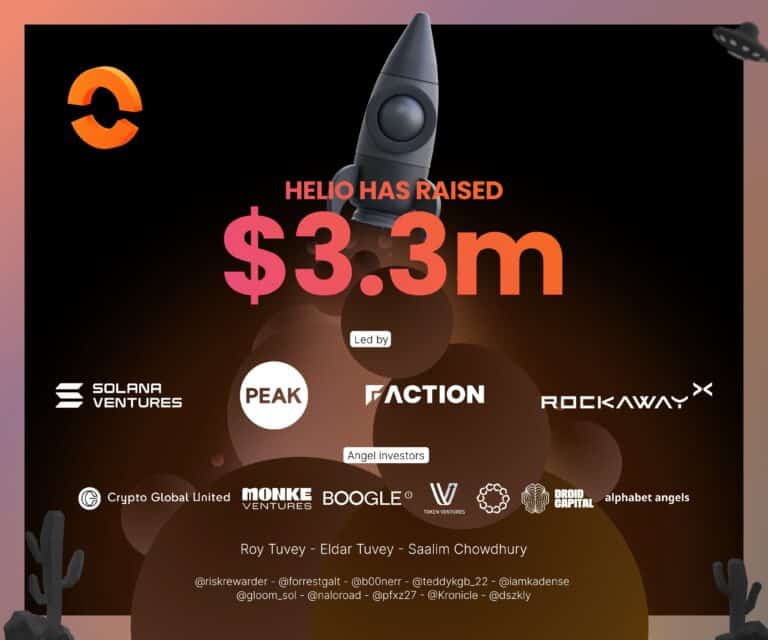
The fundraising round included Peak, and Lightspeed Faction with further participation from RockawayX, Solana Labs, and a group of leading angel investors.

The Web3 payment platform raised $3.3 million in a seed funding round with the aim of making Web3 payments easily accessible to the masses. Helio was founded by serial entrepreneurs Jim Walker and Stijn Paumen with a vision to build a “Stripe” for the Web3 economy that makes integrating blockchain-native payments as simple as setting up a Gmail account.

Helio Web3 payments
Helio Web3 payments

“Payments is the ultimate blockchain killer app, promising lower fees, instant settlement for merchants, and increased privacy & friction-free checkouts for users. Our goal is to bring these benefits to 100s of millions of users over time by lowering the barriers of using web3 technology and offering a familiar payment UX”, said Stijn Paumen, CEO of Helio. “We’re thrilled with the backing, which will allow us to execute on our roadmap, scale the platform and streamline onboarding new clients.”

Since launching in the summer of 2022, Helio has processed over $10 million in e-commerce, NFT sales, SaaS subscriptions, content paywalls, and other payments for over 900 merchant customers and 35,000 users. Helio features in the top 50 DeFi apps across all blockchains, according to DappRadar.

“Digital payments is a +10T market with double-digit growth driven by emerging payment technologies such as blockchain payments. We believe a sizeable share of transactions will be executed on blockchains in the coming decade, creating a multi-billion dollar revenue opportunity”, said David Zwagemaker, Partner at Peak. “Helio will be leading the way with their API and simple UI that makes it easy for anyone to integrate in minutes and process Web3 payments without any prior blockchain experience.”

Founders Jim Stijn have worked together for 20 years building SaaS start ups with two successful exits for a total of 600M

Helio’s solution currently provides a secure and convenient way for merchants, dApps, and creators to accept instant crypto payments across multiple blockchains, including Solana, Polygon, and Ethereum. The platform offers built-in content paywalling features that allow creators, such as podcasters, YouTubers, artists, NFT projects, media, or platforms to monetize content in a new way and reach a new audience with watch-to-earn models.

“We were instantly excited by Helio’s focus on digital content as an emerging use case for Web3 payments”, said Sam Harrison, Managing Partner at Lightspeed Faction. “A crypto wallet can also act as a portable digital identity, meaning creators can eliminate sign-ups from their checkout flow. At the same time, users can instantly unlock and pay for content with a micropayment and a single tap of their wallet saving 2-3 minutes it would take to sign up and pay over traditional, expensive card rails. That level of friction is completely removed with Helio”.

The raised funds will be allocated to expand Helio’s sales and marketing teams, fostering partnerships with creator platforms and marketplaces. Furthermore, Helio plans to grow its engineering team to advance the company’s multi-chain strategy, which includes upcoming launches on Bitcoin and Binance. Additionally, the company aims to develop an in-app wallet to facilitate Web2-style payment experiences and seamless integrations.

Edward Kim Welcomes Superman Return to Terra Classic, Dismisses Arrest Warrant Rumor

0

The individual has been repeatedly touted as one of the most talented developers on the team.

Superman, an anonymous and enigmatic individual touted as one of the best developers in the Terra Classic Layer-1 Joint Task Force (L1JTF), is expected to return to the team in the next one to two weeks. This follows a hiatus he observed after his contribution to the L1JTF’s work on Terra Classic in the first quarter of the year.

According to LUNC Burn Army (LBA), the team’s project manager, Superman, will return to the L1JTF as the team braces itself to proceed with work for the second quarter. The disclosure elicited excitement within the community, given the vacuum created by the absence of Edward Kim and Tobias “Zaradar” Andersen.


Superman, also commonly called Inon Man, is regarded by Edward Kim and Zaradar as one of the essential additions to the team in terms of development work. In January, Zaradar urged the community to do everything to retain the individual. Despite his laudable efforts, the individual has chosen to remain anonymous.

Zaradar further noted that, while Superman is officially regarded as working part-time, his work rate almost equals the efforts put in by most full-time developers. Zaradar had persistently ascribed several works in Q1 to him. However, he revealed last Tuesday that the individual had been MIA for six weeks.

Following the recent disclosure of his impending return, Zaradar noted that the team is lucky to have him back. The developer further implored that they not chase him away as they have done with other developers.


Rumors of Arrest Warrant Debunked

Notably, there have been rumors of arrest warrants out for Superman and given his anonymity within the community; community members could neither confirm nor refute these conjectures. However, upon receiving news of his return, Kim assured the community that these rumors were false. 

“I can squash the rumor that there is an active arrest warrant out. this is not true. they are 100% compliant with their local jurisdiction,” Kim remarked. He also confirmed that Superman did not make a plea bargain.


Despite this assurance, prominent community member DemonMonkey insisted that Superman denies the allegations personally. When asked if the arrest warrant rumors were true, Zaradar confirmed that he disclosed information on the matter, but he never implied that there was an arrest warrant out for Superman.

According to Zaradar, he revealed that Superman was engaged with other activity elsewhere which bordered on legal matters. Zaradar mentioned that he never insinuated that the activity involved crime. However, DemonMonkey insists that the individual is at loggerheads with the law.

Koyo Token Holders Surpasses 1,170 Amid Increased Shiba Inu Burns 

0

Koyo continues to record widespread adoption.

Koyo (KOY), a newly launched cryptocurrency, has been attracting the interest of investors in recent times. The number of Koyo token holders is on track to hit a new all-time high of 1,200. 

Data from leading cryptocurrency analytics platform CoinMarketCap (CMC) shows that the number of Koyo token holders now stands at 1,174, with the top 10 addresses holding 40.6% of KOY’s supply. 

Interestingly, the cryptocurrency achieved the feat less than two months after launching on Shiba Inu’s decentralized exchange ShibaSwap. As reported, KOY officially debuted on ShibaSwap on March 9, 2023. However, it has attracted the interest of cryptocurrency enthusiasts, especially members of the Shiba Inu community. 

Koyo’s Shiba Inu Burns

Following Koyo’s launch, the cryptocurrency has joined Shiba Inu’s ongoing burn campaign. Several reports have emerged showing Koyo’s role in reducing Shiba Inu’s gigantic supply. 

Yesterday, Koyo burned a whopping 1.49 billion SHIB tokens in a single transaction, thus causing Shiba Inu’s burn rate to spike by 30929.37%. A few days earlier, Koyo had incinerated 1,178,830,489 (1.17B) SHIB in six transactions. 

At press time, Koyo has successfully burned 8,757,565,854 SHIB tokens, according to data from Etherscan. Despite the number of tokens burned so far, the team behind Koyo has declared their commitment to continue incinerating hefty amounts of SHIB. 

Koyo’s pseudonymous founder Kintaro noted in his “First Revelation” that Shiba Inu community members should “expect its SHIB burns to be in the millions.” He further disclosed plans to build exclusively on Shibarium, Shiba Inu’s layer-2 network.  

Will Ethereum Hit $4000 In 2023? This DeFi Token Will Still Outperform ETH And Provide 10x More Gains

0

As the cryptocurrency market continues to grow and mature, investors are constantly seeking out new investment opportunities that have the potential to generate significant returns. Ethereum (ETH) has long been considered one of the most promising cryptocurrencies, with its value increasing steadily.

However, there is a new DeFi token that is emerging as a potential challenger to Ethereum’s dominance – RenQ Finance (RENQ). In this article, we will examine whether Ethereum will hit $4000 in 2023 and why RenQ Finance is likely to outperform ETH and provide 10x more gains.

Ethereum’s Potential in 2023

Ethereum has been one of the most significant cryptocurrencies in the market since its launch in 2015. In recent years, it has established itself as a significant player in the DeFi space, with its blockchain technology facilitating the development of decentralized applications and smart contracts. The cryptocurrency has also benefited from its position as the second-largest cryptocurrency by market capitalization, with many investors seeing it as a safer and more stable investment option compared to smaller altcoins.However, the question remains: will Ethereum hit $4000 in 2023? While it is difficult to predict the future value of any cryptocurrency with complete accuracy, many industry experts are optimistic about Ethereum’s potential for growth in the coming years.

Just a year and a half ago, Ethereum (ETH) reached its all-time high of $4,644.33. Since then, the cryptocurrency industry has endured a brutal bear market that has drastically changed the landscape. During this period, Ethereum lost over 75% of its value. However, there is optimism that Ethereum could once again reach those previous all-time highs.

One of the reasons experts are bullish on Ethereum is due to the series of upgrades implemented on the blockchain over the years, including the recent Shapella upgrade. This upgrade is expected to significantly improve the user experience for Ethereum users and attract new investors to the network. As a result, there is a good chance Ethereum could hit $4,000 in 2023.

RenQ Finance’s Potential for Outperforming ETH

Despite Ethereum’s potential, there is another DeFi token that is poised to outperform ETH and provide 10x more gains: RenQ Finance (RENQ).

RenQ Finance is a decentralized finance platform that is built on the Ethereum blockchain. It offers a range of innovative DeFi products and services, including money markets, yields farming, and an NFT launchpad.

RenQ Finance has already generated a lot of buzz in the cryptocurrency community, with its presale stage raising over $9.3 million in funding as of writing. The platform’s innovative approach to DeFi and its commitment to security and interoperability have made it an attractive investment option for investors seeking long-term growth and stability in the cryptocurrency market.

Moreover, RenQ Finance is likely to outperform Ethereum and provide 10x more gains due to several reasons.

  1. RenQ Finance is still in its early stages. As the platform continues to develop and gain momentum in the DeFi community, the potential for significant returns will only increase.
  2. RenQ Finance’s commitment to security and interoperability makes it a more reliable investment option compared to other DeFi platforms that have suffered from security breaches in the past.
  3. RenQ Finance’s unique product offerings, such as its NFT launchpad, will provide investors with access to new and exciting investment opportunities that are not available on other platforms.

Conclusion

While Ethereum remains one of the most promising cryptocurrencies in the market, there is a new DeFi token that is emerging as a potential challenger to its dominance – RenQ Finance. RenQ Finance’s innovative approach to DeFi and its commitment to security and interoperability make it a more reliable investment option compared to other DeFi platforms.

As the cryptocurrency market continues to grow, RenQ Finance is likely to outperform Ethereum and provide 10x more gains, making it a strong investment option for investors seeking long-term growth and stability.

Click Here to Buy RenQ Finance (RENQ) Tokens.

Visit the links below for more information about RenQ Finance (RENQ):

Website
Whitepaper