Home Blog Page 2361

CNBC Reports Terra Founder May Not Go To Prison For LUNA And UST Crash


Is Terra’s Do Kwon Going To Jail, Or Will He Pay Up? What Are The Options?


Recently, Terra Luna’s issues have been a significant subject of discussion on crypto streets. Over the last few days, founder Do Kwon and his company, Terraform Labs, have been mentioned in various scandalous allegations linked to the recent collapse of the Terra ecosystem following the price crash of LUNA and UST.

As the allegations pile up, speculations are abounding on whether Do Kwon, who apparently owns over 90% of Terraform Labs, could be legally liable for the economic damages that befell Terra investors.

There are already reports that he and his company are under intense investigation by a team of elite anti-fraud government agents in South Korea. The debate is now hot on whether Kwon could get prison time if things go south for him.

This Was His Second Failure

For starters, it’s now in the public domain that the collapse of Terra Luna and UST is not Kwon’s first failure in the crypto space. It has been revealed that he was behind yet another collapsed stablecoin project named Basis Cash a few years ago.

Interestingly, right after the collapse of Terra, Do Kwon proposed to create yet another project named Terra 2.0. The new blockchain went live on May 27, and then a faulty airdrop operation followed.

These successive failures have threatened to erode people’s confidence in the blockchain and crypto technologies. Not to mention that Terra’s crash affected the entire crypto market, including top coins like Bitcoin and Ethereum.

Fines Or Time In Prison?

So, following the back-to-back exposes and a number of investigations facing Do Kwon and his company, could he end up in prison?

CNBC reports that criminal charges in a market-related incident are hard to prove in a court of law because there’s no metric or technology to assess a person’s intent on the go. For example, being an evil CEO in the US and making decisions that lead to losses doesn’t amount to criminal conduct.

Randal Eliason, an assistant US Attorney, told CNBC:

“It’s not like a homicide where you bring witnesses to testify to who pulled the trigger. We’re trying to prove what was going on in someone’s mind.

That’s often a very painstaking process that involves reviewing lots and lots of documents, and talking to many, many people and dealing with all their lawyers through that process, and scheduling grand jury time and court appearances.

It can really drag on, so no one should expect anything to happen overnight.”

Civil Case Possible

However, a civil case could sail through and have Do Kwon pay fines and compensations to the victims. To prove such a case would have a lower evidential thresh-hold than proving a criminal case involving prison time.

A group of South Koreans who lost money during the Terra crash is already pursuing this option against Kwon. He’s also facing taxation demands from the South Korean tax authorities.

Hoskinson Defends Cardano, Says Our Developers Write Codes Carefully to Protect Users & Their Investments


Hoskinson has once again come to the defense of Cardano against critics, who feel the network has been moving slowly since it went live.


Charles Hoskinson, the CEO of Input Output Global (IOG), the firm in charge of Cardano’s research and development, has once again responded to critics, who continue to slam Cardano for its slow progress. 

In recent times, Cardano has been called all sorts of names, including “ghost chain” for its limited utility and slow progress in releasing upgrades. 

In a recent video shared by an ADA enthusiast on the microblogging platform Twitter, Solana co-founder Anatoly Yakovenko in an interview spoke about why Cardano has not experienced any issues in the last five years. 

According to Yakovenko, Cardano has been slow at releasing significant upgrades because its developers do not “kiss a couple of frogs” while building. 

By this, Yakovenko means that Cardano’s team has blatantly refused to cut corners along the line of building. 


Cardano Team Protecting Users

Reacting to these comments, Hoskinson questioned critics about whether it has become a crime for Cardano developers to write code carefully to avoid costly mistakes, especially as millions of users and thousands of businesses rely on the network. 

He added that he would like to see most of these critics, who always suggest that Cardano should hasten up by releasing significant upgrades and building a hospital. 

“So the primary criticism is that Cardano writes software carefully when billions of dollars are at stake from millions of users and thousands of businesses rely upon the infrastructure for their livelihood? I’d love to see these guys build a hospital,” Hoskinson said on Twitter. 

Hoskinson Mocks Solana

This comes less than 12 hours after Hoskinson mocked Solana for suffering another network outage, comparing the popular blockchain to an old Nintendo game. 

The Cardano exec shared a YouTube link on Twitter today showing steps to get an old Nintendo game working, and suggesting that Solana developers should use the steps in the video to revive the network.     

Critics Slam Cardano’s Slow Progress

Meanwhile, Cardano has been widely criticized for the slow pace the network has moved since its launch in 2017. The popular blockchain network has been compared with networks such as Solana and Ethereum in terms of achievements. 

Despite the fact that Solana launched at least two years after Cardano had gone live, it has achieved tremendous progress, especially in institutional adoption and the number of venture capitalists backing the project. 

However, Cardano’s team is unbothered as it continues to move at a pace it finds convenient in order to avoid incurring any mistake that will be detrimental to users and investors. 

Cardano is getting ready for the Vasil Hard Fork event slated to launch by the end of this month. 

With The Price Down 32.5% in 7 Days, Will SafeMoon Ever Return to Its Peak?

0

The cryptocurrency markets almost showed a downward trend at the beginning of May, with most cryptocurrencies starting to fall in varying degrees. Even Bitcoin or Ethereum, which are known as stable coins for cryptocurrencies, fell by 8.22% and 7.16% respectively in the last 7 days. And, the Federal Reserve raised 50 basis points to combat the effects of inflation on May 4th. Not only that, but the UK inflation rate soared to 7% and is still rising. The Bank of England raised interest rates on May 5, the fourth time since last December and the fastest increase in borrowing costs in 25 years.

Even though countries are starting to make some responses to the current financial markets, at the close of trading on May 5, the three major U.S. stock indices were down sharply, with the Nasdaq down 4.99%, the S&P 500 down 3.55%, and the Dow down 3.11%. Such a situation was not only seen in the financial markets but also in the cryptocurrency market.

As seen on the international cryptocurrency exchange www.gate.io, SafeMoon’s price was $0.0004947 at the time of writing and had dropped 32.5% in 7 days. In the last 24 hours, the price has also fallen by 2.6%, with a volume of $2,504,077. This is kind of a big drop in cryptocurrencies.

What Is SafeMoon’s Peak Moment?

SafeMoon is a BE20 token released in March 2021 on the Binance Cryptocurrency Smart chain. It was also one of the tokens with the largest price increase in the first half of 2021. Even now it still feels exaggerated to talk about it, as SafeMoon’s price rose by 6,000% in just 2 months. It also increased the attention of 2.5 million investors.

When it was first released, SafeMoon seemed to take the same cryptocurrency approach that traditional financial investors use to value stocks, which is to follow a buy-and-hold philosophy where those who hold the longest will get the biggest returns. SafeMoon uses three simple features in each transaction to combat impermanent losses and create better protocols to amplify its effectiveness. These are static rewards (reflection), manual token destruction, and automatic liquidity pooling.

However, the goods did not explode consistently. After June, the price of SafeMoon started to drop, and some investors even started to think that someone was shorting the token to make a profit. In December 2021, the SafeMoon team started to upgrade V2, changing the previous 10% transaction fee to 2%, and derived many peripheral software products or related games.

Even so, investors’ attention to SafeMoon has not increased much. And in April 2022 SafeMoon also broke out a class action lawsuit and the departure of its global product director, which also had an impact on SafeMoon price.

Nevertheless, perhaps it is also true that, as with traditional financial investments, low prices may be met with high rallies. Will SafeMoon’s current decline usher in the next sudden rise? How long before it reaches the Moon? Either way, investors need to know that cryptocurrencies are high-risk investments, and caution is needed before starting.

Gemini Exchange Lay off 10% of Its Staff Due to Cryptocurrency Market Slump

0

Cryptocurrency winter has started affecting trading firms, as Gemini lays off 10% of its employees.

Following the massive decline in the value of cryptocurrencies in recent times, popular cryptocurrency trading firm Gemini Trust Co., has laid off some of its employees to cope with the ongoing “crypto winter.”

Gemini made the announcement in an internal memo sent to employees of the company as seen and published today by Bloomberg, stating that it would reduce its total staff by 10%.  .

“This is where we are now, in the contraction phase that is settling into a period of stasis — what our industry refers to as crypto winter,” Gemini said in the memo.

The company noted that aside from the ongoing industry slump, its financial position has been badly affected by the recent macroeconomic and geopolitical turmoil, adding that it is not the only company affected in the industry.

Notably, the affected employees will be invited for a remote conversation to discuss the appropriate layoff benefits that the company will make available to the workers.

Cryptocurrency Market Winter

Since the beginning of the year, prices of various cryptocurrencies, including Bitcoin (BTC), Ethereum (ETH), among others, have suffered huge blows.

These coins have shredded more than 50% of their gains since November 2021. Events such as rising inflation across the world and Russia’s invasion of Ukraine have been considered as contributing factors to what led to the massive dip in the value of cryptocurrencies.

When investors and cryptocurrency-related businesses thought they had seen it all, the unfortunate Terra incident occurred, which became a major catalyst that ushered in the ongoing bear market.

Efforts to Salvage the Situation Not Effective

It is common knowledge that the ongoing bear market has wreaked havoc on businesses and investors. However, venture capitalists and other big players in the industry are deploying various techniques to save the market from plunging further.

While Andreessen Horowitz pumped a massive $4.5 billion to the cryptocurrency market, world’s largest exchange Binance also made a commitment of $500 million.

Contrary to expectations, these moves have had very little impact on the market.

Exchanges’ Profit Affected

With the value of cryptocurrencies experiencing wide swings, many traders have decided to stay away from trading for the time being until things stabilize and it has badly affected exchanges that rely on trading fees to cater for their operational cost.

At the moment, Gemini has decided to focus on issues and products that are pertinent to its mission.

“Today is a tough day, but one that will make Gemini better over the long run,” an excerpt of the memo reads.

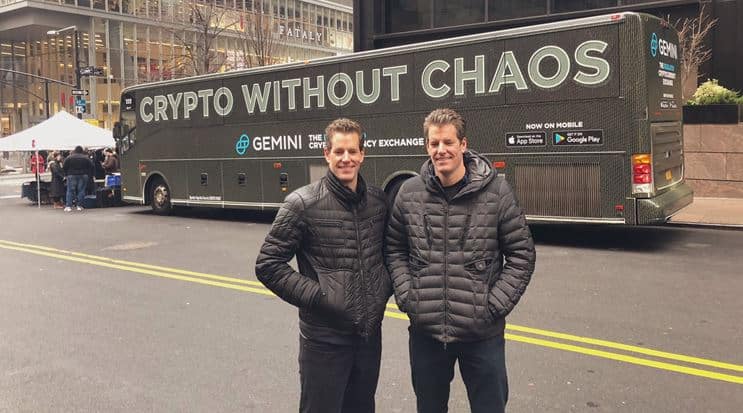
Founded by Tyler and Cameron Winklevoss in 2014, Gemini initially launched as a cryptocurrency exchange. However, the firm has added multiple services that have seen it grow beyond a mere cryptocurrency exchange.

Although it is not clear the number of staff that work for the company, LinkedIn estimates that Gemini has about 1,000 staff on its payroll.

DOGE Co-founder Takes On Binance Chain, Says “Every Token On That Chain is Garbage”


DOGE Co-founder Takes On Binance Chain, Says “Every Token On That Chain is Garbage”


Billy Markus, otherwise known on crypto Twitter as Shibetoshi Nakamoto, is one character known for his role in creating Dogecoin. DOGE is one of the most successful meme coins currently on the market. Billy is the co-founder of DOGE.

However, he’s also known for his aggressive antics when bashing some crypto projects or when educating his followers about the crypto market.

His current target is the Binance Smart Chain (BSC) and the tokens that launch on it. Billy hit out at the BSC tokens via a Twitter thread that now attracts lots of attention on crypto Twitter.

BSC Gems Don’t Exist

There have been times when investors rush to put money on specific projects launched on BSC. Investors determine the profitability of these projects, may they be crypto tokens or even NFTs, before investing. These potentially high-yielding projects are referred to as “bscgems.”

However, according to Shibetoshi, “there is no such thing as a “bscgem.” He goes on to claim that all the tokens launched on BSC are “garbage.” In his view, anyone who talks about BSc gems is a “scam bot, a scumbag, or an idiot.”

And he wasn’t done yet.


Billy: NFTs Have No Inherent Value

In another tweet, Shibetoshi shifted his attention to NFTs.

He posted a series of questions and answers regarding the intrinsic value of cryptocurrencies and NFTs. In his opinion, NFTs and cryptos have no inherent value. Their price is determined by what the next person is willing to pay for a piece of the digital asset at a particular time. However, he stopped short of calling them ponzis, instead attributing their arbitrary values to how the markets work.

Billy’s tweets have attracted a lot of attention, and many of his followers have come out to offer their opinions.

One notable reply read,

“We normally use units of measurements derived from some universal constant that we can repeatedly measure, but monetary value can’t derive value from a constant. You cross an imaginary line, and all of a sudden, something is cheaper or more expensive.”

Given Shibetoshi’s nature of acting trashy on Twitter, it’s not clear what his end-game was, especially considering that he was one of the co-founders of Dogecoin, which started as a funny meme coin.

Shiba Inu Lead Developer Teases Shib Army With “No Context, Nda, Soon” What That Could Possibly Mean?

0


Shiba Inu Lead Developer Teases Shib Army again.


Shiba Inu (SHIB), Shytoshi Kusama is teasing Shiba Inu Community about the upcoming partnership announcement with its recent tweet in a new style.

Shytoshi Kusama has recently posted a tweet with the following 4 hashtags: #nocontext, #nda, #soon, and #SHIBARMY.

The hashtags “#nda” and “#soon” point towards an upcoming partnership that could be in process and is almost near complete. Whereas, the lead SHIB Developer refrains to give a clear idea of what this NDA is all about by adding the “#nocontext” hashtag to his tweet.

Shytoshi Kusama can be Up to Signing a Non-Disclosure Agreement (NDA) with Shib.io Metaverse Studio or any other firm?

Looking at the tweet, Shiba Inu Community can expect the upcoming partnership announcement soon. This soon might stand for the coming next days, weeks, or months.

The upcoming announcement might be about the upcoming Shib.io Metaverse Studio. Here is why?

The aforementioned tweet comes after the dog-themed project added Marcie Jastrow and Sherri Cuono to its metaverse team.

Marcie Jastrow, an immersive media veteran with 20 years of experience, is reported to oversee SHIB: The Metaverse project. Whereas, Sherri Cuono has joined Shiba Inu’s Metaverse team as an advisor. Formerly, she had worked on a series of projects ranging from entertainment, and healthcare, to the enterprise.

But before these appointments, Shiba Inu hired Amazon’s former legal consultant Craig Kessler (CK1) as its first legal counsel. The announcement about this hiring came in the form of a medium article named “Shibshire Blastaway”, published on May 11.

In this medium article, the lead developer of ShibaSwap unveiled the timeframe of completion of much-awaited upcoming projects, including Shibarium, SHI, and ShibFE (Shibarium Financial Ecosystem) along with the retention of Shiba Inu’s first legal counsel.

The medium also highlights the job responsibilities of Craig Kessler (CK1) being a specialist in contract law. As per the announcement, he will handle the necessary contracts for all Shiba Inu’s upcoming projects, including Shib.io Metaverse Studio, Metaverse advisory team, and other contracts.


The medium blog post reads:

“Craig is a perfect fit for our current slate as he specializes in contracts, (specifically ENTERTAINMENT contracts), and will help us finalize the contracts with our upcoming Shib.io Metaverse Studio, Metaverse Advisory Team, and other contracts; including NDAs, entertainment deals, and new partnershibs. He’s been a legal consultant for Amazon Studios/Prime Video and Hulu, so we believe we are in good hands.”

Looking into all the above details, we can make a conclusion that soon Shytoshi Kusama will unveil the curtain from the secret, i.e., might announce the name of Shib.io Metaverse Studio or any other large enterprise.

How Terra VIPs Took Massive Profits From Farming Rewards Through Insider Trading While Others Lost Money


Do Kwon Caught In Yet Another Scandal Of Insider Trading While Everyone Else Lost Money.


The social and legal terrain is getting rougher for Do Kwon and his team at Terra. There have been multiple scandals exposed in recent days with the Terra Luna founder at the center of all of them. Now, another one has come up, and this one is even crazier and might fuel more community anger against Terra.

It turns out that during the Luna and UST crash, while everyone else was burning in pain of seeing their investments go up in smoke, Do Kwon and a group of VIP Terra validators were busy scheming on how to make themselves filthy rich. The scheme has been exposed by FatMan in a lengthy Twitter thread.


UST-LUNA Tokenomics Explained

First off, according to the original Whitepaper, Terra Luna’s basic tokenomics state that a user can redeem 1 UST for an equivalent $1 worth of Luna. The vice versa applies the same way. During a UST de-peg, as it happened in this case, UST would be converted into Luna at a very high rate until the UST is pegged again.

If de-peg isn’t restored, Luna would crash hard towards zero value. This is exactly what appears to have happened in the recent UST and Luna crash.

However, while the crypto crashed, Do Kwon and his VIP group of validators were swapping large amounts of UST into Luna.

Validators Disabled The Market Module And Staked

Apparently, the group planned to change the base tokenomics of the crypto and reap big when it eventually reversed course and recovered.

They also restricted access to staking, meaning that the rest of the Terra community was totally in the dark and couldn’t stake.

“Behind the scenes, a closed group of validators were deciding on a course to change LUNA’s fate. They were going to radically change LUNA’s core tokenomics by disabling the market module to prevent a governance attack, and would stake large amounts of LUNA themselves.”

In his tweets, FatMan estimates that this group of insider traders stands to reap profits to the tune of over 60,000% APR from LUNC (the newly renamed Luna Classic). The APY is around 700,000%.

As is evident from the comments, the community isn’t happy about this. As a matter of fact, these allegations could spark yet another investigation against Kwon and Terraform Labs. This time around, the involved Terra validators could also be subjects of investigations.

Currently, the South Korean government is investigating the collapse of Luna, and this new information, if proven to be true, could be used by the authorities.

Terraswap Official Decentralized Exchange Goes Live on Terra 2.0 

0

Leading community decentralized exchange Terraswap has announced that it has officially made its debut on Terra 2.0. 

The decentralized exchange made the announcement on Twitter today, saying that users can now gain seamless access to asset liquidity on the Terra rebirth network.

Terraswap noted that following its launch on Terra 2.0, several Terra and CW20 tokens will be listed on the platform in order to give users access to more trading pairs.

Interestingly, the developers of the platform urged token developers to reach out to the team via its Discord channel if they want to see their crypto listed on the platform.

“Terraswap is live on @terra_money Terra 2.0, and we can see many projects are getting listed! For token builders, any [token] builder can list! Feel free to ask for support on discord! For users, please provide liquidity and enjoy your swap!,” Terraswap announced.

Terraswap Launches as Community DEX

The Terraswap team described the exchange as a community decentralized exchange developed to support the Terra community, adding that the initiative would make the community stronger.

Powered by DELIGHT, Terraswap is an open-source and decentralized protocol for automated liquidity provision on the Terra network. The platform is tipped to provide decentralized trading solutions to developers, traders, and liquidity providers.

At the moment, Terraswap has only two trading pairs such as $ampLUNA – $LUNA and $LunaX – $LUNA. The team behind the DEX plans to add more pairs in the near future.

Efforts to Make Terra 2.0 Successful

Meanwhile, following the launch of Terra 2.0, several decentralized applications (dApps) have indicated interest in continuing to run on the new Terra network.

Recall that after Terra ecosystem tokens, $LUNA and $UST, suffered huge losses last month, the team behind the project decided to launch a new chain with new tokens, as part of efforts to compensate investors.

The new blockchain has been launched while the new $LUNA tokens have been airdropped to holders of the existing ones.

Things are beginning to fall into place with more dApps indicating interest in deploying on the network. As reported, Phoenix Finance became the first decentralized exchange to launch on Terra 2.0.

“Rising from the ashes and entering the realm of Nirvana. We’re thrilled to announce that we will be bringing the first and the best DEX to the Terra 2.0 ecosystem very shortly,” the DEX noted in an announcement. 

Bitcoin of America Praises Shiba Inu for “Being an Amazing Addition to Its BTC ATMs”

The popular American Bitcoin ATM provider has heaped praise on Shiba Inu.


Shiba Inu’s remarkable growth has not gone unnoticed by top businesses in the United States and the world in general, as the cryptocurrency keeps getting supported across various platforms.

Bitcoin of America Published Exclusive SHIB Article 

The popular dog-themed cryptocurrency has earned praise from famous U.S.-headquartered cryptocurrency exchange and ATM provider Bitcoin of America.

Bitcoin of America has its cryptocurrency ATMs located across 2,500 locations in the United States. Aside from cryptocurrency ATM services, Bitcoin of America also allows its clients to buy and sell selected digital currencies, including BTC, Tether (USDT), Ethereum (ETH), Litecoin (LTC), and Dogecoin (DOGE).

Bitcoin Of America Added Shiba Inu to its ATMs Across 31 U.S. States on April 4th, 2022.

“Shiba Inu has been an amazing addition to our Bitcoin ATMS!,” Bitcoin of America tweeted recently.

The popular cryptocurrency ATM provider and exchange went a step further in publishing exclusive content about Shiba Inu as part of efforts to educate people about the digital currency.

The article covered relevant Shiba Inu topics including its origin and history, the widespread adoption of the cryptocurrency, as well as the future prospects of buying the dog-themed digital currency.

“To learn more about what #SHIBA check out our latest blog article,” Bitcoin of America added.

SHIB’s Tremendous Growth Since Inception

While Shiba Inu may be far from its glory days, it is noteworthy that the cryptocurrency has had a tremendous run and achieved great feats over its less than two years of existence.

Launched in August 2020, Shiba Inu initially went live as a memecoin, a cryptocurrency created as a joke. Its initial priority at the time was to rival Dogecoin (DOGE) and ultimately become the biggest memecoin in the market, which earned it the title, “the Dogecoin Killer.”

However, all that changed when the team behind the project started releasing significant upgrades and features that can only be found in top-class cryptocurrencies.

At the moment, the Shiba Inu ecosystem features a metaverse project, non-fungible token, Decentralized Autonomous Organization (DAO), etc.

The team behind Shiba Inu is not done with trying to create more utility for the cryptocurrency, as it is currently developing a play-to-earn game and a Layer-2 chain dubbed Shibarium.

With many prospects attached to Shiba Inu, cryptocurrency has been widely adopted across various industries. It is mostly used in payments because of its ability to complete transactions faster and at an insignificant cost.

Do Kwon’s Troubles Deepen After Being Exposed To New $4.8 Million Money Laundering

More money laundering proofs come against Terra’s founder.


Do Kwon and his Terraform Labs team keep getting in trouble? After the botched launch of Terra 2.0 and the LUNA airdrop, Do Kwon is now facing yet another issue that could further pit the Terra community against him. Apparently, evidence has surfaced linking Terra to money laundering.

A famous crypto analyst and Terra researcher called FatMan is at it again. FatMan has been going after Do Kwon and Terraform Lab’s jab after jab. This time around, he could be going for the ultimate knockout to put the company and its owner, Kwon, in real legal trouble.

In a recent Twitter thread, FatMan exposed what he terms a money laundering and tax evasion operation involving Terra and an apparent shell company disguised as a blockchain consultancy.


Kwon And Terraform Labs Caught Evading Tax

News of these allegations was first reported by a popular and credible Korean news agency, saying that Korean authorities are already investigating Terra.

Apparently, Terra has had a Korean-based affiliate headed by Mo Kim. Although the news agency avoided naming the company, instead of calling it “Company K,” reports now expose the said company as Kernel Labs. This company is supposedly a blockchain consultancy linked to Terraform Labs.

It turns out that Terra has been sending money disguised as service charges to Kernel Labs. According to the expose`, Terra sent $4.8 million to Kernel Labs under this “arrangement.”

Fatman writes: “Why is this interesting? Well, Korea’s tax authorities reported that Terra sent 6 billion won ($4.8m) to company K’s CEO last year. This was reported on the books as ‘other expenses.’ Hypothetically, if the two were the same, this would indicate laundering.”

Some of Terra’s patents were filed by Kernel Labs, and employees of the two companies have been working in the same offices. Kernel Labs’ CEO is a Terra developer.

This shows that the two companies are affiliated, and such transactions could amount to money laundering. To avoid this, Do Kwon has been trying to distance Terra from Kernel Labs to make the two appear unrelated.

FatMan shared evidence of this where Do Kwon amended the Terra Revival Plan to remove all references to Kernel Labs.


Not The First Case

While this is the first time Do Kwon and Terra have been caught laundering money, it’s not the first time they’ve been caught evading tax in South Korea. The Korean tax authorities have already slapped Terraform and Kwon with close to $80 million in fines for tax evasion. Terra is also currently under investigation in South Korea after the collapse of UST and Luna.